

Mining Difficulty Adjustment Calculator
How Mining Difficulty Works
Bitcoin currently adjusts difficulty every 2,016 blocks (about 2 weeks). Adaptive systems adjust in real-time. Example: China mining ban (50% hash rate drop)
Adjustment Mode
Input Values
Bitcoin’s mining difficulty hit 95.7 trillion in October 2024 - the highest it’s ever been. That number isn’t just a statistic. It’s the result of thousands of machines grinding away around the clock, using more electricity than some countries, all to add a single block to the chain every 10 minutes. But what if that 10-minute target didn’t wait two weeks to adjust? What if the network could react in seconds to a sudden surge or drop in mining power? That’s the future of adaptive mining difficulty.
How Mining Difficulty Works Today
Right now, Bitcoin changes its mining difficulty every 2,016 blocks - roughly every two weeks. It looks at how long it took to mine those blocks and adjusts the puzzle’s complexity to keep block times steady. If blocks came in too fast, the difficulty goes up. If they lagged, it drops. Simple. Predictable. But also dangerously slow. This two-week window creates blind spots. In 2021, when China banned crypto mining, Bitcoin’s hash rate dropped by nearly half overnight. The network kept chugging along, but it took two full adjustment cycles - nearly four weeks - before difficulty finally dropped by 28%. That’s the longest anyone’s ever waited for the system to catch up. During that time, miners with outdated gear were losing money. Miners with newer machines were overpowered. And attackers? They saw a chance.Why Static Adjustments Are a Security Risk
The biggest problem with fixed cycles isn’t inefficiency - it’s vulnerability. Attackers can exploit those two-week gaps using what’s called a “selfish mining” attack. Here’s how it works: a group of miners with a large share of the network’s power secretly mines blocks without broadcasting them. They wait until the public chain falls behind, then release their hidden blocks all at once. If the difficulty hasn’t adjusted yet, they can take over the chain and double-spend coins. This isn’t theoretical. In 2020, a small pool of miners briefly pulled off a successful selfish mining attack on Bitcoin Gold, stealing over $18 million. The same technique could work on Bitcoin if hash rate drops suddenly - and with adaptive mining difficulty, it wouldn’t stand a chance.What Adaptive Mining Difficulty Actually Does
Adaptive mining difficulty throws out the two-week calendar. Instead, it watches the network in real time. Every new block, it checks: How fast are blocks arriving? How long did it take to propagate across the network? Are miners behaving normally, or is there a pattern suggesting an attack? Some protocols, like the one proposed in the Journal of Blockchain and Cryptocurrency, even track abandoned blocks - the ones miners start but don’t finish - and treat them as data points. If a miner is hoarding blocks instead of sharing them, the system notices. It doesn’t just adjust difficulty. It adjusts behavior. The result? Block times stay locked at 10 minutes - even if 100 exahashes flood in from a new mining farm in Iceland, or if a major pool shuts down overnight. The network doesn’t lag. It doesn’t panic. It just recalibrates, constantly, silently, in the background.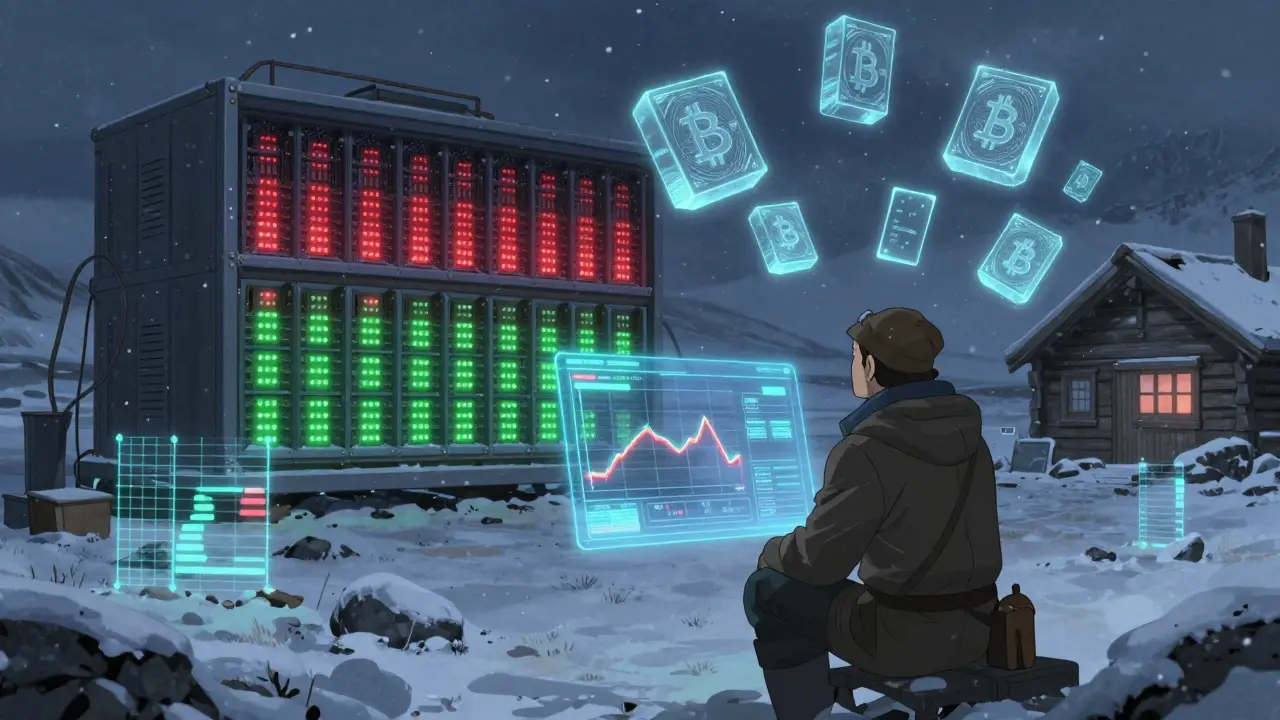
Real-World Examples: What’s Already Working
Bitcoin isn’t the only blockchain out there. Litecoin adjusts difficulty every 2.5 minutes. Monero tweaks it every block. Ethereum, before switching to Proof of Stake, used a “difficulty bomb” - a slow, intentional increase in difficulty meant to push miners toward the new system. But the real innovation is happening in newer chains. Networks like Zcash and Ravencoin now use adaptive algorithms that respond to hash rate changes within minutes. Testnets show transaction confirmation times improve by up to 40% during high-load periods. Full nodes store more data - they need to track abandoned blocks and real-time metrics - but they also see fewer orphaned chains. Less wasted work. Less energy burned. Mining pools like F2Pool and AntPool have already started testing adaptive systems internally. Their software now monitors difficulty shifts every 10 seconds instead of every 20,160 blocks. Profitability calculators? They’ve had to be rewritten. Miners can’t just buy a new ASIC and assume it’ll pay off in six months. Now they need to track live network conditions.The Trade-Offs: More Power, More Complexity
Adaptive systems aren’t magic. They come with costs. First, full nodes need more storage. They must keep records of every abandoned block and every micro-adjustment. That’s not a problem for big data centers, but for hobbyists running nodes on Raspberry Pis? It’s a barrier. Second, predictability disappears. Miners plan their hardware purchases based on known adjustment cycles. If difficulty changes every hour, it’s harder to calculate ROI. A miner in Kazakhstan might spend $50,000 on new rigs, only to see difficulty spike 15% the next day. That’s scary. Third, there’s the consensus problem. Bitcoin’s core developers are famously cautious. Changing the difficulty algorithm isn’t like updating a phone app. It requires near-unanimous agreement from miners, exchanges, wallet providers, and users. One mistake, and the chain splits. That’s why Bitcoin still uses the old system - not because it’s perfect, but because breaking it is riskier than living with its flaws.
The Hybrid Future: Not All-or-Nothing
The most likely path forward isn’t a sudden switch. It’s a hybrid. Think of it like a car’s cruise control with manual override. A network could still adjust difficulty every 2,016 blocks - but add micro-adjustments every 10 minutes based on real-time data. If the hash rate spikes, the system nudges difficulty up slightly. If it drops, it nudges it down. The big adjustments still happen, but they’re just corrections, not emergency fixes. Some researchers are even testing machine learning models that predict difficulty changes based on energy prices, hardware supply chains, and even weather patterns. If a heatwave hits Texas and power costs rise, miners might shut down. The system could anticipate that and lower difficulty before the drop happens. Ethereum’s post-merge research has already laid groundwork for this. Even though Ethereum no longer mines, the math behind its difficulty algorithms is being adapted for other Proof-of-Work chains. That’s the quiet revolution: innovation happening in the shadows, then spreading.Who Wins? Who Loses?
Large mining operations with access to cheap power and real-time analytics will thrive. They’ll use adaptive systems to stay ahead, optimizing hardware usage and reducing downtime. Small miners? They’ll struggle. No more waiting for the predictable two-week drop. No more easy profit windows. They’ll need to join pools that offer dynamic reward distribution - or get out. The environment wins. Studies suggest adaptive difficulty could cut overall network energy use by 15-25%. Less wasted computation. Fewer abandoned blocks. Fewer rigs running at half capacity. The blockchain itself wins. More stable. More secure. Less vulnerable to manipulation. More resilient to geopolitical shocks - like mining bans, power outages, or hardware embargoes.What’s Next? The Road to 2026
By 2026, most new blockchain projects will launch with adaptive difficulty built in. It’s becoming standard - like HTTPS for websites. Private and consortium chains are already using it. Public chains? They’re watching. Bitcoin won’t change overnight. But pressure is building. Environmental regulations in the EU and U.S. are forcing miners to prove their energy efficiency. Investors are asking: “Why are you still using a 2009 algorithm?” The next big move won’t be a hard fork. It’ll be a soft fork - a quiet upgrade that doesn’t break anything. Miners will update their software. Wallets will adapt. Users won’t even notice. But the network will be stronger. Adaptive mining difficulty isn’t about making mining easier. It’s about making the blockchain smarter. It’s about turning a blunt, slow tool into a responsive, intelligent system. And if the last decade taught us anything, it’s that blockchains that adapt survive. Those that don’t, fade away.How often does Bitcoin currently adjust its mining difficulty?
Bitcoin adjusts its mining difficulty every 2,016 blocks, which takes about two weeks on average. This adjustment is based on how long it took to mine those blocks compared to the target of 10 minutes per block. If blocks were mined too quickly, difficulty increases. If too slow, it decreases. This system is static and doesn’t respond to sudden changes in real time.
What is selfish mining, and how does adaptive difficulty stop it?
Selfish mining is an attack where a group of miners secretly mines blocks without broadcasting them. They wait until the public chain falls behind, then release their hidden blocks to take control. This works because static difficulty adjustments create two-week windows where hash rate changes aren’t reflected. Adaptive difficulty eliminates these windows by continuously adjusting the puzzle difficulty based on real-time network behavior, making it unprofitable to hoard blocks.
Does adaptive mining difficulty increase energy consumption?
No - it reduces it. By preventing long periods of over- or under-mining, adaptive systems ensure computing power is used more efficiently. Instead of thousands of rigs running at full blast for weeks after a hash rate surge, the network quickly scales difficulty to match demand. Studies estimate energy savings of 15-25% compared to static systems.
Why hasn’t Bitcoin adopted adaptive mining difficulty yet?
Bitcoin’s developers prioritize security and stability over innovation. Changing the difficulty algorithm requires near-universal agreement across miners, exchanges, and users. A flawed upgrade could split the network. While proposals exist, Bitcoin’s conservative approach means any change must be proven over years of testing. Hybrid solutions - small real-time tweaks on top of the current system - are more likely than a full overhaul.
Will small miners survive with adaptive difficulty?
It’s harder, but not impossible. Predictable two-week cycles helped small miners plan purchases and profits. With adaptive difficulty, rewards change daily - sometimes hourly. Small miners will need to join pools with dynamic payout systems or use tools that track real-time network conditions. Those who adapt will survive. Those who rely on old models may not.
What blockchain networks already use adaptive mining difficulty?
Litecoin adjusts difficulty every 2.5 minutes. Monero changes it with every block. Zcash and Ravencoin use real-time adaptive algorithms. Most newer Proof-of-Work chains launched after 2022 include adaptive difficulty by default. Even Ethereum’s old difficulty bomb was a form of planned adaptation. The trend is clear: adaptive systems are now the standard for new networks.
Can machine learning predict mining difficulty?
Yes - and it’s being tested. Researchers are training models to predict difficulty shifts based on historical hash rate patterns, energy prices, hardware availability, and even weather (which affects cooling costs and power supply). These aren’t yet live on major chains, but they’re part of the next wave of adaptive systems - making mining not just responsive, but predictive.
Does adaptive difficulty affect transaction fees?
Not directly. Transaction fees are determined by demand for block space, not mining difficulty. But by stabilizing block times, adaptive systems help prevent congestion. If blocks were mined too fast, mempools could overflow, driving fees up. If too slow, users would wait hours. Adaptive difficulty keeps block times steady, helping fees stay predictable.
Comments (24)