

Imagine logging into your bank, signing a lease, or proving you graduated from university-all without typing a password, uploading a scan, or waiting for someone to verify your documents. That’s not science fiction. It’s already happening, quietly, in places like Estonia, the EU, and inside a growing number of enterprises. The future of digital identity isn’t tied to usernames and passwords anymore. It’s built on blockchain.
Why Passwords Are Broken
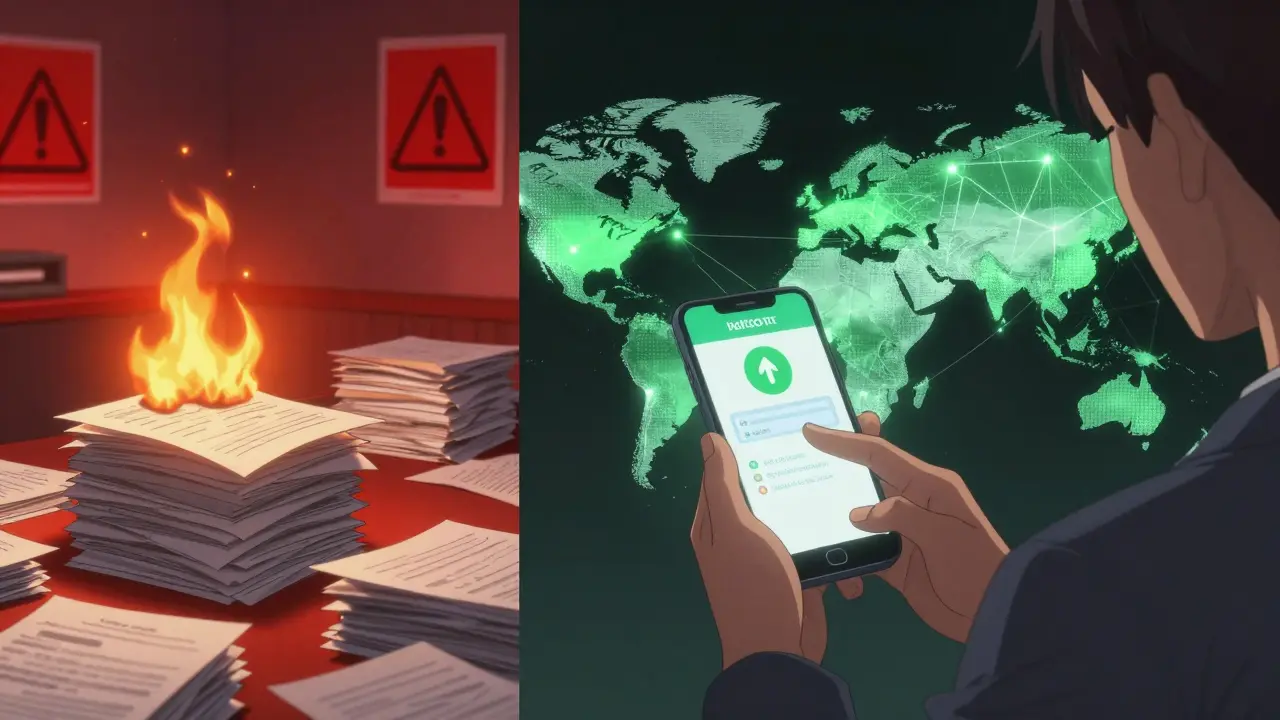
You’ve heard it a thousand times: “Use a strong password.” But here’s the truth-no matter how strong your password is, it’s still a single point of failure. In 2022, Verizon found that 81% of all data breaches started with stolen or weak credentials. Your email, your bank, your health portal-all of them rely on the same flawed system. If one site gets hacked, your password might be on the dark web. And if you reuse it? You’re exposed everywhere. Traditional systems store your identity in giant, centralized databases. One breach, and millions of records are at risk. These databases aren’t just vulnerable-they’re inefficient. Verifying your identity can take minutes, sometimes hours. You fill out forms, upload documents, wait for approval. It’s slow. It’s frustrating. And it’s unnecessary.What Is Decentralized Identity?
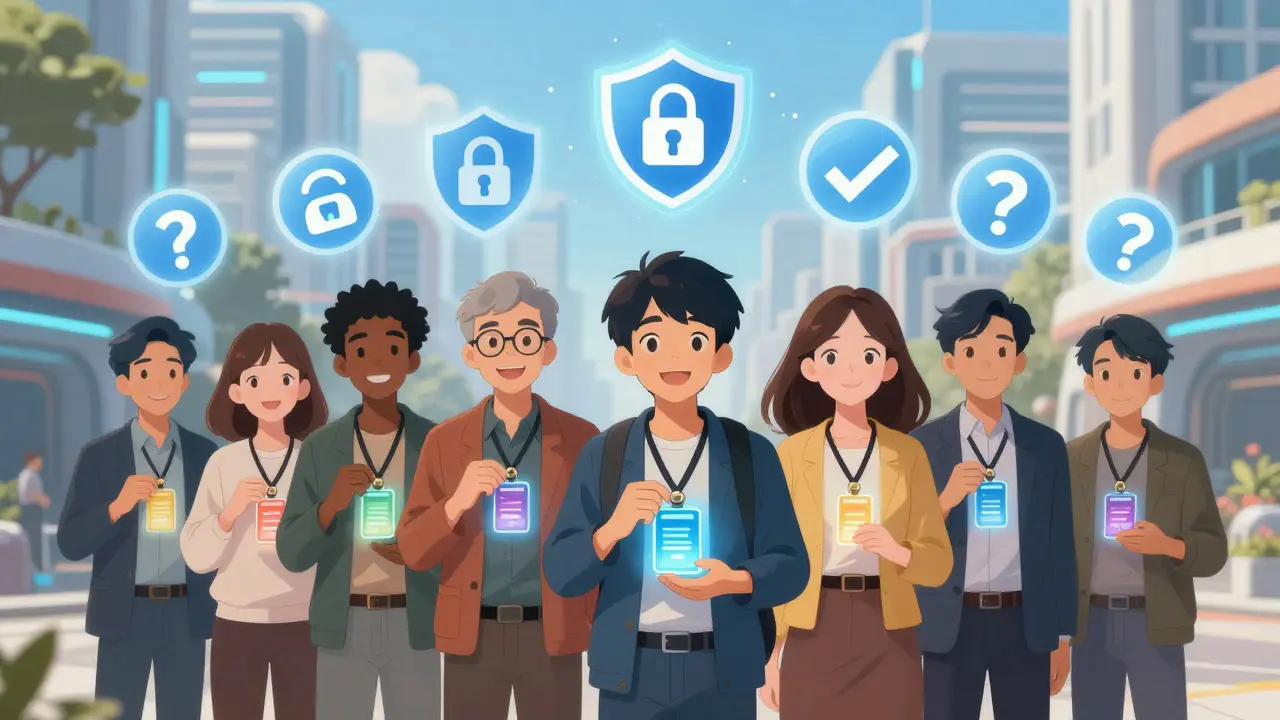
Decentralized identity flips the script. Instead of companies holding your data, you hold it. Your identity is stored as a set of cryptographically signed claims-called Verifiable Credentials-on your phone or wallet. These aren’t files you download. They’re digital proofs, like a digital passport you control. These credentials are linked to a Decentralized Identifier (DID). A DID isn’t your email or phone number. It’s a unique string of characters, anchored to a blockchain, that no one else can impersonate. Think of it like a digital fingerprint that only you can unlock. When you need to prove something-say, you’re over 18-you don’t send your birth certificate. You send a signed statement from a trusted issuer (like your government or university) that says, “This person is over 18.” The verifier checks the signature, confirms it’s valid, and sees the claim. They never see your real name, your ID number, or your birth date. Just the fact that it’s true. This is called zero-knowledge proof. It’s like showing a bouncer a card that says “Age Verified” without revealing your name or date of birth. No tracking. No data collection. Just proof.How Blockchain Makes This Possible
Blockchain isn’t just for crypto. It’s the backbone of trust in decentralized identity. Here’s how:- **Immutability**: Once a credential is issued and recorded on-chain, it can’t be altered. No one can fake your degree or erase your citizenship status.
- **Decentralization**: No single company or government controls the system. The data isn’t stored in one server-it’s distributed across thousands of nodes.
- **Transparency**: Anyone can verify the authenticity of a credential without needing to ask a central authority.
- **Interoperability**: Standards like W3C’s DID specification mean your digital ID works across platforms-whether it’s a bank in Germany, a hospital in Canada, or a university in Japan.
Real-World Use Cases Already Working
This isn’t theoretical. It’s happening.- EU’s EBSI Program: Over 1.2 million verified credentials have been exchanged across borders since 2023. Students can prove their degrees to employers in any EU country. Citizens can access healthcare records without paperwork.
- Estonia: Since integrating blockchain into its national ID in 2023, fraud in digital transactions dropped by 92%. Over 2 million cross-border transactions are processed annually.
- Healthcare: A U.S. hospital reduced patient onboarding from 45 minutes to 8 minutes by using blockchain-based credentials for insurance and ID verification.
- Finance: Banks are cutting KYC costs by 40-60%. One major European bank saved $3.2 million in a single year by replacing manual document checks with Verifiable Credentials.
The Big Trade-Offs
This isn’t magic. There are real hurdles.- Key Management: If you lose your private key, you lose your identity. No “forgot password?” button. 34% of early adopters reported being locked out in the first six months. Solutions like social recovery (letting trusted friends help reset access) are emerging, but they’re still clunky.
- Usability: Non-tech users struggle. A 2024 study found 62% of consumers found managing digital wallets confusing. Apps need to feel as simple as unlocking your phone with your face.
- Regulation: Only 37% of global jurisdictions have clear rules for blockchain IDs as of late 2025. The EU’s eIDAS 2.0 regulation, launching in June 2026, will be a game-changer. The U.S.? Still a patchwork-only 17 states have laws.
- Biometric Risks: If your iris scan or fingerprint is tied to your DID, what happens if that data is leaked? Unlike passwords, you can’t change your iris. Privacy advocates warn this could enable mass surveillance if not tightly controlled.
Who’s Leading the Charge?
The players fall into three groups:- Tech Giants: Microsoft and IBM built Entra Verified ID and Hyperledger Indy. They’re focused on enterprise use-employee IDs, supply chain verification, partner authentication.
- Startups: Civic, SelfKey, and Polygon ID are building consumer-facing wallets and developer tools. They’re pushing for mass adoption.
- Governments: Estonia, the EU, India (with Aadhaar), and Singapore are rolling out national blockchain IDs. They’re not just experimenting-they’re replacing legacy systems.
What’s Next? The Road to 2030
By 2025, multi-modal biometrics-combining facial recognition, voice, and fingerprint-will be standard for high-security verifications. AI will start optimizing how your digital identity behaves across platforms, auto-blocking suspicious logins or suggesting which credentials to share based on context. Polygon ID is already testing mobile ZK-proofs that cut verification to under one second. That’s faster than typing a password. By 2030, the Identity Management Institute predicts blockchain-based identity will be the dominant model. Not because it’s perfect-but because everything else is broken. The real win? You stop being a product. Right now, your identity is sold to advertisers, tracked by apps, and stored by companies you’ve never heard of. With decentralized identity, you decide who sees what. And when.How to Get Started (If You’re Curious)
You don’t need to be a developer to try this. Here’s how:- Download a wallet that supports DIDs: Try Microsoft’s Authenticator app or the Sovrin Wallet.
- Look for services offering Verifiable Credentials: Some universities now issue digital diplomas. Some banks let you verify identity via DID.
- Try a test credential: The EU’s EBSI portal lets you simulate a cross-border credential request.
Frequently Asked Questions
Is blockchain digital identity the same as cryptocurrency?
No. Blockchain digital identity uses the same underlying technology as cryptocurrency-decentralized ledgers and cryptography-but it doesn’t involve buying, selling, or trading coins. It’s about proving who you are, not sending money.
What happens if I lose my private key?
You lose access to your identity-just like losing the only copy of your house key. That’s why recovery options are critical. Solutions like social recovery (where 3 trusted contacts can help reset access) and biometric key reconstruction are being built into newer wallets. But right now, it’s still a major risk for non-technical users.
Can governments spy on me with blockchain IDs?
It depends on how the system is designed. If a government issues your DID and requires biometric data to activate it, yes-they could track you. But decentralized identity doesn’t require that. You can get credentials from multiple issuers (university, bank, government) without any one entity having a full picture. Privacy-focused systems are built to minimize tracking. The risk isn’t the tech-it’s the policy.
Is this secure against hackers?
Far more secure than passwords. Since your data isn’t stored in a central database, there’s no single target for hackers. Even if someone steals your phone, they can’t access your identity without your biometric or recovery phrase. Zero-knowledge proofs mean even the verifier doesn’t see your raw data. The biggest threat isn’t hacking-it’s user error.
Will this replace my passport or driver’s license?
Eventually, yes-but not overnight. Physical IDs will coexist for years. But in places like the EU and Estonia, digital IDs already work for everything from taxes to voting. The goal isn’t to eliminate physical documents-it’s to make digital ones just as trusted, portable, and secure.
Comments (14)
NO MORE PASSWORDS??? YES PLEASE!!! 🔥
This is the kind of future I’ve been waiting for since I got hacked in 2018 and lost access to my entire digital life-bank, email, even my old Netflix account (RIP my Stranger Things binge). Imagine never having to reset passwords again, never getting phished, never wondering if your data’s on the dark web. Decentralized identity isn’t just tech-it’s freedom. You control your data like you control your front door key. No middlemen. No corporations hoarding your birthdate like it’s a commodity. And zero-knowledge proofs? That’s like showing a bouncer you’re 21 without handing over your entire driver’s license. Genius. The only thing holding this back is usability-most people still think ‘blockchain’ means ‘crypto scam.’ We need apps that feel as simple as Face ID. If we can make this intuitive, this isn’t just the future-it’s the only sane way forward. 🙌
Really excited about this, especially with how India’s Aadhaar system is evolving. The real game-changer will be interoperability between national systems and private platforms. Right now, even in places with digital IDs, you still get stuck in silos. If a German bank can verify my Indian university degree without me emailing PDFs, that’s huge. Also, the 99.99% uptime on Polygon ID? That’s insane for a decentralized system. Most blockchain stuff still feels like a beta test. This is production-ready.
Just tried the EU’s EBSI simulator last week-super smooth. Got a fake ‘degree verification’ credential in under 2 minutes. Honestly, it felt like magic. The part that blew me away was how the verifier saw ONLY that I graduated-not my name, not my student ID, not my address. That’s privacy. That’s respect. I wish more banks here in India would adopt this. Right now, KYC still feels like submitting a passport to a stranger on Zoom. We need this everywhere. Also, big shoutout to the devs building social recovery options-losing your key shouldn’t mean losing your identity. We’re getting there.
ok so i read this and im like… wait so my face is my password now? but what if i get sick and my face looks diff? or if i get old? also why do i need a blockchain for this? cant we just use better encryption??
Stop acting like this is some revolutionary breakthrough. It’s not. We’ve had digital signatures for decades. What’s new is corporations finally realizing they can offload the cost of identity verification onto users. You think you’re in control? Nah. You’re just the new data farm. And don’t get me started on biometrics-your iris scan isn’t a key, it’s a fingerprint that can’t be changed. Once it’s leaked, you’re permanently compromised. This isn’t empowerment-it’s corporate laziness dressed up as innovation. If you want real security, stop using tech that requires you to be a crypto nerd just to log into your bank.
As someone from Punjab who’s seen how paper-based systems fail-birth certificates lost, degrees fake, IDs stolen-I can tell you this could change lives. My cousin couldn’t get a job abroad because his university didn’t have a digital stamp. Imagine if he just tapped his phone and showed proof. No courier. No notary. No waiting months. But we need to make this simple. My mom doesn’t know what a private key is. If we make it as easy as UPI payments, adoption will explode. Also, governments must lead. Tech alone won’t fix this.
Let’s be crystal-clear: decentralized identity is the only ethical, scalable, and future-proof model for human verification in the digital age. Period. End of story. The fact that 81% of breaches stem from passwords isn’t a bug-it’s a feature of a broken system designed for the dial-up era. Blockchain doesn’t just secure identity-it redefines sovereignty. And let’s not ignore the interoperability angle: W3C standards mean your DID works from Tokyo to Toronto. The EU’s EBSI isn’t just a pilot-it’s a blueprint. The U.S. is still stuck in 2007 with SSNs and PDFs. Shameful. And yes, key management is a challenge-but so was learning to use email in 1995. We adapt. We evolve. Or we get left behind. The choice is obvious.
Wow. So now we’re trusting a blockchain-built by devs who can’t even code a working login page-to hold our entire identity? And you think this is better than a government-issued ID? The U.S. has the best passports in the world. We don’t need some crypto bro’s app to tell a German bank I’m over 18. This is just another Silicon Valley fantasy. You think your ‘digital fingerprint’ won’t be tracked? Please. The second you use it, every corporation and government will log it. And who’s going to fix it when you lose your key? Your ‘trusted friends’? Ha. This isn’t freedom. It’s chaos with a blockchain sticker on it.
Let’s cut the hype. You say ‘zero-knowledge proof’ like it’s magic. But here’s the reality: if you’re using a wallet that requires biometrics to unlock, you’ve already lost. Your iris scan is a permanent identifier. Unlike a password, you can’t reset it. And if someone steals your phone? They’ve got your identity. No recovery. No reset. Just… gone. And who’s auditing these ‘trusted issuers’? The government? The bank? The same ones who sold your data to Cambridge Analytica? This isn’t decentralization-it’s rebranding surveillance. Also, 34% of early adopters got locked out? That’s not a feature. That’s a disaster waiting to happen. Stop selling this as liberation. It’s a liability with a fancy name.
wait so if i lose my phone i lose my id?? like my whole life?? no wayyyy that sounds like a nightmare 😭
Interesting read. The efficiency gains are undeniable-cutting KYC from 45 minutes to 8 is massive. But I wonder how this scales in regions with poor internet or limited smartphone access. Not everyone lives in Estonia or Silicon Valley. The tech is brilliant, but the rollout needs to be inclusive, not just advanced. Also, I’m wary of replacing physical IDs too quickly. There’s still value in tangible, verifiable documents-even if they’re slower.
So you’re saying we should ditch the U.S. passport for some app? Are you kidding me? This is why America is falling behind-everyone’s chasing crypto nonsense instead of fixing real problems. Your ‘decentralized identity’ is just a backdoor for foreign governments to track Americans. And who’s going to hold these ‘issuers’ accountable? China? The EU? No thanks. We have a system that works. Stop trying to reinvent the wheel with blockchain magic.
One thing not mentioned: what happens when your DID gets revoked? If a government or issuer decides you’re no longer ‘eligible’ to hold identity, do you just vanish from the system? There’s no appeal process. No recourse. That’s terrifying. This isn’t just about convenience-it’s about power. And power concentrated in the hands of issuers, even if decentralized, is still power. We need legal frameworks before we deploy this at scale.