

When it comes to buying and trading cryptocurrency, Cypriots don’t need to jump through hoops. There’s no ban, no shadow market, no need to use VPNs to get around restrictions. Crypto is legal, regulated, and accessible - but only if you know where to look and what rules to follow.
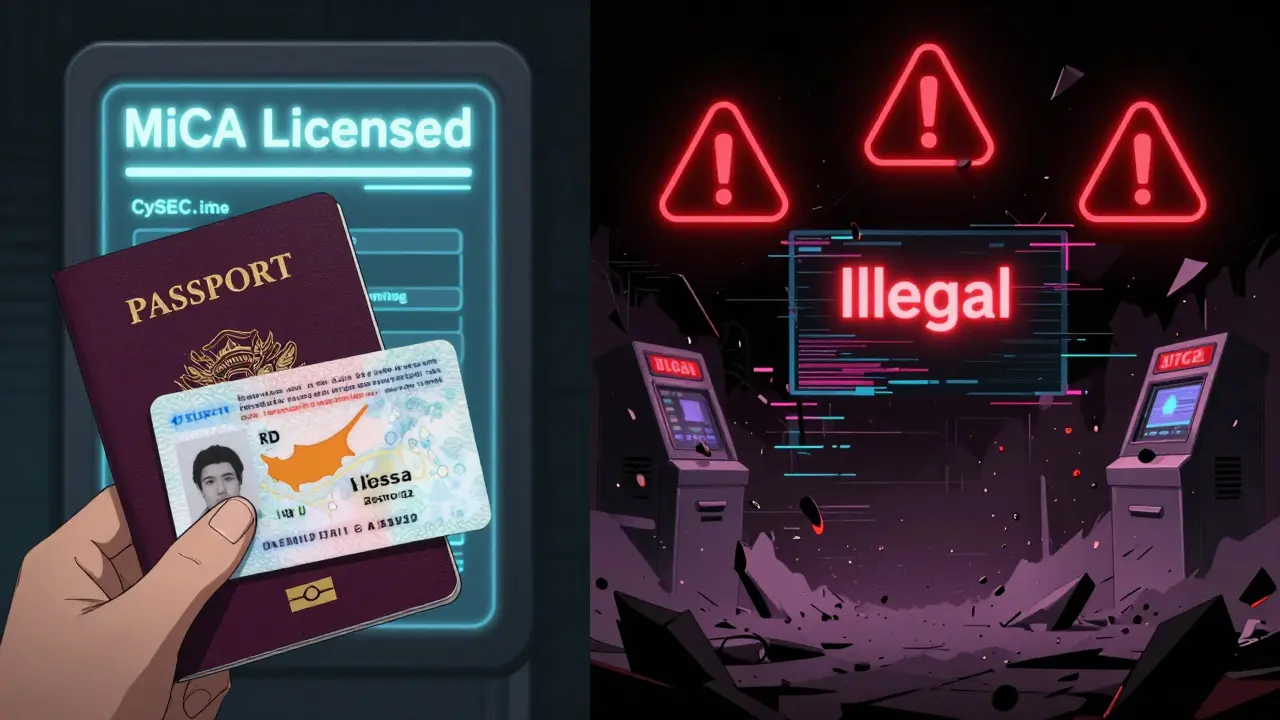
Since January 2025, every crypto exchange serving Cypriots must be licensed under the EU’s Markets in Crypto-Assets (MiCA) regulation. That means no more random platforms popping up with flashy ads and no KYC. If a crypto exchange wants to offer services to someone in Nicosia, Limassol, or Paphos, it has to be registered with the Cyprus Securities and Exchange Commission (CySEC). And once registered, that same license lets the platform operate across the entire European Union.
Before MiCA, Cyprus had its own national rules for crypto-asset service providers (CASPs). But now, those rules are gone. CySEC stopped taking new applications under the old system in late 2024. If you’re using a platform that says it’s "licensed in Cyprus," check if it’s on the official CASP Register on CySEC’s website. If it’s not there, it’s not legal - even if it claims to serve Cypriots.
So how do Cypriots actually get on these exchanges? It’s simpler than you think. Most use one of the big EU-regulated platforms like Binance, Kraken, Bybit, or Coinbase. These platforms went through the full MiCA licensing process and are now fully compliant. They’ve updated their systems to block users from unlicensed regions - but Cyprus is not one of them. Cypriots can sign up, verify their identity, and start trading without any extra steps.
The verification process is strict, but standard. You’ll need a government-issued ID - a Cypriot passport or national ID card - and a recent proof of address, like a utility bill or bank statement from the last three months. Some platforms accept digital copies uploaded via their app. Once verified, you can deposit euros via SEPA bank transfer. That’s the most common method. Credit cards are less common now because of stricter EU rules on crypto purchases with cards, and PayPal isn’t accepted by most regulated exchanges in Cyprus.
There are no local crypto exchanges based in Cyprus that most people use. A few small startups tried to launch, but none survived the MiCA compliance costs. So if you’re looking for a "Cypriot exchange," you won’t find one. Instead, Cypriots rely on the same platforms used by Germans, French, or Italians. The difference? Cyprus has one of the most favorable tax environments in the EU for crypto.
As of 2025, Cyprus does not charge capital gains tax on cryptocurrency profits. If you buy Bitcoin at €20,000 and sell it at €35,000, you keep the full €15,000 gain. No tax. That’s true whether you trade once a year or every day. This has made Cyprus a quiet hotspot for crypto traders within the EU. It’s not advertised - there are no crypto tourism campaigns - but local forums and Telegram groups are full of people discussing tax-free profits.
That doesn’t mean you’re off the hook entirely. You still need to keep records. If CySEC or the tax authorities ever ask, you need to show where you bought, when you sold, and how much you made. Most traders use tools like Koinly or CoinTracker to auto-sync their wallets and generate reports. It’s not legally required, but it’s smart.
What about stablecoins? They’re treated the same as other crypto-assets under MiCA. You can buy, sell, or hold USDT, USDC, or DAI without any extra restrictions. Many Cypriots use them to move money quickly between exchanges or to protect against volatility before making a big trade. Some even use them for small online purchases - though merchants rarely accept them directly. You usually convert back to euros first.
There’s one thing you won’t see: crypto ATMs. Cyprus has no public crypto ATMs. Not one. The regulatory risk is too high, and the demand isn’t there. If someone offers to sell you Bitcoin through a vending machine in Limassol, it’s either a scam or an illegal operation. Don’t risk it.
And don’t be fooled by fake apps. There are dozens of cloned versions of Binance or Coinbase in the Google Play Store and Apple App Store, targeting Cypriots with fake login pages. Always download apps directly from the official website. Never click a link from an email or a Telegram message. CySEC has issued multiple warnings about these scams.
The Central Bank of Cyprus and MOKAS (the Unit for Combating Money Laundering) keep a close eye on transactions. If you’re sending €1,000 or more to a crypto exchange, the platform must verify your identity. That’s not optional. If you try to bypass it by splitting payments into €900 chunks, you’ll get flagged. The system isn’t dumb - it’s designed to catch exactly that.
Some Cypriots try to use offshore exchanges that don’t require KYC. But here’s the catch: those platforms can’t legally accept money from EU bank accounts anymore. If your bank detects a transfer to an unlicensed crypto platform, they’ll freeze the transaction. And if you’re caught using an unregulated exchange, you could face fines or even criminal charges under Cyprus’s AML laws.
There’s no need to risk it. The legal path is clear, fast, and safe. Pick a MiCA-licensed exchange. Verify your ID. Deposit euros via SEPA. Trade. Withdraw when you’re ready. Keep your records. And enjoy the fact that you’re in one of the few EU countries where crypto profits are completely tax-free.
For those who want to go deeper, CySEC’s Innovation Hub offers free guidance for users and small businesses. You can book a consultation, ask questions about compliance, or get help understanding your obligations. It’s not a sales pitch - it’s a public service. Most people don’t know it exists, but it’s there if you need it.
There’s no mystery here. No black market. No hacks. Just a clear, legal system that works - if you follow the rules. Cypriots aren’t breaking barriers to access crypto. They’re walking through an open door.
How to Choose a Crypto Exchange as a Cypriot
- Only use platforms registered with CySEC under MiCA
- Check the official CASP Register before signing up
- Prefer exchanges that support SEPA deposits in euros
- Avoid platforms that don’t require KYC - they’re illegal in Cyprus
- Download apps only from the official website, not app stores
- Use tools like Koinly or CoinTracker to track trades for tax purposes
What Payment Methods Work in Cyprus?
- SEPA Bank Transfer - Most common, fastest, cheapest
- Bank Debit Cards - Limited support, often blocked for crypto
- Credit Cards - Rarely accepted due to EU restrictions
- PayPal - Not accepted by any major regulated exchange
- Crypto Deposits - Only if you already own crypto from another exchange
What About Taxes?
Cyprus has no capital gains tax on cryptocurrency. That means if you buy, hold, and sell Bitcoin, Ethereum, or any other crypto asset, you don’t pay tax on the profit. This applies whether you trade once a year or every day. You’re not required to report gains to the tax authority unless you’re running a business - but keeping records is still a good idea. The tax system treats crypto like any other asset - no special treatment, no special tax.

What Platforms Do Cypriots Actually Use?
There’s no official data, but based on user reports and support tickets from local forums, the most popular exchanges among Cypriots are:
- Binance - Largest volume, supports SEPA, MiCA-licensed
- Kraken - Strong security, EU-based, reliable for EU users
- Bybit - Popular for derivatives, licensed under MiCA
- Coinbase - Easy for beginners, full compliance with EU rules
- Bitstamp - Older platform, trusted by long-term traders
These platforms all have offices in the EU, comply with MiCA, and accept Cypriot IDs. No need to search for "Cypriot-friendly" exchanges - just pick one that’s licensed in the EU.
What Should You Avoid?
- Unlicensed exchanges - even if they say they accept Cypriots
- Crypto ATMs - none exist legally in Cyprus
- Telegram groups selling "private" access to exchanges
- Platforms that don’t require ID verification
- Using PayPal or credit cards to buy crypto - most are blocked
If a platform looks too good to be true - low fees, no KYC, instant deposits - it’s a trap. Cyprus is not a lawless zone. The regulators are watching. And they’re not afraid to shut down illegal operators.
Is cryptocurrency legal in Cyprus?
Yes, cryptocurrency is legal in Cyprus as of 2025. It’s not legal tender, but you can buy, sell, hold, and trade it without breaking any laws. All exchanges serving Cypriots must be licensed under the EU’s MiCA regulation and registered with CySEC.
Do I need to pay tax on crypto profits in Cyprus?
No, Cyprus does not charge capital gains tax on cryptocurrency profits as of 2025. Whether you make €100 or €100,000 from trading Bitcoin or Ethereum, you keep the full amount. However, you should still keep records of your trades in case the tax authorities request them.
Can I use Binance or Coinbase in Cyprus?
Yes, both Binance and Coinbase are fully licensed under MiCA and accept Cypriot residents. You can sign up with your Cypriot ID, deposit euros via SEPA, and trade without restrictions. Just make sure you’re using the official website or app - not a fake clone.
What payment methods can I use to buy crypto in Cyprus?
The only reliable method is SEPA bank transfer. You can send euros directly from your Cypriot bank account to the exchange. Credit cards and PayPal are rarely accepted due to EU regulations. Avoid any platform that pushes you to use these methods - it’s a red flag.
Are there any crypto ATMs in Cyprus?
No, there are no legal crypto ATMs in Cyprus. Any machine claiming to sell Bitcoin or Ethereum is either illegal or a scam. The regulatory environment makes it too risky for operators to install them. Stick to licensed exchanges for safe, legal access.
What happens if I use an unlicensed crypto exchange?
If you use an unlicensed exchange, your bank may block your transfers. You could also face legal consequences under Cyprus’s anti-money laundering laws. Even if the exchange works today, it could vanish tomorrow - and you’d lose your money with no recourse. Always use CySEC-registered platforms.
Comments (24)
SEPA only? Yeah that’s fine. I’ve been using Kraken for 2 years and never had an issue. No need to overcomplicate it.
LOL so they’re telling you to use Binance but not telling you they’re owned by a Chinese guy who’s probably feeding your data to the CCP? 😏
man i just bought some btc last week through coinbase and it was so smooth like… i thought it’d be a nightmare with all the docs but nah, uploaded my id, 10 mins later boom done. cyprus is lowkey the best spot in eu for this shit
The real story here isn’t the tax exemption-it’s the quiet collapse of local fintech ambition. Cyprus didn’t become a crypto hub because it innovated. It became one because it said ‘yes’ while the rest of Europe said ‘prove it’s not a casino.’ The regulatory clarity is a gift, but it’s also a surrender. We’re not building anything here-we’re just renting access to someone else’s infrastructure. And that’s fine… until the rent goes up.
Think about it: every major exchange has a European HQ now. But none of them are *from* Europe. They’re American, Chinese, Singaporean. Cyprus is just the postal code they use to bypass Brussels’ red tape. We’re not a center of gravity-we’re a loophole with a beach.
And don’t get me started on the ‘tax-free’ myth. It’s only tax-free if you never move your money out. The moment you convert to euros and buy a house? That’s income. The moment you pay your kid’s tuition? That’s a taxable event. The law doesn’t say ‘crypto is untouchable.’ It says ‘capital gains on crypto aren’t taxed.’ Big difference. Most people don’t read the fine print until the taxman knocks.
Also-no crypto ATMs? Of course not. Why would you need one when your bank account is already a crypto gateway? The real innovation isn’t the machine-it’s the banking system that lets you move value without friction. That’s the invisible infrastructure. And it’s why Cyprus works.
But let’s be honest: this isn’t about freedom. It’s about efficiency. And efficiency is the new morality.
So glad to see this laid out so clearly. I was so nervous when I started trading last year, thinking I’d get in trouble. But following the MiCA rules made everything feel safe. Just stick to the licensed ones, keep your records, and you’re golden.
India has no clear crypto rules yet. Seeing how Cyprus handles this is actually helpful. Maybe we can learn something.
just wanna say thanks for this post-really helped me feel less lost. i was about to try some sketchy platform till i read your warning about fake apps. saved my crypto and my sanity 😅
Oh please MiCA is just Wall Street’s way of killing decentralization. They’re not protecting you-they’re putting crypto in a cage so banks can charge fees on every move. You think Binance is ‘safe’? They’re just the new Barclays with better UI.
And don’t even get me started on ‘tax-free’-the IRS is already eyeing EU crypto users. They’ll come for you when you wire money to the US. This is a trap dressed as a perk.
While the regulatory framework appears to be well-structured, one must consider the long-term implications of relying on foreign-regulated entities for core financial infrastructure. The absence of domestic innovation may lead to systemic vulnerabilities in the event of geopolitical shifts or platform failures. Prudence dictates that individuals maintain diversified exposure and avoid overreliance on any single jurisdictional or corporate entity.
It’s kind of beautiful, really. No hype, no scams, just a quiet system that works. I wish more places were like this.
As someone who moved from the US to Cyprus last year, I can say this is the most straightforward crypto experience I’ve ever had. Back home, I was jumping through hoops with CoinBase, Kraken, and then trying to cash out. Here? SEPA, done. I even got my mom to start trading. She’s 72 and uses the app every Sunday.
And the tax thing? Game changer. I sold some ETH last month and didn’t tell anyone. Just put it toward a new car. No forms, no stress. I feel like I’m living in the future.
Also, no crypto ATMs? Good. I’d be terrified to use one. The idea of handing cash to some guy in a hoodie? No thanks. Digital is safer.
And yes, I checked CySEC’s register before signing up. Took 2 minutes. If you’re not doing that, you’re playing Russian roulette with your money.
People act like this is some underground secret. It’s not. It’s just common sense. And common sense is rare.
Oh sweet, so we’re supposed to trust Binance because they’re ‘licensed’? Next you’ll tell me the FDA approves candy bars as medicine. The EU doesn’t regulate anything-it just rubber-stamps corporate branding. MiCA is PR, not protection.
And ‘tax-free’? Please. The moment you buy property or send money to your family, they’ll retroactively classify it as income. Cyprus is a tax haven for the rich, not the people.
You think you’re safe? You’re just the next target for the next ‘global crackdown.’
SEPA is the only viable method. Credit cards are prohibited under PSD2 amendments to crypto purchases. PayPal is excluded due to chargeback risks under MiCA Article 57.3. Any platform offering alternative methods is non-compliant. Your assertion is correct.
Interesting. In India, we’re stuck with P2P and OTC because exchanges are banned. Your MiCA framework is a blueprint we should’ve adopted 5 years ago. No wonder crypto adoption here is stuck at 3%.
Okay but like… I’ve been using Bybit for months and I swear I saw a post from someone saying they got hacked because they used a ‘MiCA-licensed’ exchange? And now you’re telling me it’s safe? What if they just got the license and then got breached? Like… how do we even know they’re not just paying for compliance paperwork and then ignoring security? I’m not saying it’s fake but… I just… I don’t know anymore.
Also, I tried to deposit via SEPA and my bank flagged it as ‘high risk’ and froze my account for 3 days. So much for ‘easy.’
And what if the EU changes the rules next year? Like… what if they decide crypto gains are taxable after all? I’ve seen this movie before. Remember when they said Bitcoin was ‘not a currency’ and then suddenly it was? I’m not trusting this.
And why is no one talking about the fact that CySEC doesn’t audit the exchanges? They just say ‘yes’ and move on. It’s like getting a gold star for showing up. Not for doing well.
And the ‘tax-free’ thing? That’s the bait. They’re letting you get rich so they can tax you later when you’re too invested to leave. It’s a trap. It’s always a trap.
I just… I don’t trust any of it anymore.
they’re all watching you. every transaction. every wallet. every second you’re on that app. they know what you bought. when you sold. how much you made. they’re building a profile. and one day… you’ll wake up and your account will be frozen. no warning. no explanation. just gone.
you think you’re safe because it’s ‘legal’? legal doesn’t mean safe. legal just means they haven’t arrested you yet.
lol so you’re telling me the only reason crypto works here is because Cyprus is too small to matter? like… they didn’t build a system. they just gave up and said ‘whatever, do what you want.’
that’s not freedom. that’s neglect.
The fact that you’re impressed by SEPA deposits suggests you’ve never lived in a real financial center. This isn’t innovation-it’s baseline infrastructure. Anyone with a bank account and a brain can do this. The real elite use private blockchain settlements, not Coinbase.
It’s not about legality-it’s about sovereignty. You’re outsourcing your financial autonomy to multinational corporations that answer to shareholders, not citizens. The tax exemption is a distraction. The real cost is the erosion of local economic agency. You’re not free-you’re just a customer with a lower fee structure.
And yet, you call this progress?
bro i just wanna say… thank you. i was so scared to even try crypto because i thought i’d get in trouble or get scammed. but after reading this, i signed up on kraken last night and deposited 200 euro via sepa. it took 12 minutes. no drama. no weird links. just… boom. done. i’m gonna start small but i feel like i finally get it. you’re right-it’s just an open door. i just needed someone to hold my hand and say ‘it’s okay.’ 🙏❤️
So you're telling me the government doesn't want crypto ATMs because they're 'too risky'... but they're totally fine with you sending thousands through your bank to a company based in Malta? That's not regulation. That's just making it harder to cash out in person so they can track you better. Classic.
Wow. So you’re proud of using American platforms because they’re ‘licensed’? You’re not a trader-you’re a tenant. And you’re paying rent in trust.
Real crypto freedom means self-custody, not SEPA deposits to Coinbase.
Heather, you’re right to be cautious-but don’t let fear stop you. The system isn’t perfect, but it’s the best we’ve got. And honestly? It’s better than what most countries offer. Start small. Learn. Keep records. You’ll be fine.
Yeah right, 'start small'... until your entire portfolio gets flagged as 'suspicious activity' and your bank freezes your account for 90 days. Then you'll be glad you never trusted the system.