

Imagine sending a dollar to a friend without waiting 10 minutes for a blockchain confirmation, paying a coffee shop in real time with no fee, or playing a multiplayer game where every move updates instantly - all without touching the main blockchain. That’s the promise of payment channels and state channels. They’re not just buzzwords. They’re the quiet engines making blockchain usable for everyday things. But most people mix them up. And that’s a problem.
What Exactly Is a Payment Channel?
A payment channel is a two-way tunnel for money. You and another person lock up a set amount of cryptocurrency - say, 1 BTC total - into a shared smart contract on the blockchain. That’s the opening. After that, you can send each other payments back and forth, thousands of times, with zero fees and instant settlement. No miners. No blocks. Just signed updates between you two.Each update is a new balance sheet. You sign it. They sign it. The latest version is the only one that counts. If you send $0.30 to your friend, their balance goes up. Yours goes down. You both keep a copy. If you ever disagree, you can close the channel and broadcast the final signed balance to the blockchain. The network enforces it.
The Lightning Network is the biggest real-world example. It’s built on Bitcoin. It lets people make micropayments for streaming content, tipping bloggers, or buying digital goods without paying $5 in fees. It uses something called Hashed Timelock Contracts (HTLCs) to make sure no one can cheat. If you try to broadcast an old balance, the other person can claim your whole deposit as a penalty.
Payment channels are great for one thing: fast, cheap, recurring money transfers. Think utility bills, subscription services, or even a vending machine that accepts crypto. You open a channel, pay weekly, and close it when you’re done. Simple.
State Channels Go Way Beyond Payments
Now imagine the same idea - but instead of just moving money, you’re moving any kind of digital state. That’s a state channel.State channels lock not just ETH or tokens, but entire game states, NFT ownership records, or even voting results. You and a few others agree on a starting state - say, a chess board with pieces in position. Every move you make is signed off-chain. You don’t broadcast each move to Ethereum. You just exchange signed updates. The final position gets settled on-chain when you’re done.
This is huge for gaming. Imagine a decentralized version of Fortnite. Every jump, shot, and upgrade happens off-chain. Thousands of actions per second. No lag. No gas fees. Only the winner’s final score gets recorded on the blockchain. That’s state channels at work.
They also work for DeFi apps. A group of traders could open a state channel to swap tokens back and forth without paying fees on every trade. Or a DAO could use one to vote on proposals - each vote is signed off-chain, only the tally is on-chain.
State channels are more flexible because they’re not limited to currency. They can handle any data that can be represented as a blockchain state. That includes ERC-721 NFTs, ERC-20 tokens, domain names like ENS, or even game items.
How They’re Similar - and Why That’s Confusing
Both payment and state channels rely on the same core idea: off-chain signing, on-chain settlement.- You lock funds or state into a multi-signature contract.
- You exchange signed updates off-chain.
- You settle the final state on-chain.
- You have dispute windows to catch fraud.
- You need to be online to monitor for cheating.
That’s why people say they’re the same. But here’s the catch: payment channels are a subset of state channels. All payment channels are state channels, but not all state channels are payment channels.
Think of it like this: a car is a vehicle. But not every vehicle is a car. A truck is a vehicle too. A motorcycle is too. Payment channels are the cars - they move money. State channels are the whole fleet - they move money, games, votes, NFTs, contracts, anything with state.
The confusion comes from marketing. People say “payment channel” when they mean “Lightning Network.” They say “state channel” when they mean “any scalable blockchain app.” But technically, the difference matters if you’re building something.

When to Use Which?
Use payment channels if:- You’re sending money repeatedly - like paying your internet bill every month.
- You need micropayments under $0.10 - content creators tipping models, news sites charging per article.
- You’re on Bitcoin and want low fees.
- You don’t need complex logic - just send and receive.
The Lightning Network is mature. It’s live. It has over 5,000 nodes and 100,000+ channels. It works.
Use state channels if:
- You’re building a game with real-time actions.
- You need to update NFT ownership dozens of times per second.
- You’re running a decentralized app with lots of back-and-forth interactions.
- You’re on Ethereum or another smart contract chain.
State channels like those used in Counterfactual or State Channels Network are still in early adoption. They’re powerful, but harder to build. You need custom smart contracts. You need to handle state transitions. You need to make sure users can monitor for fraud.
The Big Trade-Offs: Liquidity, Monitoring, and Complexity
Neither solution is magic. Both have real costs.You have to lock up funds. If you open a $100 payment channel, that $100 is tied up. You can’t use it elsewhere until you close the channel. That’s opportunity cost. For state channels, you might lock up NFTs or tokens - which can be harder to move.
You have to stay online. If your phone dies and you stop monitoring the channel, someone could try to cheat by broadcasting an old balance. The dispute window gives you time to respond - usually 24-72 hours - but if you’re asleep, you lose. That’s why tools like watchtowers exist. They’re third-party services that monitor your channels for you, for a fee.
Routing isn’t perfect. In payment networks like Lightning, if you don’t have a direct channel to the person you’re paying, your payment must hop through others. If one node goes offline, the route breaks. State channels don’t have this problem - they’re usually point-to-point or small groups.
Complexity scales fast. Setting up a payment channel is doable with a wallet like Phoenix or BlueWallet. Setting up a state channel for a game? You need developers who understand state machines, cryptographic signatures, and dispute logic. That’s enterprise-level work.
How They Fit Into the Bigger Picture
Payment and state channels aren’t the only layer 2 solutions. There are rollups (like zkSync and Optimism), sidechains (like Polygon), and plasma chains. But channels are unique.Rollups bundle many transactions into one on-chain proof. Sidechains run parallel blockchains. Channels? They’re peer-to-peer. No middleman. No validator set. Just you and the person you’re transacting with - with the blockchain as the ultimate referee.
That’s why they’re so important for decentralization. You don’t trust a company. You don’t trust a validator. You trust cryptography and mutual accountability.
Payment channels made Bitcoin usable for daily payments. State channels could make Ethereum usable for real-time apps - gaming, social media, trading, even voting.
What’s Next?
The next big push is making these easier for regular people. Right now, you need to understand multi-sig, private keys, and dispute windows. That’s not user-friendly.But tools are improving. Wallets are starting to auto-manage channels. Watchtowers are becoming cheaper. Automated dispute resolution is being built into contracts.
Expect to see payment channels in more apps - from Spotify-style crypto music streaming to pay-per-minute cloud storage. State channels will power the next wave of on-chain games and social platforms where every interaction is fast, free, and private.
The future isn’t just faster blockchains. It’s smarter off-chain networks. And payment and state channels are the foundation.
Are payment channels and state channels the same thing?
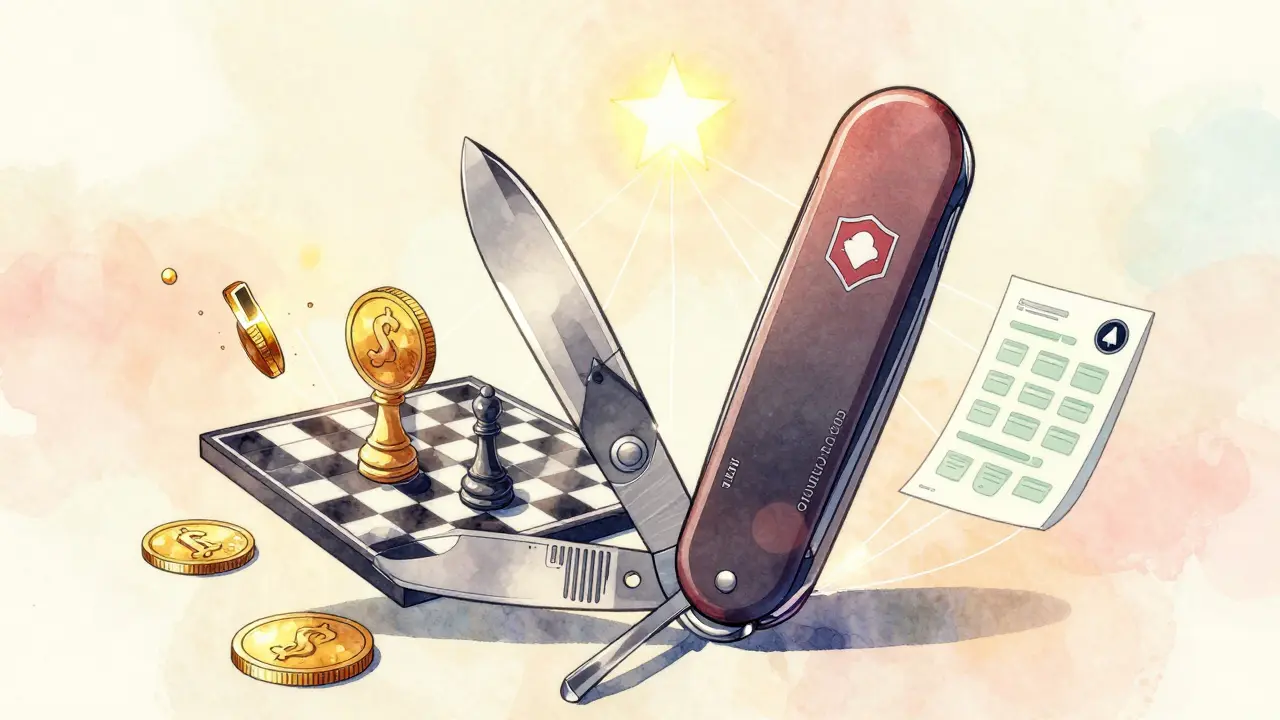
No. Payment channels are a type of state channel, but not the other way around. Payment channels only handle money transfers - like the Lightning Network on Bitcoin. State channels can handle any kind of blockchain state - games, NFTs, votes, contracts. Think of payment channels as a specialized tool for cash, and state channels as a Swiss Army knife for all kinds of digital interactions.
Can I use payment channels on Ethereum?
Yes, but it’s not common. Payment channels were designed for Bitcoin and work best there because of its simpler scripting. On Ethereum, developers usually build state channels instead - since Ethereum supports complex logic, there’s little reason to limit yourself to just payments. Still, some projects like Raiden Network tried to bring Lightning-style channels to Ethereum, but they never gained the same traction as Lightning.
Do I need to lock up my whole wallet to use a channel?
No. You only lock the amount you plan to use in the channel. For example, if you want to pay $50/month for a service, you lock $100 total - $50 each - into the channel. The rest of your crypto stays in your wallet. You can open multiple channels with different people, each with different amounts. Just don’t lock more than you’re comfortable tying up.
What happens if one person goes offline?
The channel stays open, but you can’t make new updates. If the other person tries to cheat by broadcasting an old balance, you have a dispute window - usually 24 to 72 hours - to prove you have a newer, valid state. If you don’t respond, they might get away with it. That’s why watchtowers exist. They’re automated services that monitor your channels for you and act if fraud happens.
Are state channels secure against hacking?
Yes, as long as the smart contract is well-written and participants sign every update. The security comes from cryptography, not central servers. If someone tries to submit a fake state, the contract checks the signatures. If the signature is invalid or outdated, the fraudster loses their deposit. The real risk isn’t hacking - it’s user error. Losing your private key or forgetting to monitor the channel can lead to loss.
Can I use payment channels for business invoices?
Absolutely. Many businesses use Lightning Network channels for recurring payments - like SaaS subscriptions, cloud hosting, or content licensing. Instead of paying PayPal fees every month, you open a channel and settle daily or weekly. It’s faster, cheaper, and irreversible. Some companies even auto-close channels after 30 days of inactivity to free up funds.
Do state channels work with NFTs?
Yes. State channels can lock NFTs as part of their state. For example, in a multiplayer game, players might bet NFTs as collateral. Each turn updates who owns what. Only the final ownership gets recorded on-chain. This avoids gas fees for every trade. Projects like CryptoKitties experimented with this early on, and newer games are building it into their core design.
Why aren’t state channels more popular if they’re so powerful?
Because they’re hard to build and use. Payment channels are simple: send money, close, done. State channels require managing complex state transitions, dispute logic, and user monitoring. Most users don’t want to think about signatures or dispute windows. Rollups are easier to integrate into existing apps, so they’ve gotten more attention. But as tools improve, state channels will likely become the backbone of high-frequency blockchain apps.
Bottom line: if you’re moving money, use a payment channel. If you’re moving anything else - games, NFTs, votes - use a state channel. Both solve the same problem: blockchain is too slow and expensive. But only one lets you do more than pay.
Comments (20)
Man, I’ve been using Lightning for coffee runs and it’s wild how seamless it is. No more waiting 10 minutes for a confirmation just to get my latte. I don’t even think about it anymore. It just works. Like magic, but real.
State channels are the future for gaming. Payment channels are just a stepping stone. The real innovation is moving entire game states off chain. That’s where the value is.
This is such a clear breakdown. I finally get it. Payment channels = money. State channels = everything else. Thanks for making this simple.
lightning network is lit but state channels are next level fr
I’ve been running a small SaaS and we’ve been using Lightning for monthly billing. It’s cut our fees by 90%. No chargebacks. No disputes. Just clean, instant payments. I wish more businesses knew about this.
Oh please. You’re all acting like state channels are some kind of divine revelation. They’re just glorified peer-to-peer ledgers with extra steps. And don’t even get me started on watchtowers - third-party babysitters for your crypto? That’s not decentralization, that’s just outsourcing your paranoia.
Wait - so if I’m playing a blockchain game and my phone dies, I lose my NFTs? 😳 That’s not a feature, that’s a nightmare. Who’s designing these systems like this? I’m not a blockchain engineer, I just want to play my game. Watchtowers are a band-aid on a broken leg. We need auto-recovery, not babysitters. And yes, I’m mad. 😤
While the distinction between payment and state channels is technically accurate, I believe the broader community benefits from simplified terminology. Overemphasis on semantic precision may hinder adoption. The goal is utility, not academic purity.
lightning work good. state chanel hard. i try but my phone crash. no watchtower. lose money. sad.
Y’all are missing the forest for the trees. Payment channels are the TCP/IP of crypto payments - foundational, reliable, boring. State channels are the WebSockets of blockchain: real-time, bidirectional, high-throughput. We’re not comparing cars to trucks - we’re comparing dial-up to fiber. The infrastructure shift is massive. And yeah, it’s hard. But so was SSL in ‘95. We’ll get there.
It’s interesting how we treat these technologies as tools when they’re really social contracts. The real innovation isn’t the cryptography - it’s the mutual accountability. You’re not trusting a bank. You’re trusting someone you’ve agreed to play fair with. That’s profound. And fragile. And human.
State channels enable NFT trading at scale. This is not speculative. This is technical reality. The architecture supports thousands of state transitions per second. It is not theoretical.
I must respectfully assert that the conflation of these two mechanisms is not merely an oversight - it is a systemic failure of communication within the blockchain education ecosystem. The implications for novice users are profound and potentially financially catastrophic.
WAIT - so if my phone dies I lose my NFT?!?!?!?!?!?!? I JUST BOUGHT THAT CAT FOR 5 ETH!!! NOOOOOOOO!!! 😭😭😭😭😭 WHO’S RESPONSIBLE HERE???!?!?!?!?!?!? THIS IS A SCAM!!
State channels are the only way forward. Payment channels? Cute. Like a bicycle when you could have a Tesla. I’ve been running a decentralized poker game on state channels - 200+ players, 10,000+ moves per hour. No gas. No lag. Just pure, beautiful, off-chain chaos. And yes, I’m still alive. 🤘
Let me be the one to say it: most people using these channels don’t understand the underlying cryptography. They just want to play games. That’s not innovation - it’s negligence. You’re building a house on quicksand and calling it ‘decentralized.’
So you’re telling me I have to stay awake to protect my crypto? Cool. I’ll just use PayPal. At least they don’t expect me to be a sysadmin.
The technical distinctions are clear. The practical adoption challenges remain significant. The transition from theory to user-friendly implementation requires more than innovation - it requires empathy.
Oh, so now we’re pretending that state channels are the pinnacle of blockchain scalability? How quaint. Rollups are already handling millions of transactions per second. State channels? Still in the ‘experimental prototype’ phase. The hype is louder than the tech.
omg i just opened my first lightning channel and it felt like i was magic!! 🌟💖 and i got a watchtower for my state channel and now i sleep at night!! 🛌✨