

You’ve probably seen the name Polyient Games pop up in search results or maybe even on social media. The promise sounds too good to be true: a high-tech decentralized exchange built for gamers, offering low fees and instant swaps. But here is the hard truth that most reviews won’t tell you upfront-there is no credible evidence that a "Polyient Games Decentralized Exchange" exists as a legitimate, operational financial platform.
If you are looking to trade crypto, especially if you are new to the space, this distinction matters more than anything else. Mixing up a game publisher with a financial exchange can lead to serious losses. This guide breaks down what Polyient Games actually is, why there is confusion about a "DEX," and how you can spot fake platforms trying to steal your funds.
What Is Polyient Games?
It is crucial to understand that Polyient Games is a game developer, not a financial institution. They do not offer trading pairs like BTC/USDT or ETH/DAI. They do not have an order book. They do not provide liquidity pools for swapping tokens. If you see a website claiming to be "Polyient Games DEX" where you can deposit Bitcoin or Ethereum to earn interest or trade, it is almost certainly a phishing site or a scam.
The confusion likely stems from the word "Games" combined with the buzzword "Decentralized." In the crypto world, many projects try to merge gaming with finance (GameFi). However, just because a company makes blockchain games doesn't mean they run an exchange. For example, Axie Infinity has its own token (AXS), but you don't trade AXS directly on the Axie website; you use established exchanges like Binance or Uniswap.
Why There Is No "Polyient Games DEX"
Let’s look at the facts. As of mid-2026, there is no record of Polyient Games launching a decentralized exchange. Here is why this claim is red-flagged by security experts:
- No Official Announcement: Polyient Games’ official website and verified social media channels have never announced a DEX launch.
- Domain Mismatch: Legitimate exchanges use secure, well-known domains. Fake sites often use slight variations like "polyient-games-dex.com" or "polyient-exchange.io" to trick users.
- Lack of Smart Contract Audits: Any real DEX must publish smart contract audits from firms like CertiK or Hacken. There are no such audits for a Polyient DEX because the code doesn’t exist publicly.
- Regulatory Silence: Financial exchanges face strict regulations. A major player like Polyient (backed by Koch Industries) would need to file licenses in multiple jurisdictions. No such filings exist.
This isn’t just skepticism; it’s basic due diligence. When a platform claims to be a DEX but offers no technical documentation, no GitHub repository, and no audit reports, it is designed to take money, not facilitate trades.
How Scammers Use the Polyient Name
Cybercriminals know that big names attract attention. By attaching "Polyient Games" to a fake exchange, they borrow credibility. Here is how these scams typically work:
- Fake Website Creation: Scammers build a site that looks professional, using stolen logos and images from Polyient’s actual games.
- Social Media Ads: They run targeted ads on Twitter, Telegram, or Discord, promising "exclusive early access" or "high APY yields" on the Polyient DEX.
- Wallet Connection Request: You click "Connect Wallet" to start trading. The site asks for permission to approve unlimited spending of your tokens.
- The Drain: Once you approve the transaction, the scammer’s smart contract drains your wallet of all connected assets. There is no recourse.
This is known as a "honeypot" or "wallet drainer" attack. It exploits trust in established brands. Always verify URLs. The only official Polyient domain is polyientgames.com. Anything else is suspect.

Safe Alternatives: Real Decentralized Exchanges
If you want to trade crypto without a central authority, you should use proven, audited, and widely used decentralized exchanges. These platforms have transparent code, active communities, and billions in total value locked (TVL).
| Platform | Type | Key Feature | Security Status |
|---|---|---|---|
| Uniswap | AMM (Automated Market Maker) | Largest TVL on Ethereum; open-source protocol | Audited by Trail of Bits, ConsenSys Diligence |
| PancakeSwap | AMM | Low fees on BNB Chain; popular yield farming | Audited by CertiK, PeckShield |
| Curve Finance | Stablecoin-focused AMM | Minimal slippage for stablecoin swaps | Multiple independent audits |
| dYdX | Centralized Limit Order Book (CLOB) | Advanced trading features; non-custodial options | Audited by OpenZeppelin |
These platforms are the industry standards. They allow you to swap tokens, provide liquidity, and earn rewards without handing over custody of your funds to a company. Unlike the fake Polyient DEX, these services have public repositories where anyone can inspect the code.
How to Verify Any Crypto Platform
Before connecting your wallet to any new site, follow this checklist. It takes two minutes but can save you thousands of dollars.
- Check the URL: Does it match the official brand exactly? Look for typos like "polient" instead of "polyient" or extra words like "app," "trade," or "exchange" added to the domain.
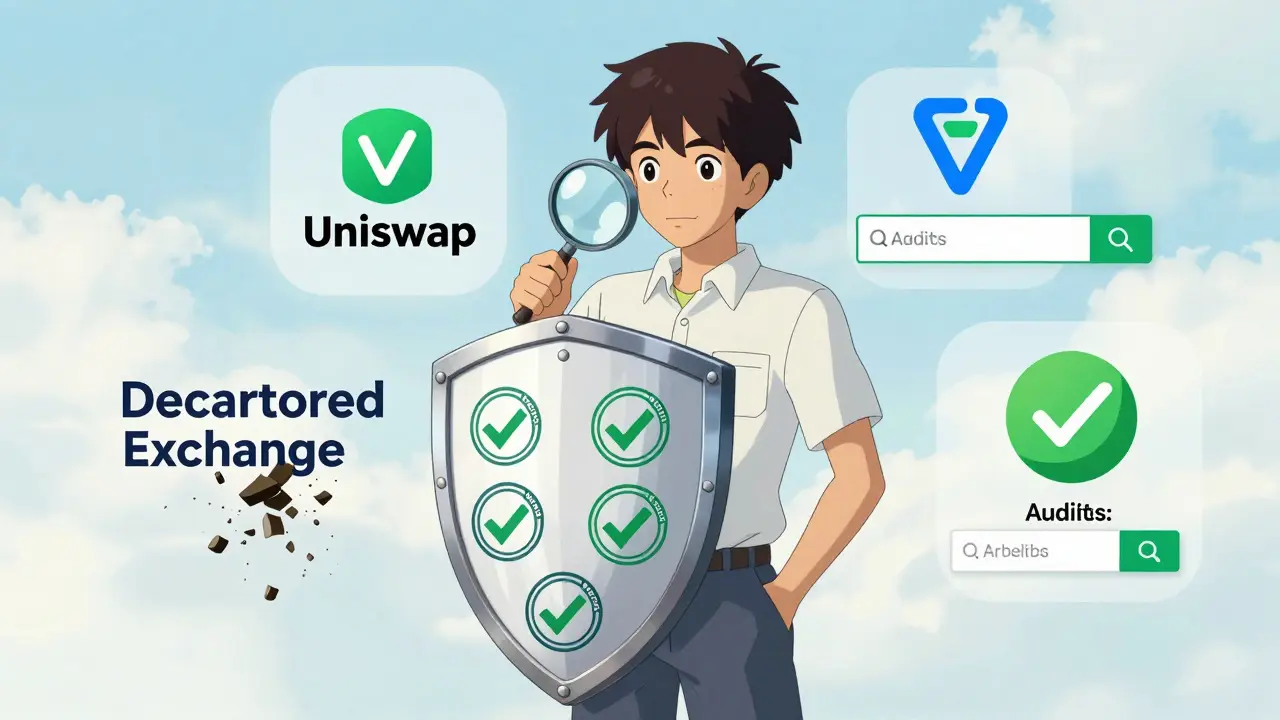
- Search for Audits: Go to the project’s website and look for a "Security" or "Audit" page. If it’s missing, walk away. Reputable firms include CertiK, Hacken, Quantstamp, and Trail of Bits.
- Verify Social Channels: Check the project’s Twitter or Discord. Are the followers real? Do they respond to questions? Or are the comments filled with bots saying "To the moon!"?
- Use Etherscan/BscScan: If the platform gives you a contract address, paste it into a block explorer. Look at the number of holders. If only one or two wallets hold most of the tokens, it’s a rug pull waiting to happen.
- Ask the Community: Post about the platform on Reddit (r/CryptoCurrency) or trusted Telegram groups. If no one has heard of it, that’s a bad sign.
Red Flags to Watch For
Scammers use psychological triggers to make you act fast. Be wary of these tactics:
- "Guaranteed Returns": No legitimate investment guarantees profit. If a DEX promises 5% daily returns, it’s a Ponzi scheme.
- Urgency: "Only 10 spots left!" or "Launch ends in 1 hour!" creates panic so you skip verification steps.
- Anonymous Teams: While some DeFi projects are anonymous, reputable ones have doxxed founders or at least verifiable team members on LinkedIn.
- Pressure to Connect Wallet First: Legitimate platforms let you browse prices and read docs before asking for wallet connection. If the first thing you see is a "Connect Wallet" button, close the tab.
What Should You Do If You Already Connected Your Wallet?
If you accidentally connected your wallet to a suspicious site, don’t panic-but act quickly.
- Revoke Permissions: Use tools like Revoke.cash or Etherscan’s Token Approval tool to remove any spending limits granted to unknown contracts.
- Move Funds: Transfer your remaining crypto to a new, clean wallet. Never reuse a compromised wallet address.
- Change Passwords: If you entered any login credentials, change them immediately across all platforms.
- Report the Site: Flag the URL with Google Safe Browsing and report it to cybersecurity authorities.
Final Thoughts on Safety in DeFi
The decentralized finance world is powerful but dangerous. Platforms like Uniswap and PancakeSwap have democratized access to trading, but they also require users to take responsibility for their own security. There is no customer support to call if you get scammed. That’s why verifying every link, reading every audit, and trusting only established brands is non-negotiable.
Polyient Games is a legitimate game studio, but it does not operate a cryptocurrency exchange. Any site claiming otherwise is fraudulent. Stick to audited, transparent protocols, and always double-check the URL before connecting your wallet. Your funds are your responsibility-protect them accordingly.
Is Polyient Games a real company?
Yes, Polyient Games is a real digital entertainment company founded in 2017. They create blockchain-based games and NFTs. However, they are not a cryptocurrency exchange and do not offer trading services.
Can I trade tokens on Polyient Games?
No. Polyient Games does not have a decentralized exchange (DEX) or any trading platform. Any website claiming to offer Polyient Games token trading is a scam.
How can I tell if a DEX is legitimate?
Legitimate DEXs have public smart contract audits from reputable firms (like CertiK or Trail of Bits), active GitHub repositories, transparent teams, and large total value locked (TVL). Always check these before connecting your wallet.
What should I do if I connected my wallet to a fake Polyient DEX?
Immediately revoke all token approvals using Revoke.cash, move your remaining funds to a new wallet, and change any passwords associated with your crypto accounts. Monitor your transactions for unauthorized activity.
Are there safe alternatives to trade crypto?
Yes. Trusted decentralized exchanges include Uniswap, PancakeSwap, Curve Finance, and dYdX. These platforms are audited, open-source, and widely used by millions of traders globally.
Why do scammers use the name Polyient Games?
Scammers use well-known brand names to gain trust. Since Polyient Games is involved in blockchain gaming, criminals create fake exchange sites to trick users into thinking they are part of the official ecosystem.
Does Polyient Games issue its own cryptocurrency?
Polyient Games may issue NFTs or in-game tokens for specific titles, but they do not have a general-purpose cryptocurrency for trading on exchanges. Be cautious of any token claiming to be the "official" Polyient coin.
Is it safe to connect my wallet to any new DEX?
Never connect your wallet to a new DEX without thorough research. Check for audits, verify the URL, and ensure the project has a strong community presence. One wrong click can drain your entire balance.
Comments (22)
Oh, please. Everyone knows Polyient is just a shell for Koch Industries to push their NFT agenda. It’s not about the games, it’s about the data harvesting and the financialization of leisure. You people are so naive thinking there’s any real innovation here, it’s just another pyramid scheme dressed up in blockchain jargon. The fact that you even need a guide to tell you this is pathetic. We should be regulating these entities out of existence rather than debating whether they’re scams or not. They are exploiting the vulnerable who think they can get rich quick. It’s morally bankrupt.
I must say that while I appreciate the thoroughness of this article, it is somewhat disheartening to see how easily people are misled by such elaborate deceptions. The distinction between a game publisher and a financial exchange is quite clear to those who take the time to read the terms of service and understand the basic mechanics of decentralized finance. It is important to maintain a respectful distance from platforms that do not provide transparent information, as doing so protects one’s own interests and contributes to a healthier digital ecosystem. One should always verify the source of information before engaging with any new platform, especially when money is involved. This is not merely a suggestion but a necessity in the current landscape.
It’s wild how many people still fall for this stuff. I’ve been watching the space since 2017 and it’s like deja vu all over again. Every cycle brings new scams wearing old masks. Just stay chill, check your audits, and don’t FOMO into anything that smells fishy. Life’s too short to stress over fake DEXs. Keep your keys safe and your mind clearer.
The semantic drift in the crypto community is truly alarming. To conflate a gaming entity with a liquidity protocol demonstrates a fundamental lack of understanding regarding smart contract architecture and tokenomics. Polyient Games operates within the realm of digital entertainment, utilizing NFTs for asset representation, whereas a DEX requires complex AMM algorithms and deep liquidity pools. This confusion suggests a broader epistemological crisis among retail investors who prioritize hype over technical due diligence. It is tedious to witness such ignorance on a daily basis.
Hey folks! Great post! :D Always good to have these reminders. Scammers are getting smarter every day, so we gotta stay sharp too! If it sounds too good to be true, it probably is! Stay safe out there! :)
i almost fell for one of these last year lol. thought i was gonna get free tokens but my wallet got drained instead. stupid me. glad i found this article before trying again. thanks for the warning!
This raises an interesting question about trust in decentralized systems. How do we build a culture where verification becomes second nature rather than an afterthought? Perhaps the solution lies in education, empowering users to understand the underlying technology so they can make informed decisions. It’s not just about avoiding scams; it’s about fostering a community that values integrity and transparency. What steps do you think we can take to achieve this?
Well, I suppose it is understandable why people might be confused; after all, the lines between gaming and finance are increasingly blurred! However, one must remain vigilant! The absence of audits is a glaring red flag! Do not ignore it! Protect your assets!
The entire narrative surrounding 'Polyient DEX' is a grotesque parody of legitimacy, a hollow shell designed to siphon hope from the desperate. These charlatans weave tales of technological marvels while their code is nothing but a trapdoor to ruin. It is a theatrical performance of fraud, where the audience pays with their life savings for the privilege of being deceived. One must dissect the illusion with surgical precision to reveal the rotting core beneath the shiny interface. Do not let the spectacle blind you to the slaughter.
This is exactly what happens when we allow unregulated foreign entities to operate without oversight. American investors deserve better than this garbage. We need strict laws to protect our citizens from these international scammers who exploit our open markets. Stop enabling them by giving them attention. Demand accountability from regulators now!
You are all missing the point entirely. This isn't just a scam, it's a test of your intelligence. If you can't figure out that Polyient isn't a DEX, you deserve to lose your money. It's natural selection in action. Weak minds get culled. Don't come crying to me when you're broke because you were too lazy to read a whitepaper.
In my experience living across different continents, I've seen similar scams pop up everywhere. It's a global issue that transcends borders. The key is to rely on local communities and trusted sources for verification. Always double-check with people you know personally if possible. Stay connected and stay safe! :)
The sheer banality of this fraud is insulting to anyone with a modicum of financial literacy. To suggest that a gaming studio would pivot to high-frequency trading infrastructure without regulatory compliance is absurd. The term 'decentralized' is being weaponized to obscure incompetence and malice. One must scrutinize the provenance of every token interaction. Engaging with unverified contracts is akin to gambling with loaded dice. It is intellectually lazy and financially reckless.
Ugh, another article telling us what we already know. Can we move on? I’m tired of reading about scams. It’s exhausting. Just block the sites and forget about it. Why do we keep talking about it? It’s drama for drama’s sake. Boring.
Great reminder everyone. Stay safe and keep learning. Small steps lead to big changes. Trust yourself.
Oh, the tragedy of it all! A world where trust is currency and yet it is so easily counterfeit! We stand at the precipice of a new era, yet we stumble blindly into traps laid by the cunning and the cruel. Let this be a wake-up call, a beacon in the fog of deception! Rise above the chaos! Verify! Validate! Survive!
Here’s a pro tip: use Revoke.cash regularly. It’s a game-changer for security. I’ve saved myself multiple times by checking approvals. Don’t skip this step! Your future self will thank you. Stay proactive, not reactive! 💪🚀
I honestly cannot believe people still connect their wallets without checking the URL first 🤦♀️ It’s literally right there in front of you! Use common sense! And for heaven’s sake, stop clicking ads from random Telegram groups! 🙄
its funny how every scam follows the same script. promise riches then disappear. we should learn from history. dont repeat mistakes. stay alert.
Look, I get the frustration, but attacking each other doesn’t help. We need to focus on solutions, not blame. Education is key. Let’s share resources and help each other stay safe. Unity is strength. Let’s build a safer community together. No aggression needed, just support.
Hey guys, just wanted to add that using hardware wallets adds an extra layer of security. Even if you click a bad link, your private keys never leave the device. Highly recommend Trezor or Ledger. Simple setup, huge peace of mind. Cheers!
The lack of due diligence displayed here is astounding!!! One must ALWAYS verify the smart contract address against official repositories!!! Failure to do so is negligence!!! Protect your portfolio!!! Do not be complacent!!!