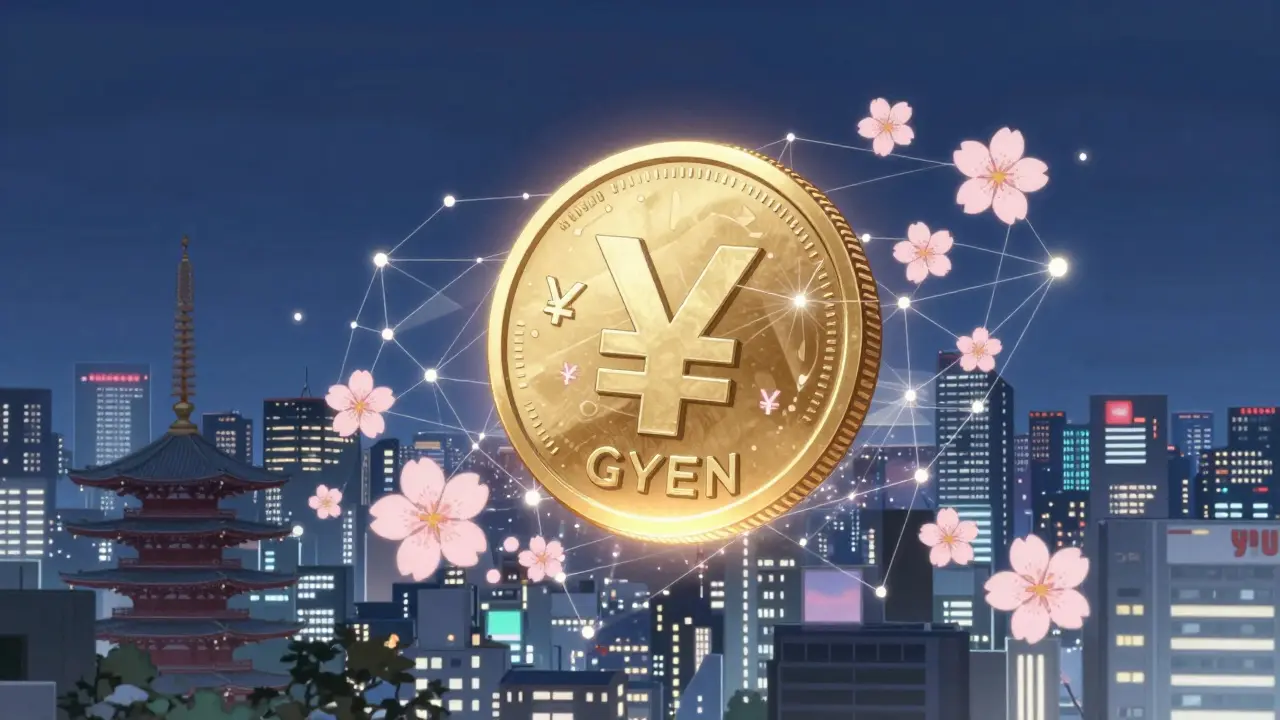
GMO Trust GYEN: What It Is, How It Works, and Why It Matters
When you hear GMO Trust GYEN, a digital token issued by Japan’s GMO Internet Group that’s fully backed 1:1 by Japanese yen. Also known as GYEN, it’s not another speculative crypto—it’s a bridge between traditional finance and blockchain, built for real-world use. Unlike most stablecoins tied to the US dollar, GYEN is pegged to the Japanese yen, making it the only regulated, institutional-grade JPY-backed token on the market. It’s not meant to be traded for quick profits. It’s meant to move money—fast, cheap, and transparently—across borders and systems.
GYEN runs on the Ethereum blockchain and is issued by GMO Trust, a licensed financial services subsidiary of GMO Internet Group, regulated by Japan’s Financial Services Agency. This isn’t some anonymous team in a basement—it’s a publicly traded Japanese company with over 20 years in tech and finance. That’s why banks, exchanges, and institutional traders in Japan and beyond use GYEN for settlement, remittances, and liquidity. It’s backed by real cash held in Japanese bank accounts, audited monthly, and fully redeemable for yen at any time. Compare that to other stablecoins with murky reserves or opaque audits, and you see why GYEN stands out. The token is also compatible with major DeFi protocols and wallets, so you can use it for lending, staking, or trading without leaving the blockchain.
Japan’s financial regulators have been clear: digital yen and stablecoins need to be safe, transparent, and regulated. GYEN was built to meet those standards from day one. It’s not a gamble. It’s a tool. And while most crypto projects chase hype, GYEN focuses on utility—helping businesses move yen globally without waiting days for bank wires or paying high fees. You’ll find it used in crypto exchanges operating in Japan, in cross-border payment platforms, and even in some merchant payment systems.
That’s why the posts below cover real-world cases: how GYEN fits into Japan’s broader crypto strategy, how it compares to other yen-backed tokens, and why institutions trust it over riskier alternatives. You’ll also see how it connects to other regulated stablecoins like JPYC and how it differs from unbacked or algorithmic tokens that collapsed in 2022. This isn’t about speculation. It’s about understanding what happens when traditional finance meets blockchain—and does it right.