
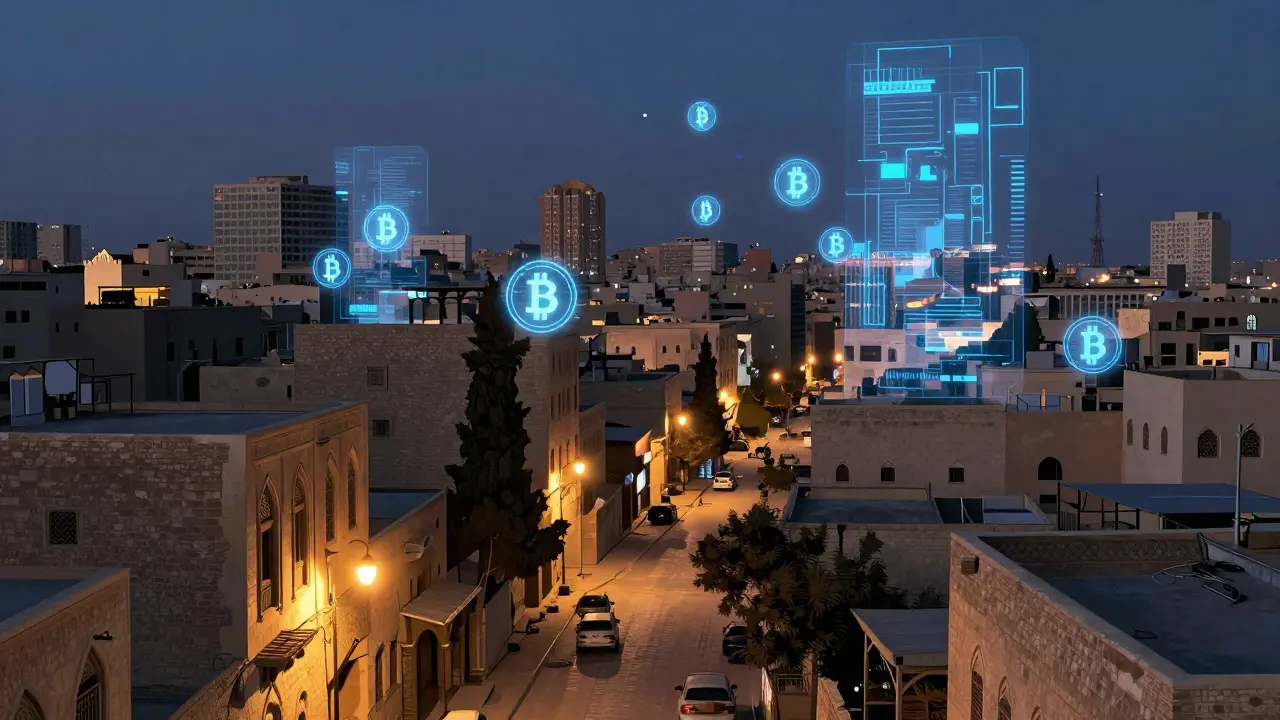
The situation around cryptocurrency in Syria has shifted dramatically over the last year, but it hasn't become easy for anyone involved. Even though the United States lifted most major economic restrictions in mid-2025, using digital assets there remains a high-wire act filled with hidden traps. You might think the news of sanctions relief meant instant freedom to trade, buy, and sell, but the reality on the ground tells a different story. Many people expected a clean slate, yet regulators and tech companies still face a maze of red tape.
To understand where things stand today, you need to look at exactly what changed and, more importantly, what stayed the same. The headline-grabbing announcement came in June 2025 when President Trump issued Executive Order 14312. This document officially revoked the comprehensive sanctions that had choked Syria's economy for two decades. On paper, it looked like a green light for financial normalization. By July 1, 2025, the U.S. Department of the Treasury formally removed the Syrian Sanctions Regulations from the federal code. For many, this seemed like the moment everything would restart.
The Reality of Residual Sanctions
However, wiping out broad sanctions didn't mean the country was completely cleared for business. A significant list of restrictions survived the overhaul. While the Office of Foreign Assets Control (OFAC) removed the blanket ban, they kept specific designations active. There are currently 139 individuals and entities tied to the former Assad regime that remain blocked under Executive Order 13894. If your crypto transaction accidentally touches one of these names, the money gets frozen instantly.
This creates a unique compliance environment for exchanges and payment processors. Unlike typical markets where rules are static, here the rules change depending on who is on the other end of the transfer. Financial institutions must screen every transaction against multiple lists simultaneously. The complexity spikes because of how deeply these old ties are embedded in the local banking sector. Even if a user seems clean, their bank account might be linked to a sanctioned entity indirectly. The risk management systems for platforms like Binance have to be incredibly sensitive to avoid accidental penalties.
No Domestic Crypto Laws
Beyond U.S. pressure, the biggest hurdle is actually inside Syria itself. Despite years of turmoil, the country never established formal laws legalizing or banning blockchain technology. This absence of legislation creates a vacuum where nothing is explicitly allowed, and nothing is explicitly forbidden, leading to chaos for businesses. In a regulated market, companies follow clear guidelines. In Syria, they operate in a gray zone where traditional anti-money laundering rules apply but lack specific crypto provisions.
This regulatory silence forces international firms to take matters into their own hands. Most global platforms implement stricter internal controls than the law requires. They know that operating without clear local statutes makes them vulnerable to sudden crackdowns or confusion. Consequently, they demand heavy documentation from Syrian users. This process often slows down transactions significantly. Users report verification delays averaging 47 hours longer than in non-sanctioned jurisdictions. It turns a usually seamless digital trade into a bureaucratic nightmare requiring constant patience.

Banking Bridges and Fiat Gaps
Getting cryptocurrency is one thing; converting it to local currency for rent or groceries is another. The removal of sanctions theoretically allowed the Central Bank of Syria to open accounts with U.S. banks again. In fact, Financial Crimes Enforcement Network granted specific relief in May 2025 allowing U.S. banks to set correspondent accounts for the Commercial Bank of Syria. This was meant to create an "on-ramp" for cash conversions.
In practice, only three of Syria's twelve major commercial banks have established relationships with international payment processors so far. Most of the country's banking infrastructure remains disconnected from the global system due to legacy compliance fears. Banks are notoriously cautious. Even with sanctions relief, they worry about secondary liability if funds move through questionable channels. As a result, many users rely on peer-to-peer networks to bridge the gap between digital coins and physical cash. These informal methods carry elevated risks. Surveys from community forums suggest that about 22% of users attempting P2P transfers lost funds due to scams or failed transactions.
The Caesar Act Waiver Impact
You also need to consider the temporary nature of some legal changes. The Department of State issued a 180-day waiver of sanctions restrictions under Section 7412 of the Caesar Syria Civil Protection Act of 2019. While this provides immediate breathing room for reconstruction efforts, it introduces uncertainty for long-term investment. Companies hesitate to build permanent infrastructure when legal protections are time-limited.
The waiver means the government doesn't face immediate punitive action for certain imports needed for rebuilding, but it's not a permanent guarantee. Investors watching Syria's crypto adoption rates worry that this window could close again without warning. Because the waiver focuses on humanitarian needs rather than financial freedom, crypto operations don't get explicit protection. This leaves exchanges guessing whether their services count as essential infrastructure or prohibited activity in six months. Until Congress acts to amend or extend these waivers, everyone operates on borrowed time.

Practical User Experiences
Despite the friction, millions of citizens are engaging with crypto. Estimates from blockchain analytics suggest around 1.2 million Syrians have interacted with digital assets since the July 2025 relief. This number represents roughly 6% of the population. Most people aren't day-trading for profit; they are using crypto to send remittances home or pay for cross-border goods. It serves as a survival tool during economic instability.
If you are a Syrian user accessing platforms now, expect strict limits. Reports indicate that transaction caps on major exchanges are typically set at $500 per move. Accounts frequently freeze during identity checks. Customer support reviews reflect this frustration, with ratings averaging 2.8 out of 5 stars specifically regarding verification delays. However, for those navigating successfully, the benefits are undeniable. It bypasses hyperinflation locally and keeps purchasing power globally. Just remember, convenience comes with a price tag in terms of time spent proving you are who you say you are.
Business Compliance Roadmap
For businesses looking to enter this market, preparation takes much longer than usual. Setting up compliant operations requires about 14 to 16 weeks of assessment, compared to 6-8 weeks elsewhere. You have to master provisions of OFAC's General License 24 and 25, which authorize specific conduct despite broader restrictions. This includes handling technologies listed on the Commerce Control List, such as advanced mining hardware.
Export controls remain tight on critical tech. The Bureau of Industry and Security published a final rule in September 2025 that permits many consumer items to be exported but blocks dual-use military technologies. Since crypto mining equipment can serve both civilian and military purposes, shipping servers or chips to Syria requires specific authorization. Firms must maintain audit-ready records of every sale. Without proper documentation, a single flagged shipment could trigger re-imposition of harsher sanctions on the company.
Can Syrian citizens use Binance after the 2025 sanctions relief?
Yes, citizens can access Binance as of July 1, 2025, following the cessation of comprehensive sanctions. However, users must undergo enhanced identity verification and may face transaction caps, typically limited to $500 per transaction due to compliance requirements.
Are all US sanctions on Syria completely gone?
Not entirely. While general economic sanctions were revoked via Executive Order 14312, 139 specific individuals and entities associated with the previous regime remain sanctioned under Executive Order 13894. Transactions involving these entities are strictly prohibited.
Does Syria have its own cryptocurrency regulations?
No. Syria currently lacks specific domestic laws that explicitly legalize or ban cryptocurrency usage. This creates a regulatory vacuum where companies rely on traditional anti-money laundering frameworks instead of crypto-specific statutes.
How does the Caesar Act affect crypto investments?
The Department of State issued a 180-day waiver under Section 7412 of the Caesar Syria Civil Protection Act. This offers temporary relief but creates uncertainty for long-term investment planning, as the waiver is subject to renewal and does not provide permanent protection.
Can Syrian banks connect with US financial institutions?
Limited connectivity exists. The Commercial Bank of Syria was authorized to open correspondent accounts with U.S. banks in May 2025, but only three major commercial banks in Syria have successfully established relationships with international payment processors to date.
Comments (16)
The whole situation is just a mess waiting to happen again soon enough.
People forget that compliance overhead eats profits before transactions even clear.
Regulatory gray zones favor large institutions that can afford legal teams on retainer.
Small players get crushed when a random sanction flag freezes assets unexpectedly.
You see the headline numbers but not the hidden costs buried in verification workflows.
you dont get that the peple here sufer while you talk polocy
i bet you live far away from the real pain
why dont you focus on the human cost instead of profits
Sanctions relief sure sounds nice in press releases though.
It always feels like they give a ribbon cutting ceremony on a road that leads nowhere fast.
I guess everyone wants to be a hero when the paperwork finally stops burning.
It is tough to stay hopeful when the rules keep shifting under your feet.
I know people who lost weeks of work just because a bank flagged a routine transfer.
We need to remember that trust takes years to build but only minutes to lose.
Everyone involved deserves a bit more patience during this transition period.
This is absolute chaos for families trying to send money home.
They tell you things are normal but then your cash gets stuck for days.
It feels like playing a game where nobody gives you the rulebook.
I just want to feed my kids without risking everything online.
😐 The reality is grim for many users navigating this minefield.
📉 Exchange rates fluctuate wildly when compliance kicks in mid-day.
🚀 Hype is high but actual utility is still blocked by old laws.
⚠️ Everyone should check their local status before sending funds anywhere.
it hurts so much seeing everyone stressed out about money matters :(
they just want stability like the rest of us right ? no they cant :(
i feel really bad knowing how hard it is to verify identity online
Financial freedom is a garden that grows slowly in rocky soil.
Even with new laws the weeds of bureaucracy still choke the flowers.
We must cultivate patience while waiting for clearer pathways to open up.
Trust is the fertilizer that eventually makes this landscape bloom again.
There is definitely progress happening even if it looks small from here.
Three banks connecting internationally is a solid foundation for growth.
People are finding ways to adapt and trade despite the hurdles.
Keep believing that better regulations will come soon enough.
You can overcome these challenges by planning ahead of the deadlines.
Make sure your documents are ready before you attempt a transfer.
Patience and preparation are the keys to avoiding unnecessary freezes.
Stay focused on the long term benefits of using digital assets.
Oh yes freedom looks great on paper until you actually try to spend it.
Bureaucracy loves to turn simple transactions into complex investigations.
Maybe next year the magic wand will fix the invisible barriers.
The agencies are definitely watching your every move on the blockchain.
Privacy is dead even if they claim otherwise publicly.
I bet they track everything regardless of the waiver status.
Just do what you want and hope they dont notice you exist.
The regulatory framework remains incredibly convoluted for foreign investors seeking entry.
OFAC guidelines still restrict movement without explicit authorization letters for every hardware shipment.
You cannot simply ignore the Commerce Control List when importing mining rigs into the region.
Penalties for non-compliance involve immediate asset freezes and potential secondary sanctions on the exporter.
General License 24 helps slightly but does not cover everything needed for full operational capacity.
Dual-use technology clauses are interpreted broadly by customs officials during any inspection process.
Many firms hesitate to deploy infrastructure until the Caesar Act waiver status becomes permanent legislation.
Risk mitigation strategies require dedicated legal teams stationed locally to navigate daily updates.
Traditional banking channels remain too slow for the rapid pace of cryptocurrency settlement cycles.
Correspondent accounts offer stability yet three banks do not connect fully with U.S. systems currently.
Peer-to-peer networks carry significant fraud risks that institutional players refuse to embrace openly.
Verification delays average forty seven hours longer than standard international markets suggest today.
Companies must maintain audit-ready records for every single transaction involving Syrian counterparties.
Export controls on critical tech prevent easy scaling of computational power required for secure nodes.
Without proper documentation a single flagged shipment could trigger re-imposition of harsher sanctions globally.
This creates an environment where innovation stalls due to fear rather than lack of technical capability.
One must consider the broader implications of such detailed compliance requirements.
Legal certainty drives investment more than optimistic market projections ever could.
Stability in regulation creates a safer harbor for all stakeholders involved.
We should respect the process even when it feels frustratingly slow.
The situation is very difficult for everyone involved.
Rules change often and cause confusion.
We need more time to understand the new norms.
Hope things improve quickly for all parties.