

Smart contracts aren’t just code on a blockchain anymore. By 2026, they’re the invisible engine behind a new kind of digital economy-one where agreements happen automatically, trust is built into the system, and intermediaries like banks, lawyers, or brokers are no longer needed. If you’ve ever used a DeFi wallet to swap tokens, bought an NFT, or tracked a shipment through a blockchain-based supply chain, you’ve already interacted with a smart contract. But what’s coming next? The future isn’t about making them faster or cheaper-it’s about making them smarter, more connected, and deeply woven into how we live, work, and trade.
From Simple Automation to AI-Powered Decisions
Early smart contracts were basic: if X happens, then Y executes. Send 1 ETH, receive 100 tokens. Simple. Reliable. But limited. Today’s smart contracts don’t just react-they predict. Thanks to AI integration, modern contracts can now analyze live data streams: weather patterns affecting crop insurance payouts, real-time stock prices triggering automated trades, or hospital patient vitals releasing funds for treatment only if conditions are met. This isn’t science fiction. Platforms like Ocean Protocol already let AI models train on encrypted, decentralized data, with smart contracts managing who pays for access and how usage is logged. The result? More intelligent, context-aware agreements that adapt in real time instead of following rigid if-then rules.Breaking Down the Blockchain Walls
One of the biggest headaches in blockchain has always been fragmentation. Ethereum does one thing well. Solana is fast. Polygon is cheap. But if your smart contract lives on Ethereum, it can’t talk to a supply chain system running on Solana. That’s changing. Cross-chain interoperability is no longer optional-it’s mandatory. Protocols like LayerZero and Chainlink CCIP now let smart contracts on one chain trigger actions on another, securely and without bridges. Imagine a loan agreement on a DeFi platform that automatically checks your identity on a government-backed blockchain (like the EU’s EBSI), verifies your credit history on a private chain, and then releases funds-all in one seamless flow. This is the new standard. The days of siloed blockchains are over.Why Private Blockchains Are Taking Over
Public blockchains are great for transparency, but businesses need privacy. That’s why private blockchains are growing fastest. Companies in healthcare, finance, and logistics aren’t using Ethereum’s public ledger-they’re using permissioned networks where only approved parties can view or validate transactions. These networks offer the same security and immutability as public chains, but with faster speeds, lower fees, and full control over who accesses what data. A hospital might use a private chain to share patient records between clinics, with smart contracts ensuring only authorized staff can access specific files. The result? Compliance with GDPR and HIPAA without sacrificing automation. Private chains aren’t the opposite of decentralization-they’re its practical evolution for enterprise use.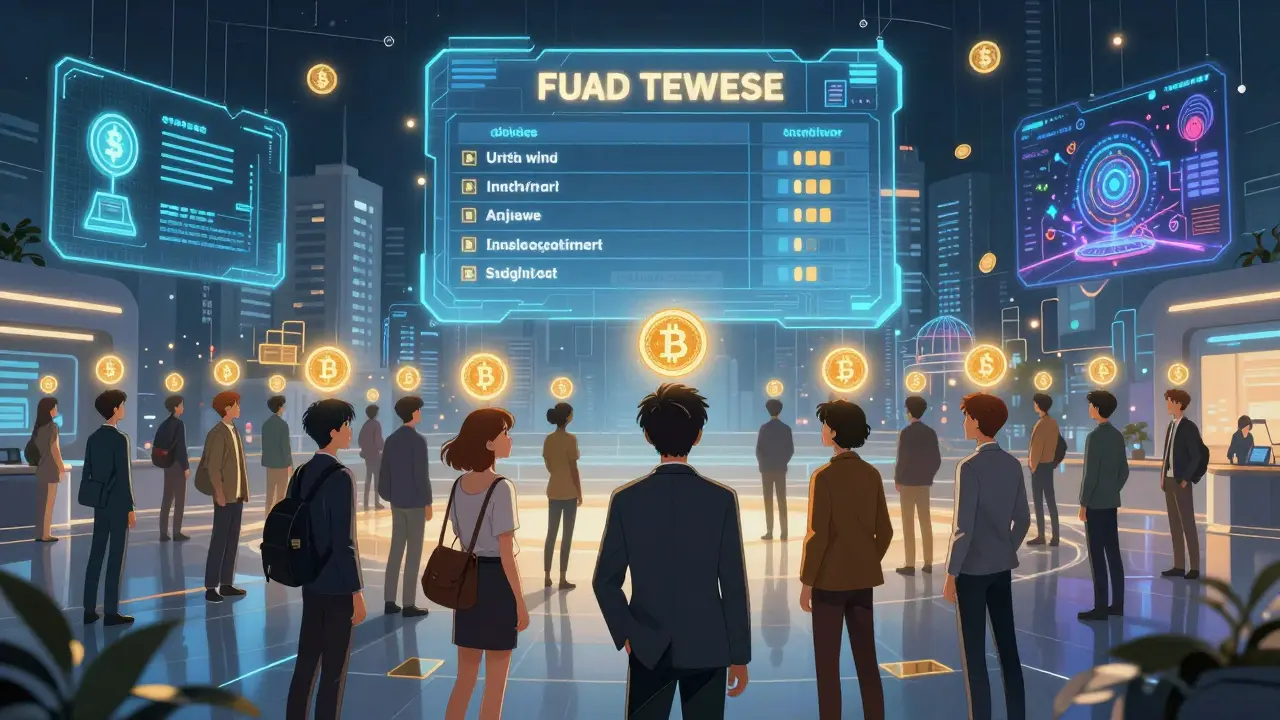
DAOs: The New Way Organizations Run
If you think companies are run by CEOs and boardrooms, think again. In 2024, DAOs (Decentralized Autonomous Organizations) captured the largest share of the smart contracts market. These aren’t just crypto clubs-they’re fully functional organizations governed by code. Voting power is tied to token holdings. Budgets are released automatically when proposals pass. Payroll is handled through smart contracts that pay contributors in crypto or stablecoins the moment deliverables are verified. No HR department. No middle managers. Just transparent rules enforced by code. Companies like Gitcoin and Bankless use DAOs to manage global teams. Even governments are testing them: Estonia’s e-residency program now lets digital nomads vote on local policy using blockchain-based DAOs. This is the future of work: flat, transparent, and automated.Identity, Not Just Transactions
Smart contracts are no longer just about moving money. They’re about proving who you are. Blockchain-based digital identity is exploding. Worldcoin’s proof-of-personhood system uses iris scans to verify you’re a real human, then stores that verification on-chain. Polygon ID lets you prove you’re a university graduate without revealing your full transcript-using zero-knowledge proofs. The EU’s EBSI lets you carry your academic credentials across borders, verified instantly. Smart contracts now manage these identities, releasing access to services only when the right proof is presented. Need to rent an apartment? Show your verified ID and income history-no background check needed. Need to claim a government benefit? Prove your residency on-chain. This isn’t about replacing IDs-it’s about making them portable, secure, and under your control.
Where It All Comes Together: Healthcare, Supply Chains, and Gaming
In healthcare, smart contracts are automating clinical trials. A patient’s anonymized data is shared with researchers via a private chain. Smart contracts release payments to participants only after they complete milestones. No middleman. No data leaks. In supply chains, a shipment from Rotterdam to Shanghai triggers a chain of automated actions: customs clearance when documents are verified, payment to the carrier when the container is scanned, and inventory update when it hits the warehouse-all without human input. And in gaming? Players now own in-game assets as NFTs. Smart contracts handle trades, royalties for creators, and even in-game economies where players earn tokens by playing, which can be converted to fiat or used to buy real-world goods. These aren’t isolated experiments. They’re becoming the norm.The Road Ahead: Scalability, Security, and Standards
The biggest barriers left aren’t technical-they’re adoption and trust. Developers still struggle with smart contract security. A single bug can cost millions. That’s why auditing tools like CertiK and OpenZeppelin are now standard. Gas fees are dropping thanks to ZK-rollups, which bundle hundreds of transactions into one on-chain proof, slashing costs by 90%. But the real challenge? Legal recognition. Can a smart contract hold up in court? Some jurisdictions, like Wyoming and Singapore, now recognize them as legally binding. Others are still catching up. The next five years will see more governments creating frameworks for blockchain-based agreements. Until then, the best practice is clear: use well-audited code, document everything, and always have a human override for critical decisions.What This Means for You
Whether you’re a developer, a business owner, or just someone using crypto apps, this shift matters. If you’re building something, you’re no longer just coding-you’re designing systems of trust. If you’re using dApps, you’re no longer just transacting-you’re participating in automated economies. The tools are here: AI-enhanced contracts, cross-chain bridges, private blockchains, self-sovereign identity, and DAO governance. The question isn’t whether smart contracts will change the future. It’s whether you’ll be building them, using them, or watching from the sidelines.Can smart contracts be changed after they’re deployed?
No, once a smart contract is deployed on a blockchain, its code is immutable. You can’t edit it. But you can design upgradeable contracts using proxy patterns-where a front-end contract points to a backend logic contract that can be swapped out. This is how most major DeFi protocols handle updates. Still, even upgradeable contracts require community approval and are subject to audit. Never assume a contract is fully secure just because it’s upgradeable.
Are smart contracts legal?
In many places, yes-but it depends. Countries like the U.S. (Wyoming), Switzerland, Singapore, and Japan have passed laws recognizing smart contracts as legally binding agreements. The EU is moving toward similar frameworks through its Digital Operational Resilience Act (DORA). However, in most jurisdictions, legal enforceability still hinges on whether the contract meets traditional requirements: offer, acceptance, consideration, and intention to create legal relations. Smart contracts automate execution, but courts still need to interpret intent. Always pair smart contracts with clear legal documentation.
Do I need to know how to code to use smart contracts?
No. Most users interact with smart contracts through apps like MetaMask, Uniswap, or OpenSea-you don’t need to write a line of code. But if you’re building a dApp, managing a DAO, or deploying your own contract, then yes. Solidity (for Ethereum) and Rust (for Solana) are the main languages. Tools like Hardhat and Foundry help developers test and deploy contracts without deep blockchain expertise. For non-developers, the barrier is low. For builders, it’s steep-and that’s where the opportunity lies.
What’s the biggest risk with smart contracts today?
The biggest risk isn’t hacking-it’s bad design. Many smart contracts fail because they’re poorly written, not because they’re attacked. A flawed logic gate, an unchecked input, or an untested edge case can lead to massive losses. The 2022 Wormhole bridge hack, which lost $325 million, happened because of a missing validation check. Audits are now mandatory for any serious project. Use reputable firms like Quantstamp or Trail of Bits. Never deploy without one. And always test on a testnet first.
How long does it take to implement a smart contract system?
For simple use cases-like a token sale or basic NFT minting-it can take 4-8 weeks. For enterprise-grade systems-like a supply chain with IoT integration, identity verification, and cross-chain triggers-it takes 3-6 months. The timeline depends on complexity, team size, and how much existing infrastructure you’re integrating with. Most organizations underestimate the need for ongoing maintenance. Smart contracts evolve. Your system needs updates, audits, and monitoring just like any other software.
Comments (15)