

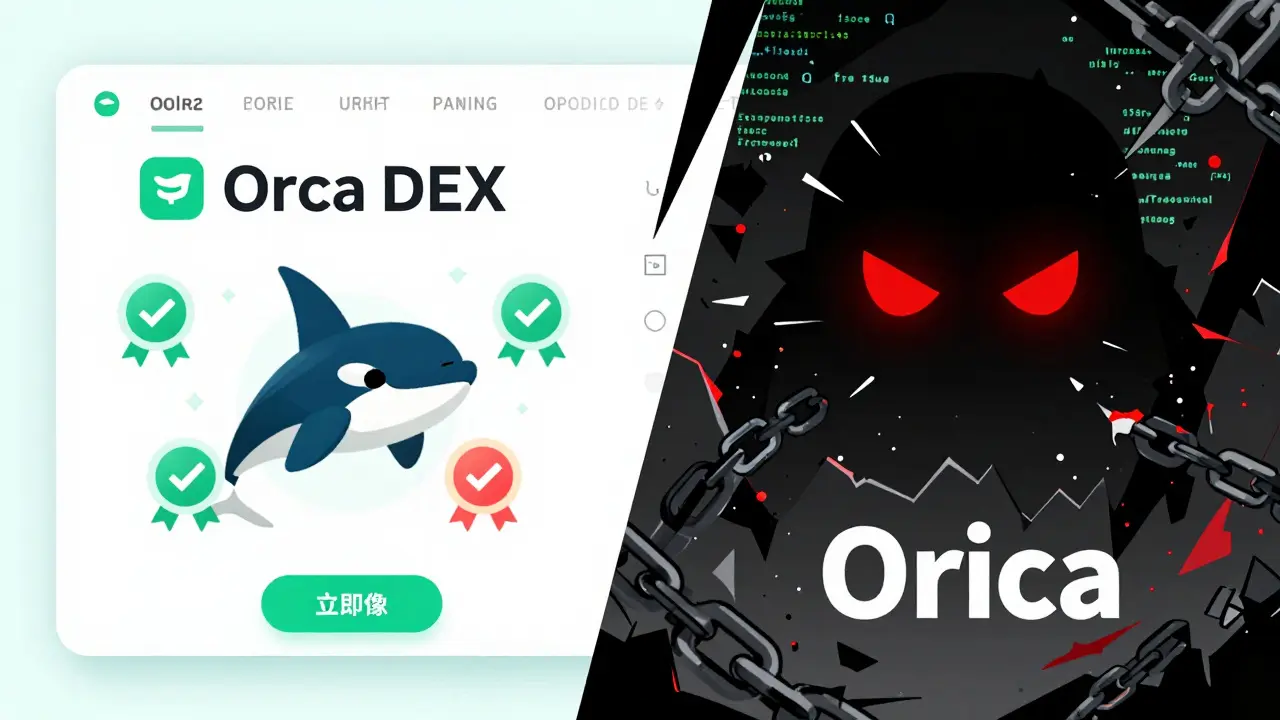
Have you seen the buzz about an Orica token airdrop? If you are hunting for free crypto, this sounds like the golden ticket. But before you connect your wallet, stop. There is a critical detail most people miss: "Orica" is likely a typo or a deliberate trap targeting fans of the legitimate Orca DEX, which is a leading decentralized exchange on the Solana blockchain. As of June 2026, there is no official project called "Orica" running a verified airdrop. This guide cuts through the noise to explain what is real, what is fake, and how to protect your assets from scams that mimic established brands.
The Confusion: Orca vs. Orica
The root of the confusion lies in the similarity between two names. On one side, you have Orca, which is a user-friendly automated market maker (AMM) built on Solana. Launched in 2021, Orca became famous for its clean interface and low fees. It distributed its native ORCA token to early liquidity providers and community members, setting a high standard for fair distribution. On the other side, you have "Orica." This name does not exist in any major cryptocurrency database, smart contract registry, or official announcement from the Orca team.
Scammers often use slight misspellings of popular projects to trick users. This technique is known as "typosquatting." If you search for "Orica token," you might find social media posts, Telegram groups, or websites claiming to offer free tokens. These are almost certainly fraudulent. They rely on the trust you already have in the real Orca brand. Always double-check the spelling. The correct name is Orca, not Orica.
Legitimate Orca Ecosystem Opportunities
While "Orica" is a red flag, the actual Orca ecosystem has offered legitimate opportunities in the past. Understanding these helps you distinguish between real projects and fakes. In July 2025, a related project called Orca DeFi AI, which is an AI-powered assistant for crypto education and trading insights on Solana, conducted an airdrop. This was not for a token called "Orica," but for ORCAI tokens. The campaign targeted top holders of URS tokens and distributed rewards automatically to eligible Solana wallets. This event had clear documentation, a defined timeline (July 11-20, 2025), and transparent criteria.
Another example is the original ORCA token distribution in August 2021. Early contributors who provided liquidity received a share of the supply. This was a retroactive reward for supporting the protocol during its infancy. These events were announced on official channels, such as the Orca Discord and Twitter account. They never asked users to send money first or reveal private keys. If an "Orica" airdrop asks for either of these, it is a scam.
How to Spot Fake Airdrops
Fake airdrops are sophisticated. They create professional-looking websites, hire influencers to promote them, and even mint tokens on blockchains to look legitimate. Here is how to identify them:
- Check the Source: Does the official Orca website or Twitter account mention the "Orica" airdrop? If not, assume it is fake. Official announcements are always pinned or widely shared by the core team.
- Verify the Contract: Use a blockchain explorer like Solscan. Look up the token address provided by the "Orica" promoters. Check if the contract is verified. Often, scam tokens have unlimited minting authority, meaning the creator can print infinite tokens and drain your wallet.
- No Private Keys Ever: Legitimate airdrops never ask for your seed phrase or private key. If a site asks you to enter these details to "claim" tokens, close the tab immediately. This is the fastest way to lose all your crypto.
- Gas Fees vs. Upfront Payments: You may need to pay small network fees (gas) to interact with a legitimate airdrop claim page. However, if they ask you to send SOL or USDC to a specific wallet address to "unlock" your reward, it is a scam. Real airdrops are free; you only pay the blockchain for the transaction, not the project.
The Risk of Connecting Your Wallet
Many fake airdrop sites require you to connect your wallet, such as Phantom or Solflare, to verify eligibility. Once connected, malicious scripts can scan your portfolio. If you hold valuable NFTs or tokens, the scammer might target those next. Worse, some malicious contracts allow the attacker to approve unlimited spending of your assets. This means they can transfer your funds out without further permission. To mitigate this risk, use a burner wallet-a separate wallet with no significant funds-for interacting with unverified protocols. Never connect your main vault to suspicious sites.
Real Solana Airdrop Strategies for 2026
If you are looking for legitimate ways to earn free crypto on Solana, focus on established ecosystems. Projects like Jupiter, Jito, and Pyth Network have run successful airdrops in recent years. The common thread? They rewarded active users who helped secure and improve the network. For example, Jito rewarded users who used its MEV protection tools. Pyth rewarded validators and data consumers. To position yourself for future opportunities:
- Provide Liquidity: Add liquidity to reputable DEXs like Orca, Raydium, or Jupiter. This supports the ecosystem and often qualifies you for governance token distributions.
- Use New Protocols: Try out new lending platforms, bridges, or NFT marketplaces when they launch. Early adopters are frequently rewarded.
- Stay Active: Regularly swap tokens, stake your SOL, and participate in governance votes. Consistency matters more than one-off actions.
- Follow Official Channels: Join the Discord servers and follow the Twitter accounts of projects you use. Announcements happen there first.
Comparison: Real Orca Events vs. Fake Orica Claims
| Feature | Real Orca / Orca Ecosystem | Fake "Orica" Airdrop |
|---|---|---|
| Official Announcement | Yes, on X/Twitter and Discord | No, only on random Telegram groups |
| Token Name | ORCA, ORCAI, URS | ORI, Orica, ORC |
| Cost to Claim | Only network gas fees | Often asks for upfront payment or private keys |
| Smart Contract | Verified on Solscan, audited | Unverified, hidden owner privileges |
| Team Identity | Public, doxxed founders | Anonymous, no LinkedIn profiles |
What to Do If You Already Connected
If you accidentally connected your wallet to a suspicious "Orica" site, act quickly. First, revoke any token approvals. Tools like Revoke.cash or Solana-specific revocation tools can help you cancel permissions granted to malicious contracts. Second, monitor your wallet for unauthorized transactions. If you see any, move your remaining assets to a new wallet with a fresh seed phrase immediately. Change your password and enable two-factor authentication on any associated accounts. Reporting the scam to the platform where you found the link can also help prevent others from falling victim.
Conclusion: Stay Safe and Skeptical
The crypto space moves fast, and scammers are faster. The "Orica token airdrop" is a prime example of how easily confusion can be exploited. By sticking to verified sources, understanding the difference between Orca and imitators, and practicing good security hygiene, you can enjoy the benefits of DeFi without the risks. Remember, if it sounds too good to be true, it probably is. Focus on building genuine value in the ecosystem, and the rewards will follow naturally.
Is the Orica token airdrop real?
No, there is no official "Orica" token airdrop. It is likely a scam mimicking the legitimate Orca DEX project on Solana. Always verify information through official Orca channels.
What is the difference between Orca and Orica?
Orca is a well-known decentralized exchange on Solana with a verified team and history. "Orica" appears to be a misspelling or a fraudulent project using a similar name to deceive users. There is no legitimate connection between the two.
How can I verify if a crypto airdrop is legitimate?
Check for official announcements on the project's verified social media accounts. Verify the smart contract on a blockchain explorer like Solscan. Ensure the team is public and doxxed. Never share your private keys or seed phrase.
Did Orca ever have an airdrop?
Yes, Orca distributed its ORCA token to early liquidity providers and community members in 2021. Additionally, related projects like Orca DeFi AI have conducted smaller, documented airdrops for specific token holders.
What should I do if I connected my wallet to a fake airdrop site?
Immediately revoke all token approvals using a tool like Revoke.cash. Monitor your wallet for unauthorized transactions. Move your assets to a new, secure wallet with a fresh seed phrase. Report the scam to relevant platforms.
Are there any current legitimate Solana airdrops in 2026?
While specific airdrops change frequently, legitimate opportunities usually come from active participation in established protocols like Jupiter, Jito, or Pyth. Always research projects thoroughly and avoid anything promising guaranteed returns without effort.
Why do scammers use names similar to real projects?
This tactic, called typosquatting, exploits user trust and confusion. By using a name that looks like a popular project, scammers increase the likelihood that victims will overlook warning signs and engage with the fraudulent site.