

Imagine trying to buy a coffee with Bitcoin in Taipei. Sounds simple, right? Wrong. In Taiwan, you can own cryptocurrency, but you cannot easily use your local bank account to move money into or out of it without jumping through regulatory hoops. This is the reality of Taiwan's selective banking crypto restrictions. The Financial Supervisory Commission (FSC) has drawn a hard line between traditional finance and digital assets, creating a unique ecosystem where ownership is legal, but banking integration is severely limited.
If you are an investor, a trader, or just curious about how Asia’s tech hub handles digital money, understanding these rules is critical. It is not just about compliance; it affects how you fund your trades, which exchanges you can use, and even whether you get paid by credit card. Let’s break down exactly what is happening, why the banks say no, and what this means for your wallet in 2026.
The Core Ban: Why Banks Say No to Crypto
At the heart of Taiwan’s approach is a clear prohibition on direct banking services for cryptocurrency transactions. Back in 2014, the FSC issued a directive that explicitly stopped local banks from accepting Bitcoin or offering exchange services for fiat-to-crypto conversions. This wasn’t a temporary pause; it was a structural decision. The logic was straightforward: protect the stability of the banking sector from the volatility and money laundering risks associated with speculative digital assets.
This stance hardened further in July 2022. The FSC instructed the local bankers association to prohibit credit card acquirers from processing payments for crypto purchases. Think about that for a second. You cannot use your Visa or Mastercard to buy Bitcoin on a local platform. The regulators treated crypto transactions similarly to online gambling or futures trading-categories they deemed too risky for standard consumer credit. This created a massive friction point. If you want to trade, you have to use bank transfers, third-party payment processors, or cash, rather than the seamless one-click checkout we see in other jurisdictions.
Why does this matter to you? Because it changes the user experience entirely. You lose the convenience of credit leverage and instant settlement. Instead, you deal with slower transfer times and higher scrutiny. For casual users, this barrier often discourages entry. For serious traders, it means planning liquidity needs carefully because moving large sums requires navigating strict Anti-Money Laundering (AML) checks at every step.
VASP Registration: The Gatekeepers of the Market
If you think you can just open any app and start trading, think again. Since January 1, 2025, Taiwan enforced mandatory registration for all Virtual Asset Service Providers (VASPs). Before this, compliance was voluntary or loosely monitored. Now, if an exchange wants to operate legally, it must be registered with the government. As of late 2024, only 23 VASPs had completed this rigorous AML compliance process. That number is small, indicating a high barrier to entry.
MaiCoin stands out as the largest player in this restricted market, handling roughly $70 million in daily volume. They are even eyeing a public listing on the local stock exchange, signaling that big money sees long-term value despite the constraints. But operating here isn’t cheap. New companies face setup costs between NT$2 million and NT$5 million ($62,000 to $155,000) just to build the necessary compliance infrastructure. Non-compliance carries heavy penalties: fines up to NT$5 million and potential jail time for executives.
For users, this list of 23 registered entities is your safe harbor. Using unregistered platforms might offer better rates or more coins, but you risk having your funds frozen or facing legal ambiguity. The Taiwan Virtual Asset Service Provider Association, formed in mid-2024, helps standardize practices among these registered firms, but inconsistencies remain. Some banks interpret the rules differently, leading to confusion when you try to link a new account.
| Asset Type | Regulatory Body | Banking Access | Legal Status |
|---|---|---|---|
| Bitcoin/Ethereum | FSC (Virtual Commodity) | Restricted (No Credit Cards) | Legal to Own & Trade |
| Security Tokens | Securities and Exchange Act | Limited | Highly Regulated Security |
| TWD Stablecoins | FSC (Upcoming Framework) | Potential Integration | Draft Legislation (2025) |
| Unregistered Exchanges | N/A | Blocked/High Risk | Non-Compliant |

The Rise of TWD Stablecoins: A Potential Loophole?
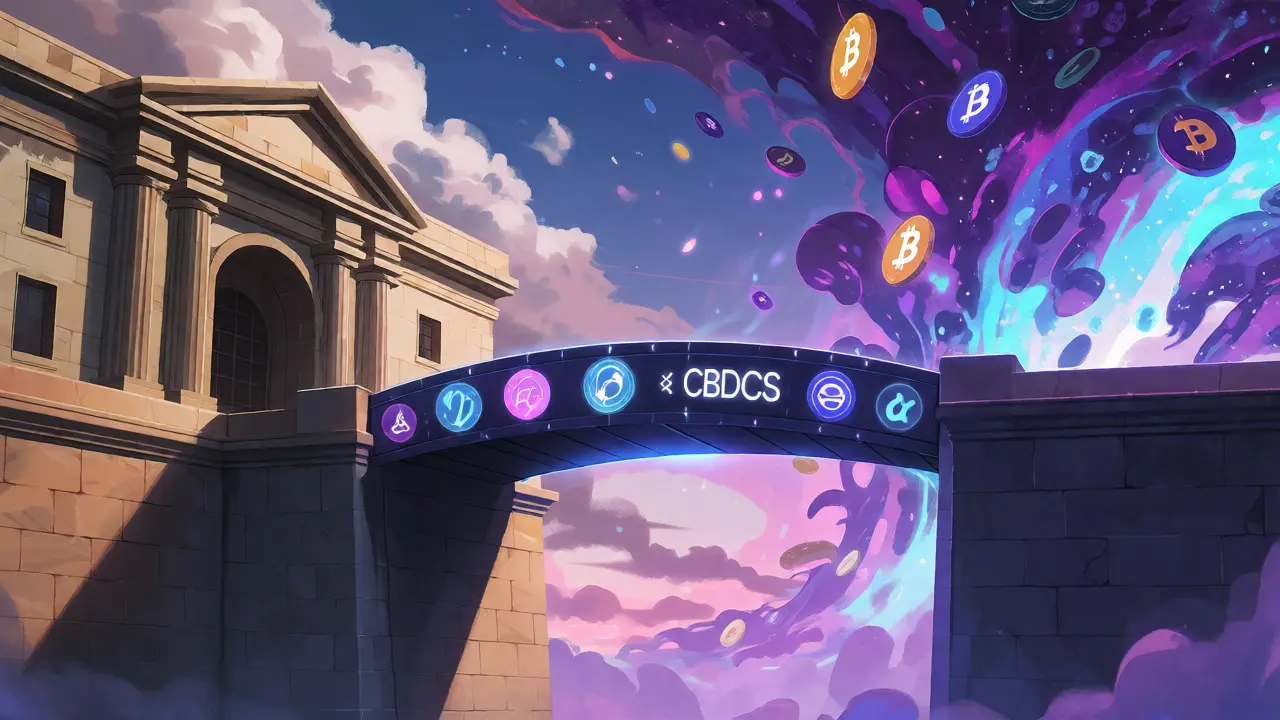
Here is where things get interesting. While Bitcoin faces a banking ban, the Central Bank of the Republic of China (CBC) is exploring a different path for digital dollars pegged to the New Taiwan Dollar (TWD). Starting June 2025, the FSC plans to introduce a framework allowing regulated financial institutions to issue government-backed stablecoins. Unlike USDC or USDT, which operate in a gray area regarding banking support, these new TWD stablecoins could potentially enjoy closer ties to the traditional banking system.
This distinction is crucial. The regulators aren’t against digital currency per se; they are against unregulated, volatile speculation touching their balance sheets. By introducing a controlled, pegged asset, they aim to capture the efficiency benefits of blockchain while keeping monetary policy in check. Early prototype testing for a Central Bank Digital Currency (CBDC) began in late 2024, using existing digital voucher infrastructure. If successful, this could soften the current restrictions, allowing banks to handle stablecoin transactions while still blocking speculative cryptocurrencies like Dogecoin or Shiba Inu.
Does this mean the end of the banking ban? Not necessarily. It likely means a bifurcation. Speculative assets will remain outside the banking perimeter, forced to use peer-to-peer methods or specialized payment rails. Stablecoins, however, might become the bridge, offering a compliant way to move value digitally. Keep an eye on this development, as it could redefine how you interact with your bank account in the next two years.
User Experience: Workarounds and Realities
So, how do people actually trade in Taiwan given these hurdles? The data shows resilience. Approximately 2.3 million Taiwanese citizens own crypto-that’s about 10% of the population. Daily trading volume hits around $200 million across registered platforms. How? Through workarounds.
Reddit threads in r/Taiwan reveal common strategies. Users rely heavily on Peer-to-Peer (P2P) trading platforms where they send money directly to another person’s bank account via ATM transfers or convenience store payments, then receive crypto from the seller. International exchanges that have registered as VASPs also score higher in user satisfaction (averaging 4.2/5) compared to some local-only platforms (3.8/5), largely due to better functionality despite the same regulatory shackles.
The lack of credit card support hurts impulse buying. You can’t just swipe and hope the price goes up. You need to plan. Third-party payment processors have stepped in to fill the gap, acting as intermediaries that comply with AML laws while offering smoother interfaces. However, these services often charge higher fees to cover their compliance costs. It’s a tax on convenience in a restrictive environment.
Future Outlook: Evolution, Not Revolution
Will Taiwan lift the banking restrictions soon? Probably not. The FSC’s philosophy is cautious innovation. They allow ownership and trading but keep systemic risk contained within non-bank entities. Expert analysis from PwC Taiwan suggests that the current registration requirements provide stronger consumer protection, even if they stifle some rapid growth. Legal experts note that this "cautious but not prohibitive" stance protects the broader economy from crypto crashes while letting the industry mature.
Expect incremental changes. The CBDC rollout and stablecoin regulations are the first cracks in the wall. If these prove stable, we might see gradual relaxation for specific, low-risk digital assets. But don’t expect Bitcoin to suddenly appear on your monthly bank statement anytime soon. The separation between traditional finance and crypto remains a deliberate policy choice to maintain financial stability.
Can I use my credit card to buy crypto in Taiwan?
Generally, no. Since July 2022, the FSC prohibited credit card acquirers from processing crypto purchases. Most local exchanges require bank transfers or third-party payment methods instead.
Is owning Bitcoin illegal in Taiwan?
No, owning Bitcoin is legal. The FSC classifies it as a virtual commodity. However, banks are restricted from providing direct services related to its purchase and sale, forcing users to use registered VASPs.
What happens if I use an unregistered crypto exchange?
Using unregistered exchanges carries risk. Since January 2025, registration is mandatory for legal operation. Unregistered platforms may face shutdowns, and users might encounter difficulties withdrawing funds or proving compliance during audits.
Are there plans for a Central Bank Digital Currency in Taiwan?
Yes. The Central Bank of the Republic of China completed a feasibility study in late 2023 and began prototype testing in early 2025. This could lead to a regulated digital TWD, distinct from decentralized cryptocurrencies.
How many registered crypto exchanges are there in Taiwan?
As of late 2024, approximately 23 Virtual Asset Service Providers (VASPs) had completed registration for Anti-Money Laundering compliance. MaiCoin is currently the largest among them.