

Blockchain transaction fees can feel like a hidden tax-sometimes pennies, sometimes dollars-when you just want to send crypto or interact with a dApp. If you’ve ever watched your $50 transfer get eaten by $15 in gas fees, you’re not alone. The good news? There are real, practical ways to slash those costs by 70% or more, even on busy networks like Ethereum. You don’t need to be a developer. You just need to know when, how, and where to send your transactions.
Timing Matters More Than You Think
Most people send transactions when it’s convenient for them-lunchtime, after work, during a quick break. That’s exactly when everyone else is doing it too. Network congestion spikes, and fees skyrocket. The key? Send when no one else is looking. On Ethereum, the quietest hours are typically between 2 a.m. and 5 a.m. UTC, especially on weekends. On Solana, it’s even simpler-fees stay under $0.01 almost all day. Use tools like Mempool.space or Etherscan Gas Tracker to see real-time demand. If the fee gauge is red, wait. If it’s green or yellow, go ahead. One user in Bristol saved over $200 in a month just by shifting their DeFi swaps from weekday evenings to Sunday mornings.Batch Your Transactions Like a Pro
Sending five separate payments? That’s five fees. But if you bundle them into one transaction, you pay one fee. That’s transaction batching-and it’s one of the most underused tricks in crypto. Wallets like BitGo, Ledger Live, and even some newer mobile wallets support batching. You can combine multiple token transfers, NFT mints, or staking actions into a single on-chain operation. For businesses paying freelancers in crypto, batching 50 payroll transactions into one can cut fees from $150 to under $5. Even individuals saving up small amounts of ETH or USDC can batch weekly deposits into a single monthly transaction. It’s not magic-it’s math. One transaction, regardless of size, costs roughly the same as another. So make it count.Use Layer 2 Networks to Avoid the Main Chain
Ethereum’s main chain (Layer 1) is expensive because it’s secure, decentralized, and busy. Layer 2 solutions like Arbitrum, Optimism, and Polygon handle transactions off-chain, then bundle them into one big batch on Ethereum. The result? Fees drop from $10 to $0.10-or less. For everyday users, switching to a Layer 2 is as easy as connecting your wallet. MetaMask and Trust Wallet let you toggle between Ethereum and Arbitrum with one click. Once you’re on Layer 2, you can swap tokens, send ETH, or use DeFi apps at a fraction of the cost. Even better, most major dApps now support Layer 2 natively. If you’re trading on Uniswap or lending on Aave, you’re probably already paying 95% less than you think. Solana is another option. With average fees under $0.007 per transaction, it’s ideal for high-frequency users. The trade-off? Less decentralization than Ethereum-but for most people, speed and cost matter more than perfect decentralization.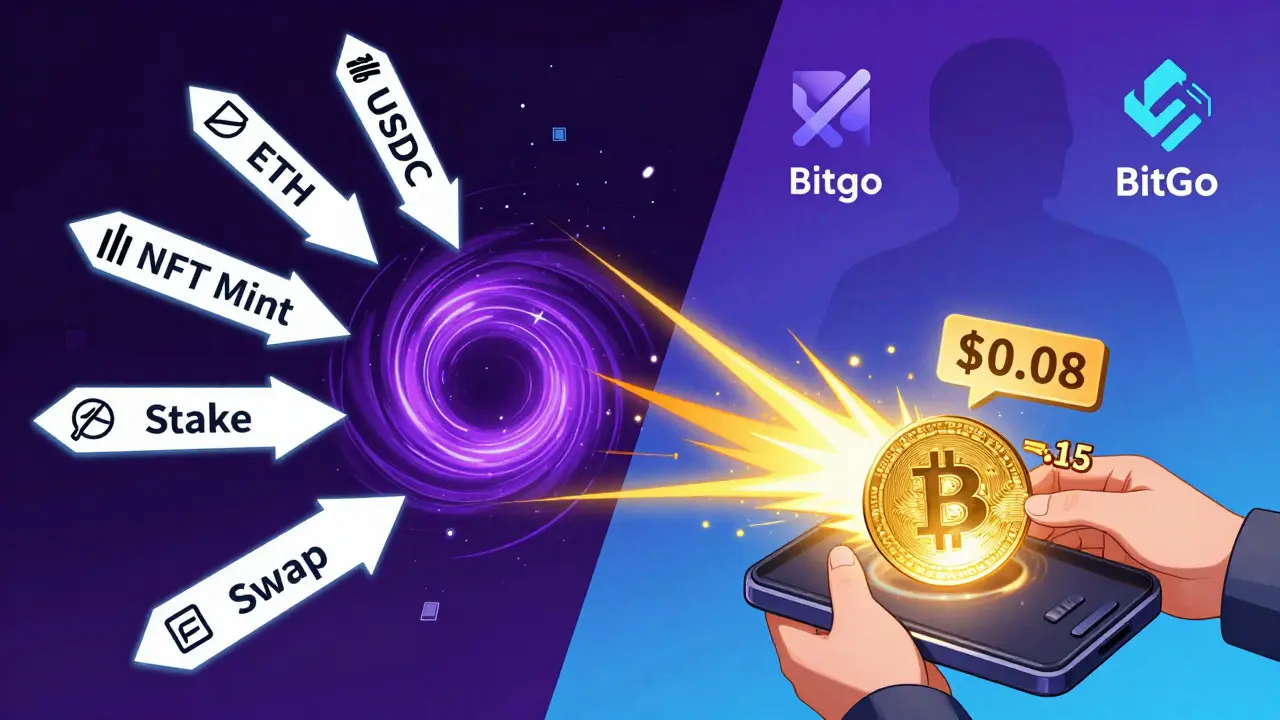
Pay Fees in Native Tokens to Get Discounts
Some wallets and platforms let you pay transaction fees in their native token-and give you a discount for doing so. Klever Wallet, for example, lets you pay swap fees in KLV, its own token, and automatically reduces the cost by up to 50%. Other platforms offer similar programs: paying in BNB on Binance Chain, MATIC on Polygon, or SOL on Solana can unlock lower rates. It’s not just about saving money-it’s about stacking benefits. Klever’s Rewards Hub lets you earn points for daily actions like checking your balance or staking. Those points can later be redeemed to offset future fees. Over time, you’re not just avoiding fees-you’re getting paid to use crypto.Use Stablecoins for Cross-Border Payments
Sending money internationally? Traditional banks charge $20-$50 per transfer and take days. Even PayPal and Wise charge 3-5% in currency conversion fees. With stablecoins like USDC or USDT, you send $10,000 across borders in under 10 seconds for less than $1. Businesses are catching on. One logistics company in Bristol started paying overseas suppliers in USDC instead of EUR or USD. They cut payment processing costs by 40% and improved cash flow because funds arrived instantly. No more waiting for SWIFT, no more hidden FX fees. And since stablecoins are pegged to the dollar, there’s no volatility risk. Even individuals benefit. If you’re sending crypto to a family member abroad, skip the wire transfer. Send USDC. They cash out locally via a P2P exchange like Paxful or LocalBitcoins-and keep 95% of what you sent.Replace-by-Fee (RBF) Saves You From Overpaying
Ever sent a transaction and then watched it sit there for hours? That’s not a glitch-it’s a signal. The network didn’t pick it up because the fee was too low. But instead of sending a new transaction (and paying again), you can use Replace-by-Fee (RBF). RBF lets you resend the same transaction with a higher fee, and the network replaces the old one. It only works if you enable it when you first send the transaction. Most modern wallets like Electrum (Bitcoin) and MetaMask (Ethereum) give you the option. Turn it on. Then, if your transaction gets stuck, you can bump the fee without losing your original send. It’s like having a do-over without paying twice. And it’s built into the protocol-no hacks, no tricks. Just smart design.
Why This All Matters: Real Numbers
Let’s say you run a small online store and process $500,000 in sales a year. With Stripe or PayPal, you’d pay about 2.9% + $0.30 per transaction. That’s roughly $35,000 in fees. Now switch to accepting USDC. Your fees? Less than 1%-maybe $5,000. You keep $30,000 more. That’s a new laptop. A team member. A marketing campaign. Or think about cross-border payroll. Bitwage customers report paying less than 0.1% in fees to send crypto salaries globally. Traditional payroll? 3-5% in fees, plus 2-5 days of waiting. With crypto, employees get paid Friday night-local time-even if they’re in Nigeria or Vietnam.What Not to Do
Don’t panic-spend on high fees during a market rally. Don’t assume all blockchains are equal. Don’t ignore network congestion. And don’t think you need to buy a fancy wallet to save money. The cheapest tool you have is your patience-and your ability to wait for the right moment. Also avoid using centralized exchanges for frequent transfers. Exchanges charge withdrawal fees, and you still pay gas on the blockchain. If you’re moving crypto often, keep it in a self-custody wallet on a Layer 2 network. That’s where the real savings happen.Final Tip: Automate When You Can
If you’re doing this regularly-sending payroll, paying vendors, trading tokens-look into custodial services like BitGo or Coinbase Custody. They offer automated batching, scheduled transactions, and dynamic fee optimization. They’re built for institutions, but individuals can use them too. The setup takes time, but once it’s running, you forget about fees entirely. The future of crypto isn’t just about price. It’s about usability. And lower fees are the biggest step toward making blockchain feel as easy as sending a text.Why are blockchain transaction fees so high sometimes?
Fees go up when lots of people are using the network at once-like during a new NFT drop or a crypto price surge. The blockchain can only process so many transactions per second. When demand exceeds capacity, users compete by offering higher fees to get their transactions confirmed faster. This is called network congestion. It’s temporary and predictable.
Can I avoid fees entirely on blockchain?
No, you can’t avoid fees entirely because validators need to be paid to secure the network. But you can reduce them to near-zero levels by using Layer 2 networks like Arbitrum or Solana, where fees are often less than a penny. Some networks, like Hedera, charge fixed micro-fees that are negligible for most users.
Is it safer to pay higher fees to get faster confirmations?
Higher fees get your transaction confirmed faster, but they don’t make it more secure. Once a transaction is on the blockchain, it’s immutable-no matter how much fee you paid. The only difference is how long you wait. If you’re not in a rush, waiting for lower fees is just as safe.
Which blockchain has the lowest fees in 2025?
As of 2025, Solana leads with average fees under $0.007 per transaction. Layer 2 networks like Arbitrum and Optimism follow closely, with fees around $0.05-$0.10. Ethereum mainnet remains expensive during peak times, often $5-$20, but has become more stable since EIP-1559. For most users, Layer 2s offer the best balance of low cost and strong security.
Do I need to use a hardware wallet to reduce fees?
No. Hardware wallets like Ledger or Trezor don’t lower fees-they just make your crypto safer. Fee reduction comes from *how* and *where* you send transactions, not the type of wallet you use. You can use a mobile wallet like MetaMask or Klever and still save 90% on fees by using Layer 2 networks and batching.
Can I use blockchain to pay bills and avoid bank fees?
Yes. Some companies now accept USDC or other stablecoins for rent, utilities, and subscriptions. Services like BitPay and Coinbase Commerce let merchants convert crypto to fiat automatically. If your landlord or provider accepts crypto, you can pay without bank transfer fees, currency conversion charges, or delays. Even if they don’t, you can send crypto to a friend who pays for you in local currency via P2P.
How do I know if a wallet supports transaction batching?
Check the wallet’s official documentation or support page. Wallets that support batching usually mention it under "advanced features," "multi-send," or "batch transfers." BitGo, Ledger Live, and some versions of Trust Wallet and MetaMask (via third-party integrations) offer this. If you’re unsure, try sending two small transfers at once-if the wallet lets you combine them into one transaction, it supports batching.
Are Layer 2 networks as secure as Ethereum?
Yes, for practical purposes. Layer 2 networks like Arbitrum and Optimism inherit Ethereum’s security by anchoring their data back to the main chain. If Ethereum is secure, so are these networks. The only risk is if the Layer 2’s own operators are compromised-but even then, funds are protected by fraud proofs and withdrawal periods. Millions of users use Layer 2s daily without issue.
Comments (13)