
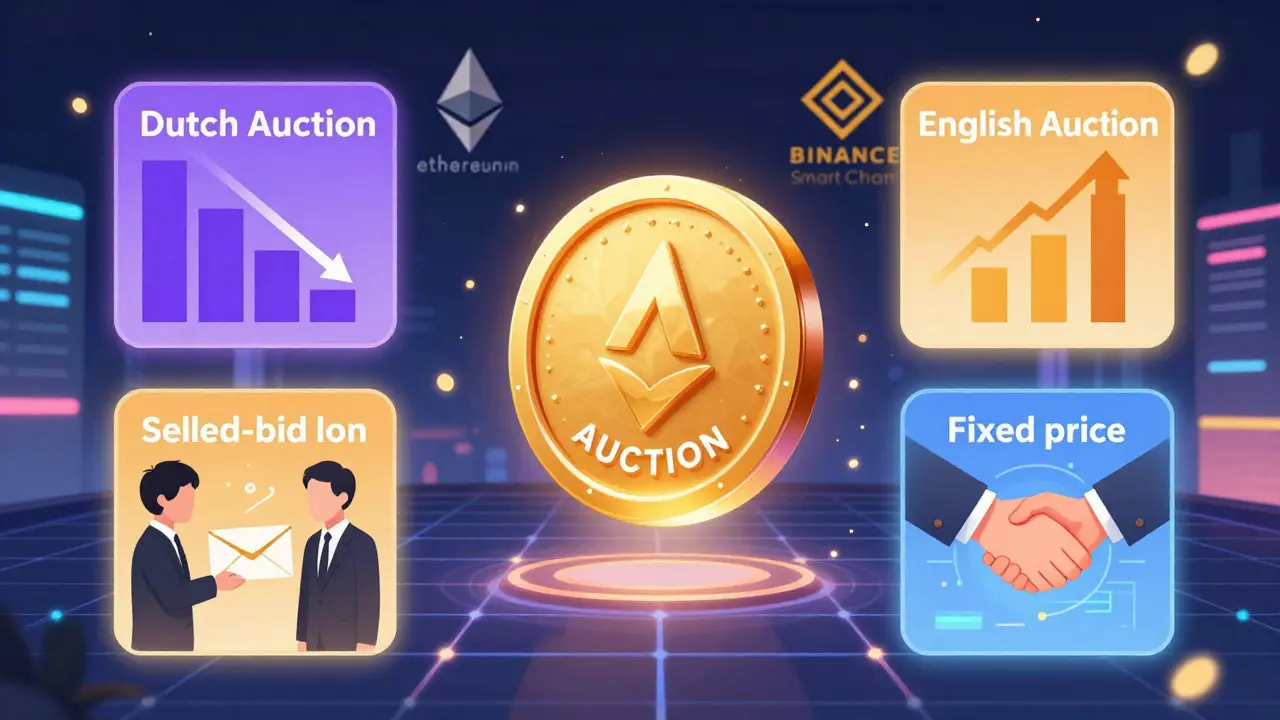
Bounce Token (AUCTION) is the native cryptocurrency powering Bounce Finance, a decentralized auction platform built on Ethereum and Binance Smart Chain. Unlike traditional auction sites that rely on middlemen, Bounce lets anyone run or join auctions directly on the blockchain - whether you're selling an NFT, launching a new token, or bidding on a rare digital collectible. The AUCTION token isn't just a currency; it’s the engine behind governance, fees, and rewards on the platform.
How Bounce Token Works
Bounce Finance launched in February 2021, replacing its predecessor BOT token at a 1:100 conversion rate. Since then, it’s grown into a go-to tool for decentralized auctions. The core idea is simple: use smart contracts to eliminate trust issues. When you auction an NFT on Bounce, your asset never leaves your wallet. The platform doesn’t hold your crypto - the code does. That means no one can freeze your items, steal them, or manipulate the process.
The AUCTION token is used in three main ways:
- Governance: Holders vote on platform upgrades, fee structures, and new auction types. One token = one vote.
- Fees: Every auction on Bounce charges a small fee - 0.20% of the transaction amount - and half of that gets distributed to AUCTION stakers as passive income.
- Access: You need AUCTION to participate in certain auctions, especially sealed-bid or Dutch auctions designed for fair token distribution.
Staking AUCTION isn’t just about earning rewards - it’s about influence. The more you stake, the more say you have in shaping the future of the platform. This creates a feedback loop: as more people use Bounce, demand for AUCTION grows, and stakers get paid more.
Auction Types You Can Run on Bounce
Bounce supports four auction styles, each tailored to different use cases:
- Fixed-Price Auctions: Set a price, and the first bidder wins. Great for NFT artists who want to sell without drama.
- Dutch Auctions: The price starts high and drops over time until someone buys. Used often for new token launches to find a fair market price.
- English Auctions: Classic bidding - highest bid wins. Ideal for rare NFTs or collectibles where competition drives value.
- Sealed-Bid Auctions: Everyone submits a bid secretly, then all bids are revealed at once. Prevents last-second bidding wars and ensures fairness in token sales.
These options let creators pick the best method for their asset. A musician dropping a limited-edition album might use a Dutch auction to avoid underselling. A high-end NFT collection might go for an English auction to maximize revenue.
Real-World Uses of Bounce Finance
Bounce isn’t just theory - it’s being used daily by real projects:
- NFT Launches: Artists bypass centralized marketplaces like OpenSea and sell directly to their community through Bounce auctions, keeping more profit and building trust.
- Token Sales: DeFi protocols use sealed-bid auctions to distribute new tokens fairly, avoiding whale manipulation that often skews initial distributions.
- Fundraising: Early-stage crypto teams raise capital without going through VC gatekeepers. Investors bid AUCTION tokens for new project tokens.
- IDOs (Initial DEX Offerings): Bounce is a popular choice for decentralized fundraising, letting retail investors get in early on promising projects.
One standout example is a 2022 NFT project called Pixel Legends that raised over $1.2 million in AUCTION tokens through a Dutch auction. All 5,000 NFTs sold within 17 minutes, with prices settling at a natural market level - no artificial inflation, no last-minute sniping.
Why Bounce Stands Out in DeFi
Most DeFi platforms focus on lending or swapping. Bounce fills a gap: price discovery. In traditional markets, auctions are how you find the real value of something rare - a painting, a car, a diamond. Bounce brings that same logic to crypto.
Here’s what makes it different:
- No custody risk: Your assets stay in your wallet. No exchange hacks, no frozen funds.
- Transparent pricing: All bids are on-chain and publicly visible. No hidden fees or price manipulation.
- Community-driven: The platform evolves based on votes from AUCTION holders, not a CEO or board.
- Multi-chain: Works on Ethereum and Binance Smart Chain, so users aren’t locked into one ecosystem.
It’s not just another DeFi token - it’s infrastructure. Think of it like eBay, but built on blockchain with no company in the middle.
Market Data and Supply
As of March 2026, AUCTION trades around $4.80 USD, with a daily volume of over $4.4 million. That’s down from its all-time high of $71.00 in April 2021, but typical for a mature DeFi token. The market cap hovers near $50 million.
Supply numbers have been confusing. Early reports said 50 million total tokens with 10 million circulating. Later updates suggested a reduced supply of 220,000, but this was likely a misreport. Current data shows 11.2 million AUCTION tokens in circulation, with a maximum supply of 50 million. The rest are locked in staking pools, team vesting, or future ecosystem incentives.
Tokenomics are designed to encourage long-term holding. The 0.20% fee distribution alone has paid out over $2.3 million to stakers since 2021. That’s real, ongoing value - not just speculation.
Where to Trade AUCTION
Binance, Huobi, and OKX list AUCTION, making it easy to buy, sell, or trade. OKX offers advanced charting tools and lightning-fast execution, while Binance users can pair AUCTION with BUSD or ETH for quick swaps.
For those wanting to interact directly with Bounce Finance, you can connect your wallet (MetaMask, Trust Wallet, etc.) to the platform and start auctions without ever leaving the blockchain. No sign-up, no KYC - just pure Web3.
Security and Audits
Bounce’s smart contracts have been audited by leading firms like CertiK and PeckShield. No major exploits have occurred since launch. The platform also integrates with decentralized insurance protocols like Nexus Mutual for added protection.
Unlike centralized exchanges, Bounce doesn’t hold user funds. That reduces risk dramatically. If a hacker targets the platform, they can’t steal your NFT - because it’s never been on their servers.
Is Bounce Token a Good Investment?
It’s not a get-rich-quick coin. But if you believe in decentralized marketplaces and the future of fair, transparent asset trading, AUCTION has real utility.
Its value isn’t based on hype - it’s tied to usage. Every auction run, every fee paid, every vote cast increases demand for the token. The staking rewards alone make it attractive for long-term holders.
It’s not for traders chasing 10x pumps. It’s for users who want to be part of a system that removes middlemen and puts control back in the hands of creators and collectors.
What is Bounce Token (AUCTION) used for?
Bounce Token (AUCTION) is the governance and utility token of the Bounce Finance platform. It’s used to vote on platform changes, pay transaction fees, stake for rewards, and participate in auctions. Holders earn a share of 0.20% of all auction fees as passive income.
How do I buy AUCTION coin?
You can buy AUCTION on major exchanges like Binance, Huobi, and OKX. Pair it with ETH, BUSD, or BNB. For direct interaction with the Bounce platform, connect your wallet (like MetaMask) to Bounce.finance and use AUCTION to bid or launch auctions.
Is Bounce Finance safe to use?
Yes. Bounce uses audited smart contracts from CertiK and PeckShield, and operates as a non-custodial platform - meaning your assets never leave your wallet. There have been no successful hacks since its 2021 launch. Always use trusted wallets and double-check contract addresses before transacting.
Can I stake AUCTION tokens?
Yes. Staking AUCTION lets you vote on governance proposals and earn a share of 0.20% of all transaction fees generated on the platform. Rewards are distributed automatically and compound over time.
What’s the difference between AUCTION and BOT?
BOT was the original token launched in late 2020. In February 2021, Bounce Finance replaced BOT with AUCTION at a 1:100 conversion rate. All BOT holders received 1 AUCTION for every 100 BOT they held. BOT was retired, and AUCTION became the sole native token of the platform.
Comments (17)