
There’s a new name popping up in crypto circles: GGEZ1. You’ve seen the price charts on Binance, heard whispers about asset-backed tokens, and maybe even stumbled on a Reddit thread asking if it’s legit. But what exactly is GGEZ1? Is it just another crypto project with a fancy pitch, or does it actually solve a real problem? Let’s cut through the noise.
What GGEZ1 Actually Is (Not Just Another Token)
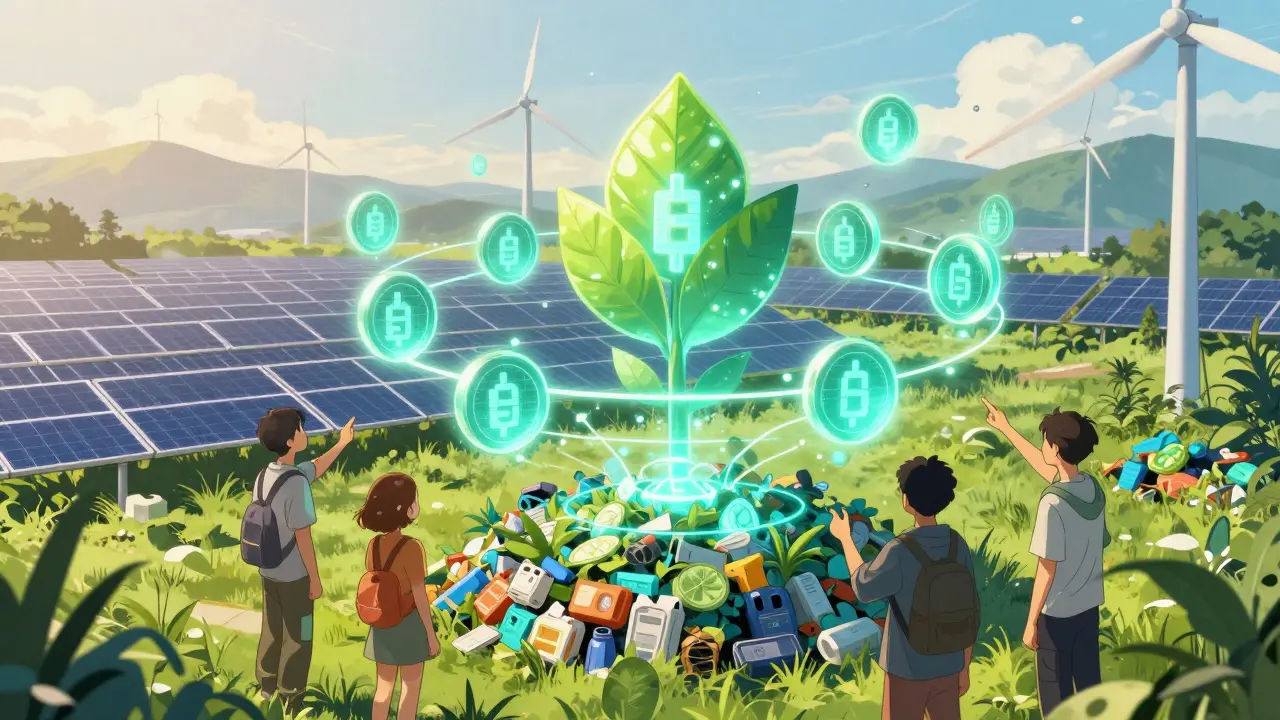
GGEZ1 isn’t a single coin. It’s a whole blockchain ecosystem built on the Cosmos SDK, designed to turn real-world sustainability projects into digital assets you can buy, trade, and use. Think of it like this: instead of just betting on whether a token’s price will go up, you’re backing actual solar farms, recycled plastic plants, or regenerative farms-and getting a token for it.
The system runs on Proof-of-Stake, which means it’s energy-efficient and fast. Transactions confirm in about 6 seconds, and fees are under a penny. That’s not just convenient-it’s critical if you want people in emerging markets to actually use it without getting crushed by transaction costs.
There are two tokens in the ecosystem:
- GGEZ1 Governance Coin: Fixed supply of 1,777,777,777 tokens. This is what you trade on exchanges. It gives you voting rights in the network’s future decisions.
- GG ReFi Coin: No supply limit. This one is backed by real assets like clean energy projects. Every time someone buys GG ReFi Coin, new coins are minted to match the value of the underlying sustainability project.
That’s unusual. Most crypto projects fix supply to create scarcity. GGEZ1 does the opposite for one of its tokens, betting that demand for real-world sustainability will keep growing-and that the asset backing will hold its value.
How It Works: Tokenizing the Real World
GGEZ1’s real innovation isn’t the blockchain tech-it’s the use case. The platform has three main parts:
- Tokenization Launchpad: A company with a solar farm or a composting plant can list their asset here. They prove ownership, get it audited, and then mint GG ReFi Coins tied to that project’s output.
- Sustainability Marketplace: Buyers can purchase GG ReFi Coins directly. Each coin represents a share of the real-world asset’s value. Want to own a piece of a wind turbine in Kenya? You can.
- Web3 Distribution Framework: The tokens work across DeFi platforms, wallets, and even apps. You can stake them, lend them, or use them in games.
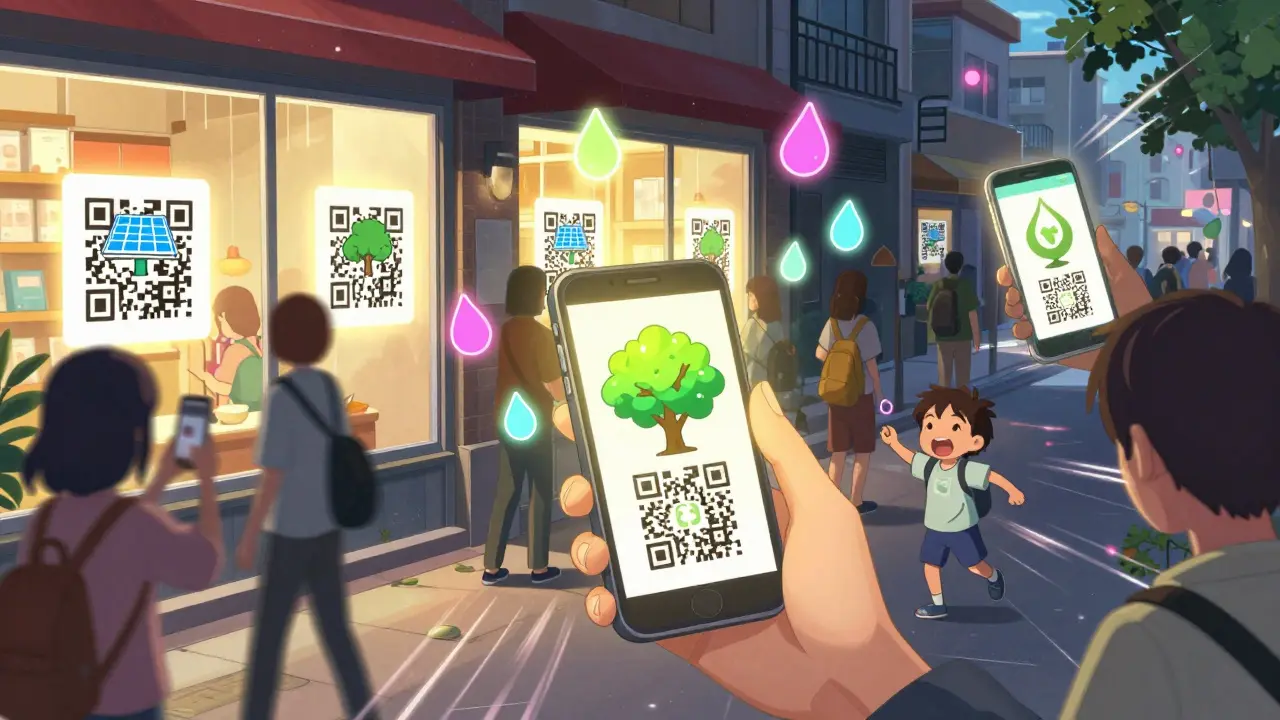
That last part is where it gets weird-and maybe brilliant. The project has an AR game feature called “Save, Play, and Earn.” You walk into a local shop, scan a QR code, and play a mini-game. Win? You get GGEZ1 rewards. It’s like Pokémon Go meets a green loyalty card. The idea? Get people who’ve never touched crypto to interact with sustainability tokens in a fun, low-risk way.
Market Data: What’s the Price? Is It Even Available?
As of January 17, 2026, the GGEZ1 Governance Coin trades between $0.07 and $0.088 on major exchanges. Binance lists it at $0.087, CoinCodex at $0.071. The All-Time High was $0.088, reached in early January 2026. The Fully Diluted Valuation is around $155 million-meaning if all 1.78 billion tokens were circulating, that’s the total market cap.
But here’s the catch: the circulating supply is listed as zero on Binance. That doesn’t mean the token doesn’t exist. It means almost none of it is out in public hands yet. The project raised $1.44 million in its initial sale in late 2024, selling 53 million tokens at $0.027 each. But those are likely still locked up with early investors or the team.
This isn’t a red flag by itself-many projects launch with locked tokens. But combined with the lack of exchange listings and wallet integrations, it suggests you’re not going to be able to buy this easily. If you see someone selling GGEZ1 on a random site, it’s probably a scam.
Why It’s Different From Other Sustainability Coins
There are other ReFi (Regenerative Finance) projects out there. Toucan Protocol tokenizes carbon credits. KlimaDAO focuses on climate bonds. But GGEZ1 goes broader. It’s not just about carbon. It’s about clean energy, sustainable agriculture, recycling, and water projects. That’s a wider net.
It also doesn’t rely on speculative offsets. The GG ReFi Coin is meant to be directly tied to physical assets producing measurable outcomes-like kilowatt-hours of electricity generated or tons of plastic recycled. That’s a step beyond most carbon credit tokens, which often lack real-time verification.
Still, it’s early. Most of these projects have struggled to prove their asset backing is real. GGEZ1 hasn’t published a single audit report of a tokenized asset yet. Without transparency, it’s just a promise on a website.
What Experts and Users Are Saying
On CoinGecko, users gave GGEZ1 a 3.8/5 rating. The top praises? “Innovative approach,” “low fees.” The top complaints? “No proof of asset backing,” “unclear launch timeline.”
Experts are split. CoinCodex calls it “Bullish” with a Fear & Greed Index of 73 (Greed). That means people are buying because they’re excited, not because they understand it. CoinCarp warns that “asset-backed cryptocurrencies often crash when markets turn.” And CoinStats raises a red flag: having one token with unlimited supply (GG ReFi) and one with fixed supply (GGEZ1) could create economic tension. What if demand for GG ReFi explodes? Does that devalue the governance token?
On Reddit, users are skeptical. One wrote: “I need to see actual proof of the sustainability assets backing it before taking seriously.” Another said: “The AR game idea could work-if they don’t screw it up.”
Is GGEZ1 Legit? The Reality Check
It’s not a scam. The team has a website, a roadmap, and a partnership with Global Green Energy Solutions to tokenize 500MW of solar capacity. That’s real. They’re not just vaporware.
But “legit” doesn’t mean “safe” or “profitable.” This is a high-risk, long-term bet. If they deliver on asset verification, user adoption, and real-world utility, GGEZ1 could be a pioneer. If they fail to prove their sustainability claims or can’t get tokens into people’s hands, it’ll fade into obscurity like 90% of crypto projects.
Right now, it’s in the “wait and see” phase. The Mainnet launch is planned for Q1 2026. The tokenization platform beta is due in Q2. That’s your timeline to watch.
Should You Buy GGEZ1?
If you’re looking for a quick flip-skip it. There’s no liquidity. You can’t buy it easily. Even if you could, the market is tiny. The 24-hour trading volume is under $18,000. That’s not a market. That’s a whisper.
If you’re interested in long-term ReFi exposure and believe in tokenizing real-world sustainability-then maybe. But only if you’re okay with:
- No guaranteed returns
- High chance of failure
- No clear path to cashing out
- Waiting 12-24 months to see if the model works
And even then, don’t put in more than you’re willing to lose. This isn’t Bitcoin. It’s a prototype with a bold vision-and a long road ahead.
What’s Next for GGEZ1?
The roadmap is clear: launch Mainnet, activate validators, open the tokenization platform, and start onboarding real asset owners. If they do that by mid-2026, they’ll have a shot. If they delay or fail to prove their asset verification process, they’ll be another footnote in crypto history.
The bigger question isn’t about price. It’s about trust. Can a blockchain project convince the world that a digital token truly represents a real, measurable, sustainable impact? That’s the test GGEZ1 is trying to pass. And right now, the world is watching-but not buying.
Comments (20)