
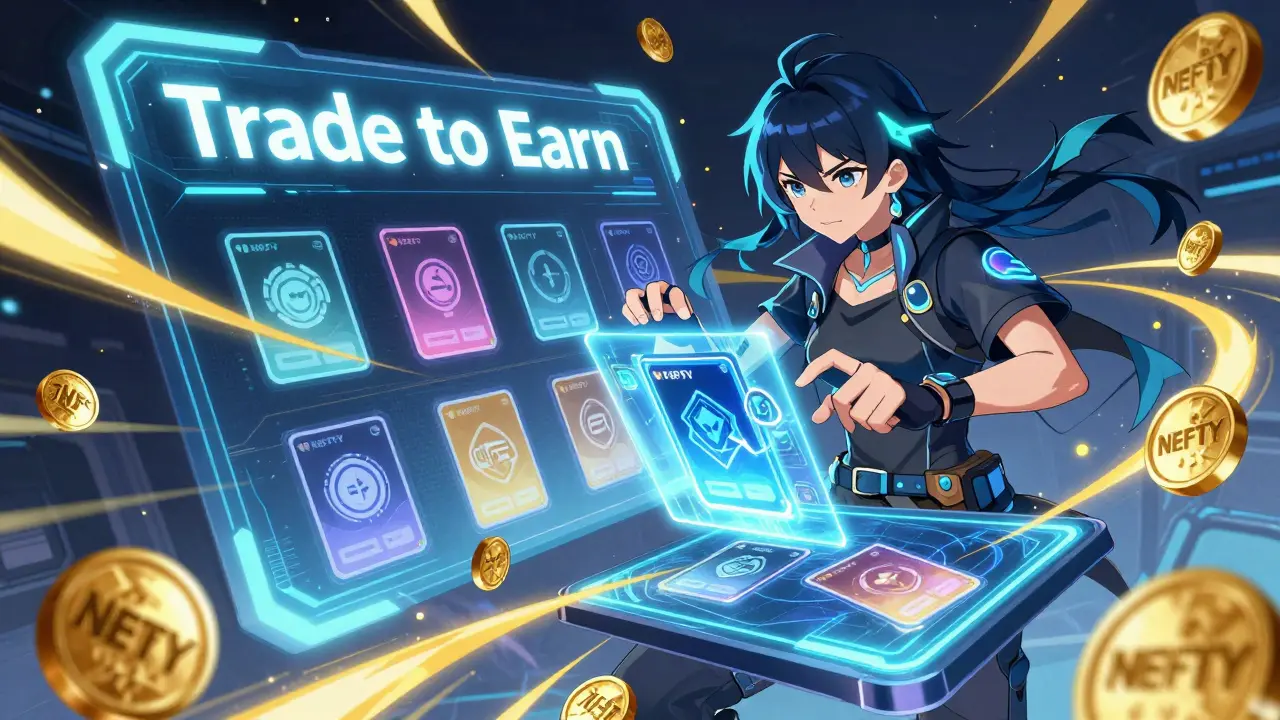
Have you ever bought an NFT and felt like you were just throwing money into a void? You pay the gas fees, you list it for sale, and if it sells, great. If not, you’re stuck holding digital art that costs more to move than it’s worth. That frustration is exactly why NeftyBlocks exists. It isn’t just another marketplace; it’s an attempt to fix the broken incentive structure of trading by introducing a 'Trade to Earn' model powered by its native utility token, NEFTY.
If you’ve stumbled upon the ticker symbol NEFTY on a chart or seen it mentioned in Discord servers focused on Web3 gaming, you might be wondering what it actually does. Is it a meme coin with no backing? Or is there real utility behind the hype? The short answer is that NEFTY is the fuel for the NeftyBlocks ecosystem on the WAX Blockchain. It rewards active traders, unlocks premium features, and serves as a payment method for creators. But to understand if it’s worth your attention, we need to look under the hood at how it works, where you can buy it, and whether the economics make sense.
The Core Concept: Trade to Earn on WAX
Most NFT marketplaces operate on a simple fee structure. You list an item, someone buys it, and the platform takes a cut-usually between 2% and 5%. That money goes into the company’s pocket. NeftyBlocks flips this script. Built specifically on the WAX (Worldwide Asset eXchange) blockchain, which is renowned for low-cost transactions and high throughput ideal for gaming assets, NeftyBlocks introduces a gamified layer to trading.
The core mechanism is called 'Trade to Earn.' Here is how it works in practice:
- Active Participation: When you buy or sell NFTs on the secondary market within the NeftyBlocks platform, you aren’t just exchanging assets. You are generating activity.
- Daily Rewards: Based on your trading volume and activity level, the protocol distributes daily rewards directly to your wallet in the form of NEFTY tokens.
- Circular Economy: These earned tokens can then be used to pay for listing fees, access premium tools, or even purchase new NFT drops priced exclusively in NEFTY.
This creates a self-reinforcing loop. Traders want to stay active to earn more NEFTY. Creators want to price their drops in NEFTY to tap into the liquidity of active traders. And holders want to keep their tokens to access exclusive features. Unlike speculative tokens that rely solely on price appreciation, NEFTY has built-in demand drivers tied directly to user behavior on the platform.
Technical Specifications and Tokenomics
When evaluating any cryptocurrency, the technical details matter. They tell you about scarcity, divisibility, and security. For NEFTY, these specifics are clear-cut because they are hardcoded into the WAX blockchain.
| Attribute | Value / Detail |
|---|---|
| Blockchain | WAX |
| Contract Identifier | token.nefty |
| Maximum Supply | 100,000,000 (Fixed Cap) |
| Decimals | 8 (Allows for micro-transactions) |
| Image Hash | QmWPWxHaa4D9K2HbonvUQPEbaqoQFiWEUB7Zjw3kZGLDYU |
The fixed supply cap of 100 million tokens is crucial. In crypto, inflationary tokens often lose value over time because new supply constantly dilutes existing holdings. With NEFTY, once those 100 million are minted, no more can be created. This provides a baseline of scarcity. However, the distribution model is inflationary in nature due to the 'Trade to Earn' rewards. New tokens enter circulation as users trade. This means the long-term sustainability depends on balancing reward emissions with token burns or sinks (like using NEFTY for premium services) to prevent hyperinflation.
The use of 8 decimal places is another thoughtful design choice. On blockchains like Bitcoin, you can’t easily split a coin into tiny fractions without dealing with satoshis, which confuses many users. With 8 decimals, NEFTY allows for precise fractional ownership and micro-payments. This is essential for an NFT marketplace where listing fees or small-value trades need to be granular enough to not eat up the entire value of a cheap digital collectible.
How to Buy and Store NEFTY
You won’t find NEFTY on major centralized exchanges like Coinbase or Binance right now. It lives primarily within the decentralized finance (DeFi) ecosystem of the WAX blockchain. To acquire it, you need to interact with Decentralized Exchanges (DEXs) that support WAX assets.
Here are the primary venues for swapping WAX for NEFTY:
- Alcor Exchange: One of the largest DEXs on WAX. It offers deep liquidity and supports both spot swaps and limit orders. This is often the go-to for larger trades.
- Taco Swap: A popular automated market maker (AMM) on WAX. It’s user-friendly and good for quick swaps, though slippage can be higher during volatile periods.
- WaxOnEdge: Another reliable option for WAX/NEFTY pairs, providing additional liquidity depth across the ecosystem.
To store NEFTY, you don’t need a complex hardware setup immediately. Most users start with cloud wallets integrated into the WAX ecosystem, such as Atomic Wallet or Anchor Wallet. Since NEFTY is a standard WAX token, adding it to your wallet is as simple as pasting the contract identifier `token.nefty`. For serious holders who plan to keep large amounts long-term, transferring private keys to a cold storage solution compatible with WAX is the safest route.
Market Performance and Volatility
Let’s talk numbers. NEFTY is not a stablecoin, nor is it a top-10 giant like Ethereum. It is a mid-to-low-cap asset with significant volatility. As of mid-2026, data from aggregators like CoinMarketCap and CoinGecko shows NEFTY hovering around rank #7366 globally. This ranking tells us two things: first, it is a niche asset with a dedicated but smaller community. Second, it is highly sensitive to market sentiment and trading volume.
Recent data points highlight this volatility. In a single 24-hour period, NEFTY has been recorded swinging from a modest 1.56% gain to a massive 32.24% surge depending on the specific exchange pair and liquidity conditions. Conversely, weekly trends have shown declines of over 8%. Why the discrepancy? Because liquidity is fragmented across different DEXs. A large buy order on Alcor might spike the price there, while Taco Swap remains unaffected until arbitrageurs step in.
The all-time high (ATH) for NEFTY sits at approximately 0.00000284 ETH, while the all-time low (ATL) touched 0.00000026 ETH. Currently, it trades closer to the lower end of this spectrum, around 0.000000269 ETH. For investors, this means NEFTY is in a discovery phase. It hasn’t yet found its mature valuation floor. This presents both opportunity and risk. Early adopters in similar ecosystems saw 10x gains, but many others watched their investments stagnate when the underlying platform failed to grow.
Comparing NeftyBlocks to Other Marketplaces
To truly understand NEFTY, you have to compare NeftyBlocks to the giants it competes against, albeit in a different lane. OpenSea dominates Ethereum. Magic Eden leads on Solana. NeftyBlocks claims the crown on WAX. But how do they differ?
| Feature | OpenSea (Ethereum/L2s) | Magic Eden (Solana) | NeftyBlocks (WAX) |
|---|---|---|---|
| Primary Chain | Ethereum, Polygon, Arbitrum | Solana | WAX |
| Incentive Model | Fee-based (Platform takes %) | Fee-based + Merit Points | Trade to Earn (Token Rewards) |
| Transaction Cost | High (on L1), Low (on L2) | Very Low | Extremely Low ($0.001 avg) |
| Native Utility Token | OP (Governance only) | ME (Staking/Rewards) | NEFTY (Payments/Rewards) |
| Target Audience | Art Collectors, High-Net-Worth | Gaming, Pop Culture Collectibles | Gaming Assets, Daily Traders |
The key differentiator here is the 'Trade to Earn' aspect. OpenSea’s OP token is largely for governance-you vote on proposals, you don’t get paid to list items. Magic Eden’s ME token has staking benefits, but NeftyBlocks integrates the token directly into the act of trading itself. If you are a high-volume trader flipping gaming skins or digital cards, NeftyBlocks literally pays you to do what you already enjoy. This is a powerful psychological hook that other platforms lack.

Risks and Considerations for Investors
No investment is without risk, and NEFTY comes with specific caveats you must consider before buying.
Liquidity Risk: Because NEFTY is traded on decentralized exchanges with limited depth compared to Binance or Coinbase, selling large amounts quickly can cause significant slippage. You might intend to sell $1,000 worth of NEFTY but only receive $800 because there aren’t enough buyers at that price point.
Platform Dependency: The value of NEFTY is intrinsically linked to the success of the NeftyBlocks platform. If users migrate to a competitor on WAX, or if the WAX blockchain itself loses relevance, the demand for NEFTY could evaporate. The token has little utility outside of this specific ecosystem.
Regulatory Uncertainty: While WAX is generally viewed as a utility-focused chain, the classification of 'reward tokens' varies by jurisdiction. In some regions, receiving tokens for trading activity could be interpreted as income or even securities-related activity. Always consult local regulations.
Smart Contract Risk: Although WAX contracts are robust, no code is immune to bugs. The NEFTY contract (`token.nefty`) should be audited regularly. Users should verify they are interacting with the official contract address to avoid phishing scams, which are rampant in the crypto space.
Future Outlook: Can NEFTY Sustain Growth?
The future of NEFTY hinges on three factors: adoption, interoperability, and tokenomics balance. First, adoption. WAX is growing rapidly in the gaming sector. If NeftyBlocks becomes the default marketplace for major WAX-based games, NEFTY will see organic demand. Second, interoperability. Currently, NEFTY is siloed on WAX. Bridges to Ethereum or Solana would expand its reach dramatically, allowing cross-chain traders to participate. Finally, tokenomics. The project team must ensure that the rate of new token issuance through rewards doesn’t outpace the rate of consumption through fees and purchases. If they strike that balance, NEFTY could evolve from a niche utility token to a cornerstone of the WAX economy.
For now, NEFTY remains a specialized tool for a specific audience: active NFT traders on WAX who want to monetize their engagement. It’s not a set-and-forget investment like Bitcoin. It requires participation, understanding of DeFi mechanics, and a tolerance for volatility. But for those willing to dive in, it offers a unique glimpse into how Web3 markets can align incentives between platforms, creators, and collectors.
Is NEFTY a safe investment?
Like most low-cap cryptocurrencies, NEFTY carries high risk. Its value is tied directly to the usage of the NeftyBlocks platform and the health of the WAX blockchain. It is highly volatile and should only be invested with capital you can afford to lose. It is not considered a 'safe haven' asset.
Where can I buy NEFTY tokens?
You cannot buy NEFTY on major centralized exchanges like Coinbase. You must use decentralized exchanges (DEXs) on the WAX blockchain. Popular options include Alcor Exchange, Taco Swap, and WaxOnEdge. You will need a WAX-compatible wallet to facilitate these trades.
What is the maximum supply of NEFTY?
The maximum supply of NEFTY is capped at 100,000,000 tokens. This fixed cap ensures scarcity, although new tokens are continuously distributed to users through the 'Trade to Earn' reward system, meaning the circulating supply changes based on platform activity.
How does the 'Trade to Earn' model work?
Users earn daily NEFTY rewards based on their trading volume on the NeftyBlocks marketplace. Every time you buy or sell an NFT on the secondary market, you contribute to your reward pool. These tokens are distributed automatically to your connected wallet, incentivizing frequent trading activity.
Why does NeftyBlocks use the WAX blockchain?
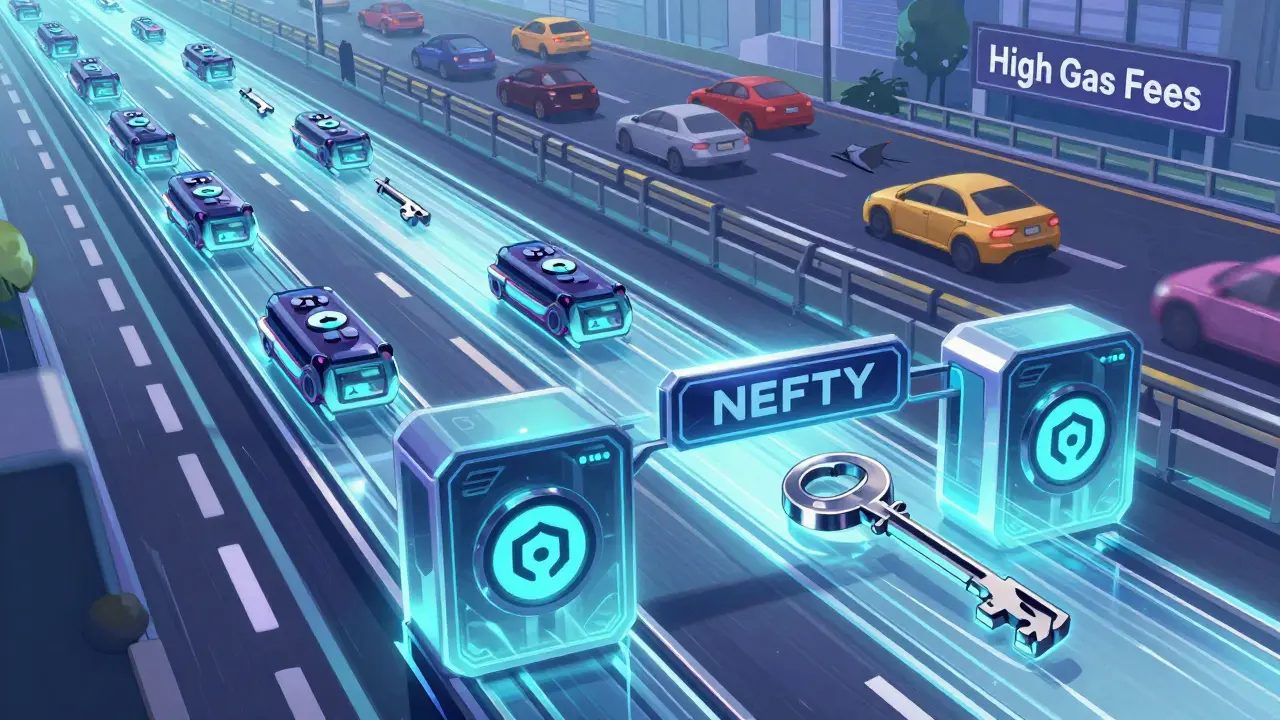
WAX is optimized for high-speed, low-cost transactions, making it ideal for NFTs and gaming assets. Unlike Ethereum, where gas fees can exceed the value of the item being traded, WAX transactions cost fractions of a cent. This makes the 'Trade to Earn' model economically viable for small-value trades.
Can I use NEFTY to buy NFTs?
Yes. NEFTY functions as a utility token within the NeftyBlocks ecosystem. Creators can choose to price their NFT drops in NEFTY instead of WAX or USDC. This allows holders to spend their earned rewards directly on new collections, creating a circular economy within the platform.
What is the contract address for NEFTY?
The official contract identifier for NEFTY on the WAX blockchain is `token.nefty`. Always verify this address before adding the token to your wallet or executing swaps to avoid scam tokens with similar names.