

You might have heard the name Zetacoin and wondered if it’s the next big thing or just a ghost from the early days of blockchain. If you are searching for what is Zetacoin (ZET) crypto coin, you are likely looking at a project that predates the modern DeFi boom by nearly a decade. It isn’t Ethereum, and it certainly isn’t Solana. It is a direct descendant of Bitcoin, built with the specific goal of being faster and cheaper to use for everyday payments.
Think of Zetacoin as the "speedboat" version of the Bitcoin "tank." While Bitcoin focuses on being an ultra-secure store of value, Zetacoin was designed in 2013-2014 to move money quickly between people. But here is the catch: while the technology has held up, the market presence has shrunk dramatically. Today, ZET is a low-cap asset with minimal trading volume, making it a niche curiosity rather than a mainstream investment. This guide breaks down exactly how it works, where it came from, and why its current status matters more than its original promise.
The Origins of Zetacoin
Zetacoin launched around 2013 to 2014, placing it firmly in the first wave of altcoins that emerged after Bitcoin gained traction. Unlike many modern projects backed by venture capital firms and public foundations, Zetacoin started as a grassroots, open-source effort. There are no famous founders attached to it-no Vitalik Buterin or Satoshi Nakamoto figures leading the charge publicly. It was created by anonymous developers who wanted to tweak Bitcoin’s code to improve transaction speed.
The project’s core philosophy was simple: Bitcoin works, but it is slow. By adjusting certain parameters, the creators aimed to create a currency that felt more like cash in your pocket. They didn’t try to reinvent the wheel; they just tried to make the wheel spin faster. This approach attracted early miners and users who were frustrated with Bitcoin’s rising fees and confirmation times before solutions like Lightning Network existed.
How Zetacoin Works: The Technology Behind ZET
At its heart, Zetacoin is a Proof-of-Work cryptocurrency that uses the same SHA-256 hashing algorithm as Bitcoin. If you can mine Bitcoin, you can technically mine Zetacoin. However, the network parameters differ significantly to achieve its performance goals.
- Block Size: Zetacoin allows for blocks up to 2 MB, which is double Bitcoin’s original 1 MB limit. This means more transactions fit into each block.
- Difficulty Adjustment: The network adjusts mining difficulty more frequently than Bitcoin. This helps stabilize block times even when hash rates fluctuate wildly.
- Transaction Speed: Early documentation claimed transactions could be processed up to 20 times faster than Bitcoin. While this claim depends heavily on network congestion, the design prioritizes throughput over conservative security margins.
Unlike newer chains like Ethereum or Solana, Zetacoin does not support smart contracts. It is a pure payment layer. You send ZET, someone receives ZET. That’s it. There is no decentralized finance (DeFi), no NFTs, and no complex dApps running natively on the chain. It is digital cash, plain and simple.
Tokenomics: Supply and Inflation
Understanding the supply schedule is crucial because it differs from Bitcoin’s strict deflationary model. Zetacoin was launched with an initial allocation of 160,000,000 coins. After this initial distribution, the protocol introduced a small, ongoing inflation rate of 1,000,000 ZET per year.
This creates a unique economic dynamic. Bitcoin becomes scarcer over time through halvings. Zetacoin, however, maintains a steady drip of new coins to keep miners incentivized indefinitely. The maximum theoretical supply grows slowly past the 160 million mark, but the annual addition is negligible compared to the total cap. As of mid-2026, data trackers report circulating supplies varying between 59 million and 60 million ZET, suggesting that roughly 37% of the initial cap has been mined or recognized.
| Parameter | Value | Description |
|---|---|---|
| Initial Allocation | 160,000,000 ZET | Distributed via mining at launch. |
| Annual Inflation | 1,000,000 ZET | Fixed yearly issuance post-launch. |
| Block Reward | 100 ZET | Reward paid to miners per block. |
| Max Block Size | 2 MB | Larger capacity than legacy Bitcoin. |
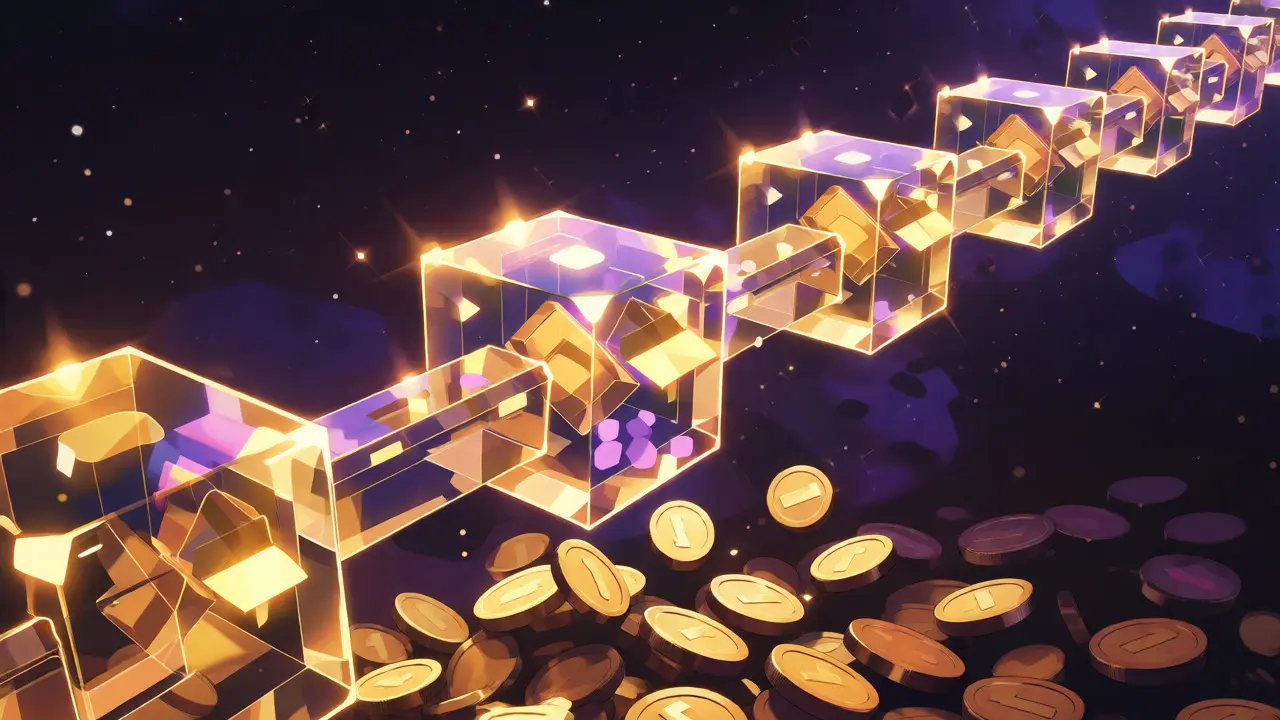
Market Reality: Liquidity and Price Volatility
Here is where the story gets complicated. While the tech is stable, the market for ZET is extremely thin. As of August 2026, major aggregators like CoinMarketCap rank Zetacoin around #5740, with a price hovering near $0.00056 USD. More importantly, daily trading volumes often sit at or near zero dollars.
Why does this matter? Low liquidity means two things. First, you cannot easily buy or sell large amounts without moving the price drastically. Second, price feeds across different exchanges can disagree significantly. One platform might show ZET at $0.0009, while another shows $0.0017, simply because there are so few trades happening. This fragmentation makes Zetacoin risky for anyone hoping to exit a position quickly.
Furthermore, Zetacoin is not listed on top-tier Western exchanges like Coinbase or Kraken. You will mostly find it on smaller platforms like Gate.io or Bitget. This lack of mainstream adoption limits its utility as a widely accepted payment method, despite its technical ability to process payments quickly.
Zetacoin vs. ZetaChain: Don’t Get Confused
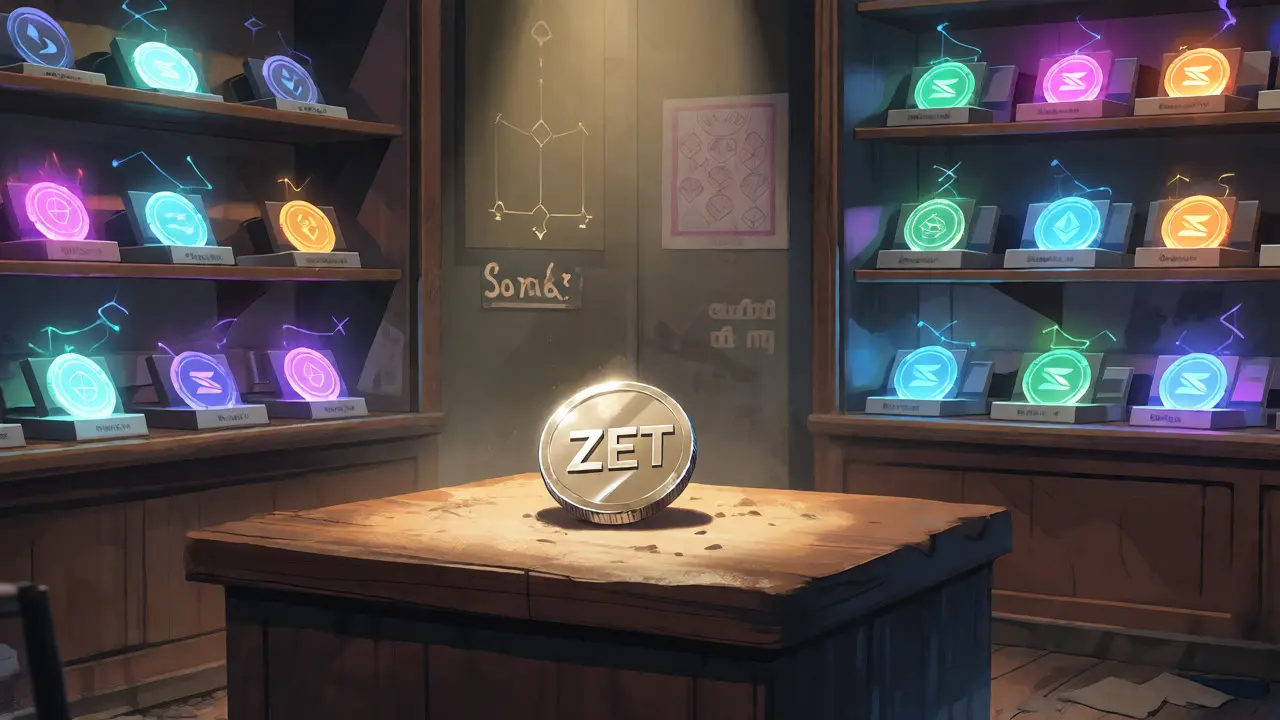
A common mistake among newcomers is confusing Zetacoin (ZET) with ZetaChain (ZETA). These are completely different projects.
- Zetacoin (ZET): An old-school Bitcoin fork focused on fast payments. No smart contracts. Low market cap.
- ZetaChain (ZETA): A modern Layer-1 blockchain designed for cross-chain interoperability and AI integration. It supports smart contracts and has millions in daily trading volume.
If you are researching "Zeta" assets, check the ticker carefully. ZETA is active and liquid; ZET is a legacy relic. Mixing them up can lead to serious portfolio errors.
Pros and Cons of Holding Zetacoin
Should you care about ZET today? Let’s look at the trade-offs honestly.
The Pros:
- Simplicity: It does one thing well-transfers value.
- Proven Tech: Based on SHA-256, it has survived since 2014 without major hacks or forks.
- Low Fees: Transaction costs remain minimal due to the larger block size and lower demand.
The Cons:
- Illiquidity: Hard to sell. Volumes are often negligible.
- No Ecosystem: No DeFi, no NFTs, no developer activity comparable to modern chains.
- Data Discrepancies: Different sites report different supply numbers, making analysis difficult.
- Stagnation: There is little evidence of active development or roadmap updates in recent years.
Final Verdict: Is Zetacoin Worth Your Attention?
Zetacoin serves as a fascinating case study in cryptocurrency history. It represents the era when every minor tweak to Bitcoin’s code spawned a new coin. Today, it survives more as a museum piece than a viable financial instrument. Its technology still works, but the community and market interest have moved on to smarter, more versatile platforms.
If you already hold ZET, it’s likely a speculative hold hoping for a revival. If you are considering buying, be aware that you are entering a highly illiquid market with limited growth catalysts. For most investors, Zetacoin remains a footnote in the broader crypto narrative-a reminder that speed alone isn’t enough to sustain value in a world driven by utility and network effects.
Is Zetacoin the same as ZetaChain?
No, they are distinct projects. Zetacoin (ZET) is an older Bitcoin fork focused on payments, while ZetaChain (ZETA) is a newer Layer-1 blockchain supporting smart contracts and cross-chain interoperability. Their tickers, technologies, and market caps differ significantly.
Can I mine Zetacoin with my GPU?
Yes, because Zetacoin uses the SHA-256 algorithm, it is ASIC-friendly but can also be mined with GPUs. However, given the low profitability and network difficulty, mining is generally only viable for hobbyists or those with access to cheap electricity.
Where can I buy Zetacoin?
Zetacoin is not available on major US exchanges like Coinbase. You typically need to use smaller centralized exchanges such as Gate.io or Bitget, or potentially decentralized exchanges, though liquidity there is very sparse.
Does Zetacoin have smart contracts?
No, Zetacoin does not support smart contracts. It is a basic Proof-of-Work payment coin similar to Bitcoin, lacking the programmable features found in Ethereum, Solana, or Cardano.
What is the maximum supply of Zetacoin?
The initial allocation was 160,000,000 coins. Unlike Bitcoin, Zetacoin has a fixed annual inflation of 1,000,000 coins thereafter, meaning the total supply grows slowly over time rather than having a hard absolute cap.