
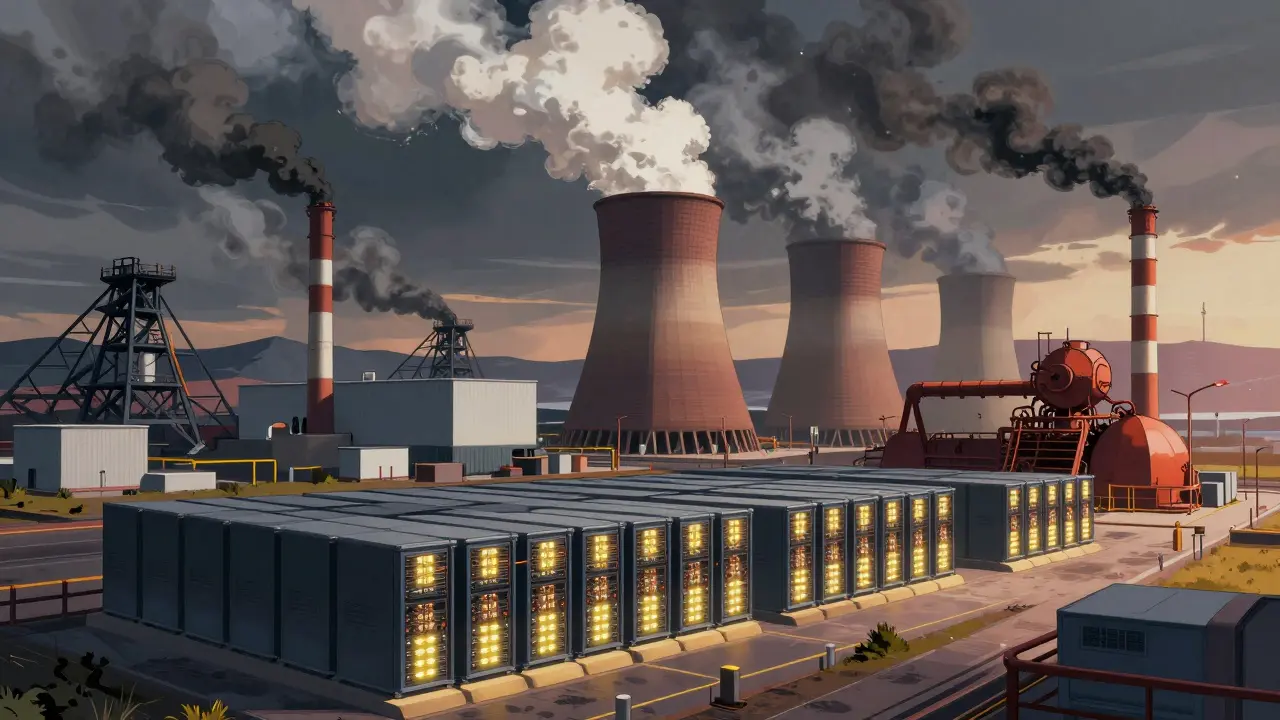
Cryptocurrency mining is the process of validating transactions on blockchain networks. The most common method, proof-of-work, requires massive computing power. As of 2025, Bitcoin mining alone uses 138-150 terawatt-hours of electricity yearly-comparable to the entire energy consumption of Argentina or the Netherlands.
Bitcoin Mining's Energy Appetite
| Energy Source | Percentage | Key Regions |
|---|---|---|
| Hydroelectric | 23% | Canada, Norway |
| Wind | 15% | Texas, Iceland |
| Solar | 3% | Arizona, Nevada |
| Nuclear | 10% | Pennsylvania, France |
| Coal | 30% | Kazakhstan, China |
| Natural Gas | 19% | US, Russia |
Bitcoin mining uses between 138-150 terawatt-hours of electricity annually. That's more than Argentina or the Netherlands. According to the Cambridge Centre for Alternative Finance, this energy use is growing as Bitcoin's network gets more complex. The table shows where this energy comes from-over half is from non-renewable sources like coal and gas.
Carbon Footprint: More Than Just Numbers
Each Bitcoin transaction emits about 672 kg of CO2-equivalent to driving 1,600 kilometers in a gas car. After China banned mining in 2021, carbon intensity jumped from 478 to 557 grams per kWh. This shift happened because miners moved to coal-heavy regions like Kazakhstan. Harvard researchers found this pollution exposes millions of Americans to harmful PM2.5 particles linked to heart disease and dementia.
The International Monetary Fund warned in March 2025 that U.S. cryptocurrency and AI operations could consume 2% of global electricity by 2027. This isn't just about Bitcoin. Other cryptocurrencies using proof-of-work add to the problem, but Bitcoin remains the biggest contributor.

Other Environmental Damage
It's not just carbon. Mining hardware creates electronic waste-thousands of tons yearly. These specialized ASIC miners last only 18-24 months before becoming obsolete. Rockdale, Texas, residents documented noise levels exceeding 70 decibels from cooling systems, comparable to a vacuum cleaner. University of New Mexico researchers found mining operations use 637 gallons of water per Bitcoin mined for cooling, straining local supplies.
Harvard's March 2025 study mapped 34 major U.S. Bitcoin mines and their power plants. They confirmed these operations directly contribute to air pollution affecting public health. This isn't just a future risk-it's happening now in communities near mining facilities.
Regulatory Crackdowns
Kuwait banned all cryptocurrency mining in August 2025, citing "excessive strain on the national power grid." New York tried to restrict proof-of-work mining in 2024, but courts suspended enforcement pending review. The European Union's MiCA regulation, effective since June 2024, requires all crypto service providers to disclose energy use. By March 2025, 68% of registered EU entities provided verified sustainability data.
Some regions are taking action. Plattsburgh, New York, banned new mining operations in 2023 and revised rules in 2025 to allow only renewable-powered facilities. Meanwhile, the Trump administration's EPA rollbacks in January 2025 made it easier for mines to use fossil fuels, sparking lawsuits from environmental groups like Earthjustice.
Industry Efforts to Go Green
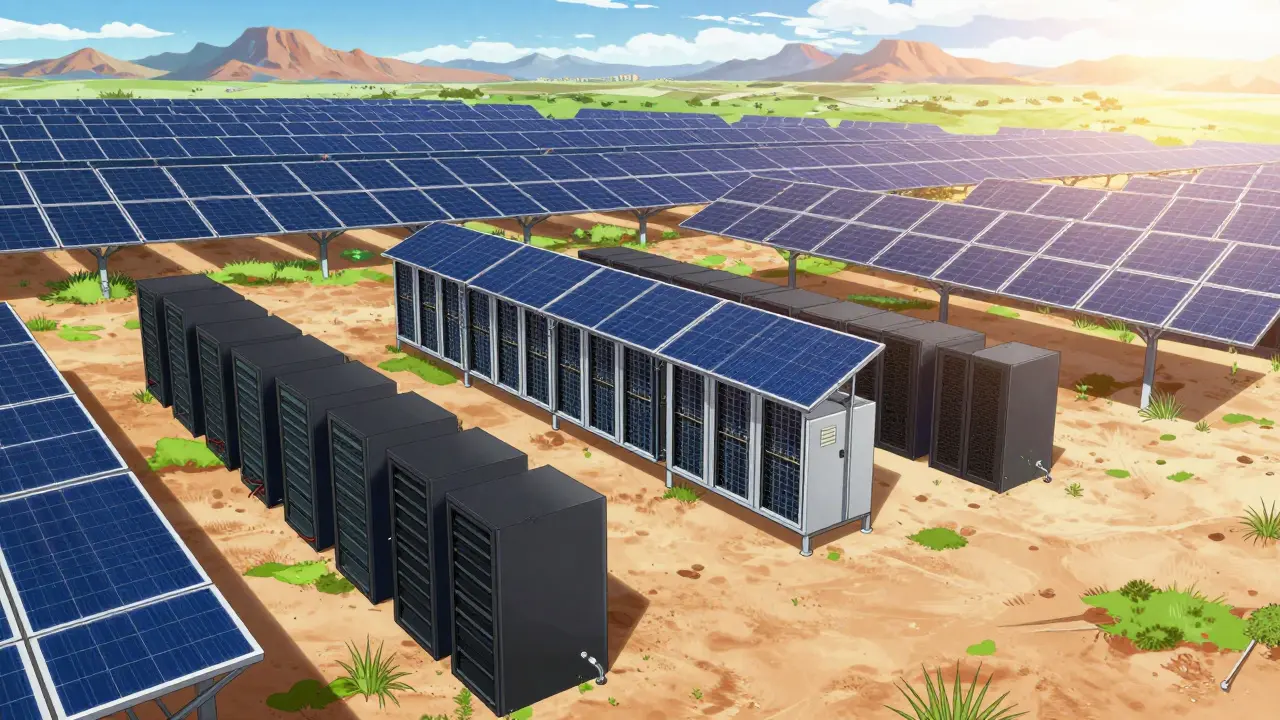
Some miners are switching to renewables. CleanSpark's Arizona data center connects directly to solar farms, cutting carbon intensity to 187 gCO2/kWh-far below the network average of 557.76 gCO2/kWh. Riot Platforms signed 10-year wind power deals in Texas, sourcing 40% of energy from clean sources. Lancium captures flared gas in North Dakota, preventing 1.2 million tons of CO2 yearly.
Immersion cooling using mineral oil has reduced noise pollution by 60% in Montana mining facilities. But this technology costs 20-30% more upfront. The Bitcoin Mining Council claims 62.9% renewable energy for its members, but CoinShares' October 2025 analysis suggests the real figure is closer to 43.7% when accounting for renewable energy certificates without physical delivery.
The Path Forward
Experts warn that without major changes, mining's environmental impact will keep rising. The International Energy Agency's October 2025 report projects Bitcoin's energy use could hit 210 TWh by 2027 if trends continue. A UN Environment Programme report recommends global carbon taxes on proof-of-work cryptocurrencies at $120 per metric ton of CO2 starting in 2028.
Proof-of-stake alternatives like Ethereum cut energy use by 99.95% after "The Merge" in 2022. But Bitcoin's core developers resist similar changes. They argue proof-of-work is fundamental to security and decentralization. Intel's new Bonanza Mine 5 ASIC chip in Q3 2025 improved efficiency by 17.6%, but network growth offset these gains. The real solution may require a mix of regulations, renewable adoption, and smarter technology.
How much electricity does Bitcoin mining use?
Bitcoin mining consumes between 138-150 terawatt-hours (TWh) of electricity annually as of 2025. That's more than entire countries like Argentina or the Netherlands. The Cambridge Centre for Alternative Finance tracks this data, and it's growing as the network's complexity increases.
Is cryptocurrency mining the main contributor to global carbon emissions?
No, but it's significant. Bitcoin mining accounts for 0.08% of global CO2 emissions according to Wikipedia's 2025 review-equivalent to Slovakia's total emissions. However, CarbonCredits.com estimates it's closer to 0.7%. While not the largest source, its growth rate is concerning. Without changes, it could become a bigger problem as adoption increases.
Can cryptocurrency mining use renewable energy?
Yes, and some miners already do. CleanSpark uses solar power in Arizona, while Riot Platforms sources wind energy in Texas. Flared gas capture in North Dakota by Lancium turns waste into power. However, only about 52% of Bitcoin's energy comes from renewable sources globally. Coal and gas still dominate in key regions like Kazakhstan and parts of the U.S.
What are the environmental effects beyond carbon emissions?
Mining creates electronic waste from outdated hardware, produces noise pollution that disrupts communities, and uses massive amounts of water for cooling. Harvard researchers linked mining-related air pollution to health issues like heart disease and dementia. Water consumption is also critical-637 gallons per Bitcoin mined in Texas strains local supplies.
Are there regulations targeting cryptocurrency mining?
Yes, many countries are acting. Kuwait banned all mining in 2025. New York passed a moratorium on proof-of-work mining, though enforcement is paused. The EU requires energy transparency under MiCA. Some U.S. states like Arizona and Texas have local rules for noise and emissions. These rules are evolving quickly as governments respond to environmental concerns.
Will Bitcoin ever switch to proof-of-stake?
Currently, no. Bitcoin core developers like Pieter Wuille argue proof-of-work is essential for security and decentralization. Ethereum's successful 2022 switch to proof-of-stake cut energy use by 99.95%, but Bitcoin's community remains resistant. Recent improvements like Schnorr signatures (2024) only marginally improve efficiency. A full switch seems unlikely without major consensus changes.
Comments (22)
Bitcoin mining uses more energy than Argentina. Its insane and needs to stop immediately.
Crypto mining is bad for the planet. We need to stop it. It's not worth it.
Bitcoin mining is a scam. Period.
Crypto mining has its issues, but it's also a global phenomenon. Different countries have different approaches. We should learn from each other.
The environmental impact of cryptocurrency mining is undeniable and severe. It's time for stricter regulations.
The global community must recognize the grave threat posed by cryptocurrency mining. It is a reckless disregard for environmental sustainability.
The data presented here, is, well, incomplete. Bitcoin mining, is, actually, not as bad as people think. Renewable energy sources are being used, more than ever. For instance, in Texas, wind power, is, a significant part of the energy mix. However, there are, other issues, like e-waste, and water usage. The real problem, is, the lack of proper regulation. We need, to, address all these factors. It's not just about energy, but also, the environmental impact beyond carbon emissions. This is, a complex issue, requiring a multifaceted approach. The solution, is, not black and white. We need, to, consider all aspects. It's time for, thoughtful, discussion. Not, knee-jerk reactions.
Renewable energy solutions are working we can fix this stop worrying
The environmental consequences of cryptocurrency mining are of grave concern. It is imperative that national policies address this issue with urgency and precision.
The existential dilemma of crypto mining is a microcosm of our societal contradictions. We must transcend the binary of progress vs. preservation. 🌍⚡️
It's important to consider both sides. Crypto mining has benefits, but we need to address the environmental impact. Let's work together on solutions.
The ontological implications of proof-of-work consensus mechanisms necessitate a reevaluation of our energy consumption paradigms.
Crypto mining is a double-edged sword. It's revolutionizing finance but harming our planet. We need balance.
The environmental damage caused by cryptocurrency mining is undeniable. Its a moral failing of our society. We need to prioritize the planet over profit. But the industry is not doing enough. They're just making excuses. Its time for real change.
The data shows coal is still a big part of mining. Funny how they say it's green when it's not. We need real solutions.
The environmental impact is significant, but not surprising. It's just another example of unregulated capitalism.
Crypto mining is a national security threat. It's draining resources. We need to shut it down. Period.
There's hope. Renewable energy is being adopted. We can solve this together.
It is imperative that we address the environmental concerns of cryptocurrency mining with a balanced approach. Collaboration is key.
Ah, yes, because nothing says 'sustainability' like using coal for Bitcoin. What a brilliant idea.
The environmental damage from cryptocurrency mining is unacceptable. It is a clear violation of national interests.
Crypto mining is a government plot. They want to control everything. 🤯