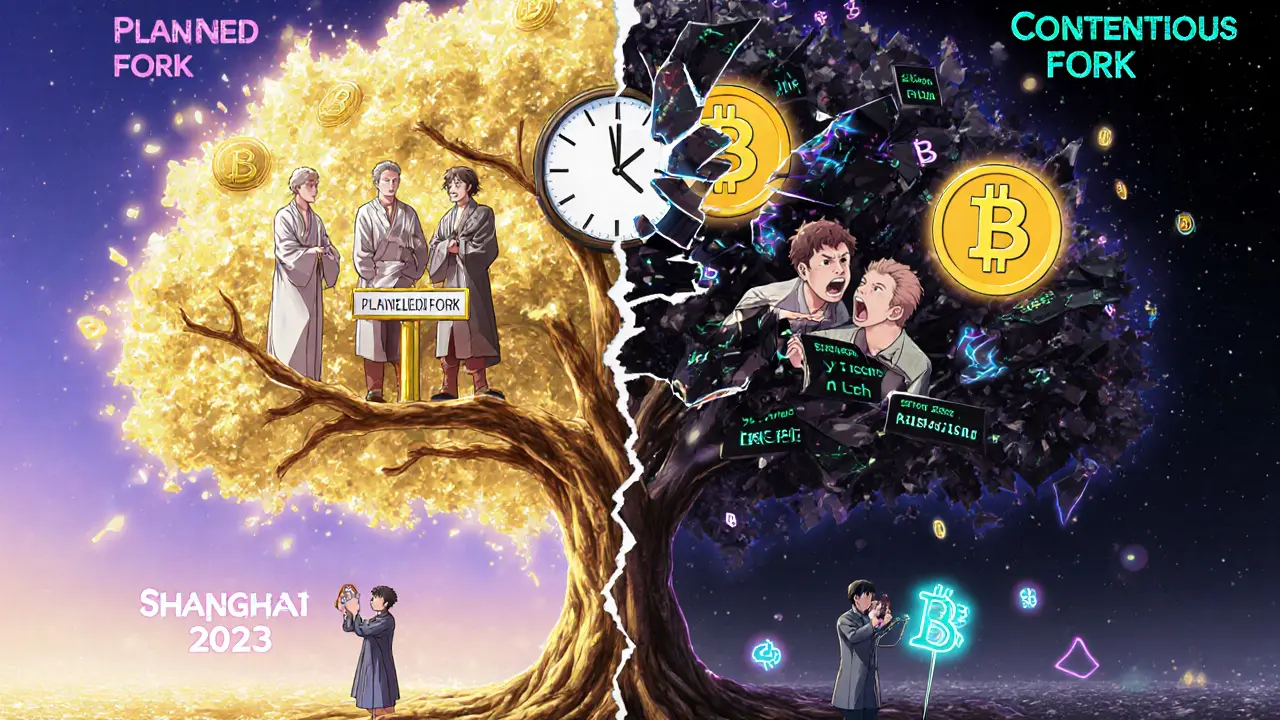
Planned Fork: What It Means for Crypto, Blockchain, and Your Wallet
When a blockchain makes a planned fork, a scheduled change to the network’s rules that splits the blockchain into two versions. Also known as software upgrade, it’s not a glitch—it’s a deliberate reset. This is how blockchains evolve: adding features, fixing bugs, or changing how transactions are validated. But not all forks are equal. Some are smooth, silent upgrades. Others spark chaos, price swings, and even new coins. The difference? It’s all in the type of fork.
A hard fork, a backward-incompatible upgrade that forces everyone to update or get left behind. Also known as chain split, it creates two separate blockchains—one following the old rules, one on the new. Think Bitcoin Cash splitting from Bitcoin in 2017. If you held Bitcoin before the fork, you got free Bitcoin Cash. But if you didn’t move your coins to a wallet that supported the new chain, you lost access. That’s why exchanges like APROBIT and CoinTR always announce fork support in advance—they’re protecting your assets. On the flip side, a soft fork, a backward-compatible change where old nodes still recognize new blocks. Also known as upgradable protocol, it’s like updating your phone’s OS without losing apps. Ethereum’s transition to proof-of-stake was a soft fork. No new coin. No chaos. Just a quieter, more efficient network.
Planned forks aren’t just tech updates—they’re economic events. When a network like BlockSwap Network or HashLand Coin prepares for a fork, it often ties the change to tokenomics: new staking rules, airdrops, or NFT rewards. That’s why you see so many posts about airdrops tied to upgrades. But here’s the catch: most of these aren’t free money. FarmHero’s HERO airdrop? Gone. Throne’s THN airdrop? Fake. Even the CBSN StakeHouse NFT rumor? A scam. Real forks don’t rely on social media hype. They rely on code, community votes, and clear documentation. If a project is whispering about a fork but hiding the technical details, run. The best forks are transparent. The worst ones? They’re designed to steal your private keys while you’re busy chasing free tokens.
That’s why security matters more than ever. If you’re holding crypto on an exchange during a fork, you’re trusting them to handle it right. But if you’re using a hardware wallet or cold storage, you control everything—even when the chain splits. That’s why guides on private keys, 2FA, and gas fees keep popping up in this collection. A planned fork doesn’t just change the blockchain. It tests your preparedness. Whether you’re watching Ethereum’s next upgrade, checking if Angola’s mining ban triggered a fork, or wondering if Baby PeiPei’s zero-liquidity token will ever upgrade, the same rule applies: know what’s changing, who’s behind it, and how it affects your holdings. Below, you’ll find real cases—some successful, some disastrous—of how planned forks shaped crypto history. Learn from them before your next wallet update.