
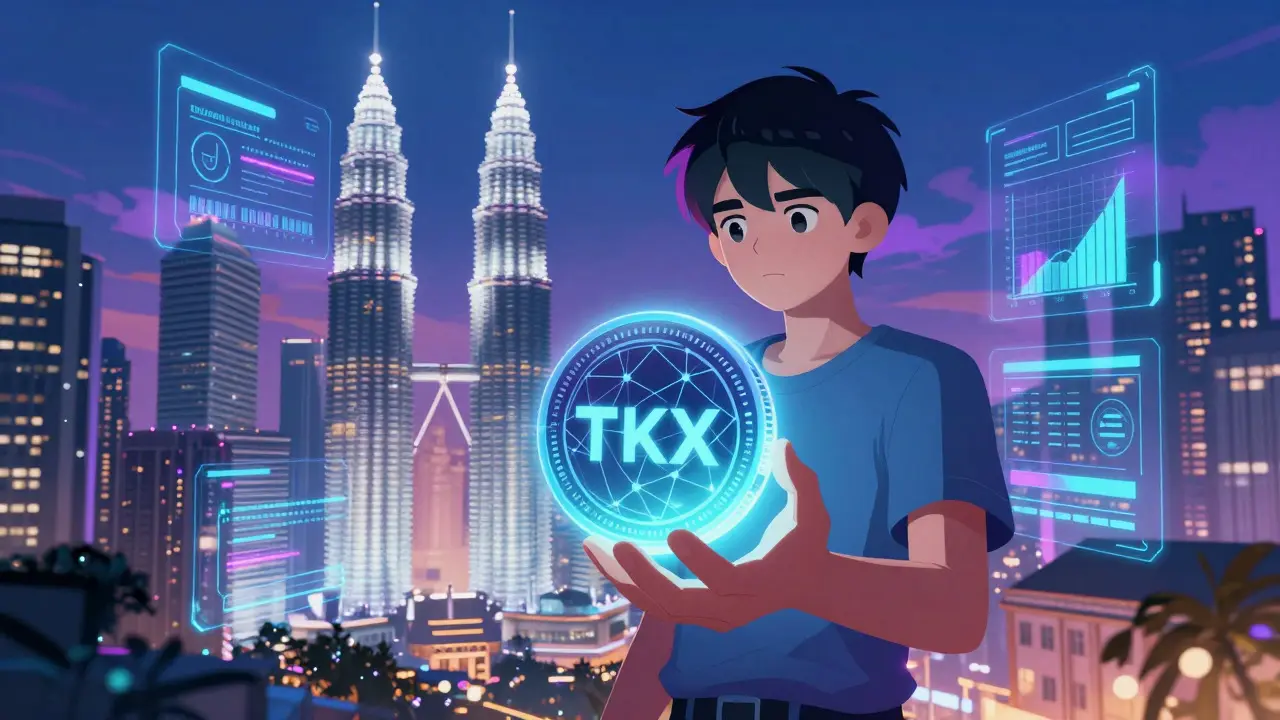
Most people hear "crypto exchange" and think of massive, global giants. But Tokenize Xchange is a different beast. It’s a centralized digital asset exchange (DAX) focused specifically on the Southeast Asian market, particularly Malaysia and Singapore. If you’re asking what the TKX coin actually does, you’re looking at more than just a trading fee discount. It’s the key to an entire ecosystem that includes its own custom blockchain, initial exchange offerings, and a push into NFTs.
The core promise here is simplicity. The founders wanted to lower the barrier for new users who get overwhelmed by complex interfaces. By using the native TKX token, you unlock specific utilities that standard fiat or Bitcoin holdings don’t offer directly. This isn't a passive investment; it's a functional tool within the platform.
What Exactly Is Tokenize Xchange?
Tokenize Xchange is a licensed digital asset exchange operator authorized by the Securities Commission of Malaysia. Founded by Hong Qi Yu, the platform launched around 2017 or 2018, depending on which source you trust. Yu started by coding smart contracts with Ether before deciding to build a full exchange to solve user experience issues in the crypto space.
The platform operates on four main pillars:
- Digital Exchange: Standard spot trading for crypto-to-crypto and crypto-to-fiat pairs.
- IEO Platform: A dedicated section for Initial Exchange Offerings where new tokens launch.
- Merchant Solutions: Tools for businesses to accept crypto payments.
- Education: Resources to help beginners understand digital assets without the jargon overload.
Geographically, it’s tied closely to Malaysia and Singapore. While some sources label it as Singapore-based, the regulatory authorization from the Malaysian Securities Commission is a significant credibility marker. It also seeks licensing in Singapore, indicating a dual-market strategy.
Understanding the TKX Token Utility
So, why hold TKX? It’s an ERC-20 token operating on the Ethereum blockchain, adhering to standardized protocols for compatibility. As of mid-2023, the circulating supply was roughly 80 million tokens, with a hard cap of 100 million. That fixed supply matters if you’re worried about inflation diluting your holding.
You can’t mine TKX in the traditional sense. There is no proof-of-work mining rig running for this coin. Any website claiming you can "mine TKX" is likely misleading you. Instead, you acquire it through purchases, staking rewards, or affiliate programs.
Here’s where the utility kicks in:
- Fee Discounts: Paying trading fees in TKX significantly reduces costs compared to paying in fiat or other cryptos.
- IEO Access: You need TKX to participate in new token launches on their IEO platform. All contributions are made in TKX.
- Staking Rewards: Stake your TKX on the platform to earn additional yield.
- Crypto Earn Programs: Participate in Dual Earn and other interest-bearing products.
- Governance: Holders have voting rights on platform decisions.

The Titan Blockchain: Why They Built Their Own Chain
This is the most technical part, but it’s crucial for understanding the long-term vision. As user volume grew, relying solely on Ethereum became expensive and slow. So, the team developed Titan, their own blockchain infrastructure.
Titan isn’t just a random chain. It’s built on the Cosmos SDK, a framework designed for building interoperable blockchains. Crucially, it’s EVM-compatible, meaning existing Ethereum applications and developers can migrate to Titan with minimal friction. This allows for faster, cheaper transactions while maintaining the security of a decentralized network.
Titan integrates AI to help monitor the network. This AI layer helps identify fraud, flag potential money laundering, and reduce human error in transaction processing. It supports the Inter-Blockchain Communication (IBC) protocol, allowing seamless asset transfers between Titan and other Cosmos-based chains.
| Feature | Ethereum Network | Titan Network |
|---|---|---|
| Base Technology | Ethereum Mainnet | Cosmos SDK + EVM Compatible |
| Transaction Speed | Standard Ethereum speed | Optimized for fast, low-cost trades |
| Interoperability | Bridges required for cross-chain | Native IBC Protocol support |
| Security Layer | Standard consensus | AI-assisted fraud detection |
| Primary Use Case | Legacy storage & DeFi integration | High-volume exchange operations |
Trading Features and Security
On the trading floor, Tokenize Xchange offers cross-chain trading capabilities. This means you can swap assets across different blockchains without jumping through multiple bridge hops manually. The interface includes an order book for viewing bid/ask positions and an order management system to track outstanding trades.
Security is handled via a partnership with BitGo, a well-known institutional custody provider. This gives retail users access to enterprise-grade cold storage solutions. For personal security, TKX is supported by major hardware wallets like Trezor and Ledger. Keeping your tokens on a hardware wallet ensures you maintain 100% ownership and control, protected from online hacks.
The platform also supports fiat pairings. At various points, it has listed Bitcoin, Ethereum, Litecoin, and Ripple for direct fiat trading. In June 2022, they added support for Elimint, an NFT platform, allowing creators to mint and sell digital art directly through the exchange ecosystem.
Is TKX a Good Investment?
That depends on your goal. If you want a speculative meme coin with viral potential, TKX might not be it. It’s a utility token tied to a specific exchange. Its value proposition relies heavily on the success of the Tokenize Xchange platform itself. If the exchange grows, usage of TKX increases, potentially driving demand.
However, there are risks. It’s a centralized exchange (CEX), meaning you rely on the company’s operational stability. Regulatory changes in Malaysia or Singapore could impact operations. Also, because it’s a niche regional player, liquidity might not match global giants like Binance or Coinbase. Always check current trading pairs and volumes on platforms like LBank or others listing TKX before making large moves.
Frequently Asked Questions
Can you mine TKX coins?
No, TKX cannot be mined using traditional proof-of-work methods. It is an ERC-20 token issued by the exchange. You acquire it by buying it on exchanges, earning it through staking, or participating in affiliate programs. Be wary of sites claiming "TKX mining" as they are often scams.
Where is Tokenize Xchange based?
The platform is primarily associated with Malaysia, where it holds a license from the Securities Commission. It also operates with a strong presence in Singapore and is seeking further licensing there. It targets the broader Southeast Asian market.
What is the maximum supply of TKX?
The maximum supply of TKX is capped at 100,000,000 tokens. As of recent data, the circulating supply hovers around 80 million tokens, meaning a significant portion remains unissued or locked.
Does TKX work on hardware wallets?
Yes, TKX is compatible with popular hardware wallets such as Trezor and Ledger. Storing your tokens on these devices provides offline security and protects against online threats while keeping you in control of your private keys.
What is the Titan blockchain?
Titan is Tokenize Xchange's proprietary blockchain. It is built on the Cosmos SDK and is EVM-compatible, allowing it to run Ethereum smart contracts. It aims to provide faster, cheaper transactions and better interoperability than relying solely on the Ethereum mainnet.