
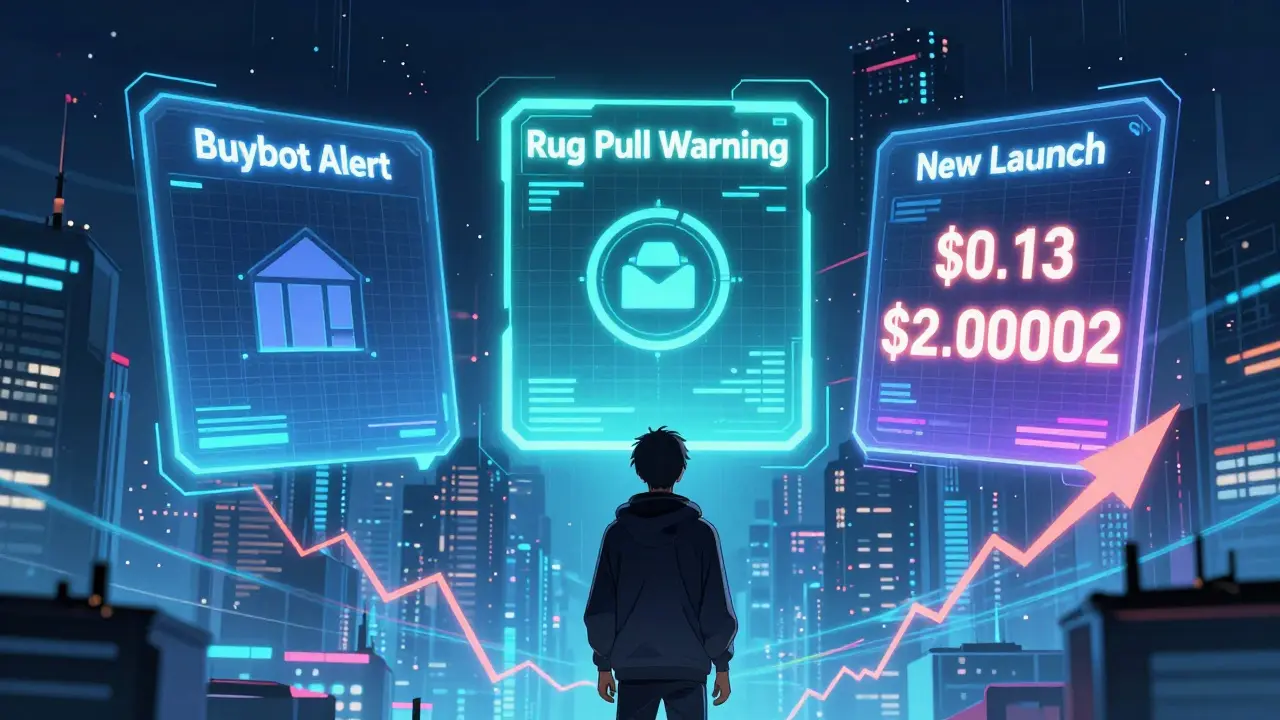
Virtu by Virtuals (VIRTU) is a cryptocurrency token built on the Base blockchain, designed to support the Virtuals ecosystem - a network of tools and services aimed at helping crypto traders navigate the chaotic world of new token launches. Unlike major coins like Bitcoin or Ethereum, VIRTU isn’t meant to be a store of value or a payment system. Instead, it acts as a utility token, powering features that warn users about scams, notify them of new trading bots, and track newly launched tokens. The token launched in late 2024 with a burst of hype. Its all-time high hit $0.130117 on November 27, 2024. Just two days later, it crashed to $0.00002245 - a 99.95% drop. That kind of volatility isn’t unusual for tiny, low-liquidity tokens, but it’s a red flag for anyone thinking of holding VIRTU long-term. As of March 2026, VIRTU’s price varies wildly depending on which exchange you check. Binance lists it at $0.000177, CoinMarketCap at $0.00007133, Crypto.com at $0.00007756, and TradeSanta at $0.00050111. These differences aren’t errors - they’re symptoms of extremely thin trading volume. Some days, the total 24-hour trading volume across all exchanges adds up to less than $2,000. That means if you tried to buy $10,000 worth of VIRTU, you’d likely move the price drastically - and probably end up paying far more than expected. The total supply of VIRTU is capped at 1 billion tokens. Almost all of them - 999.85 million - are already in circulation. That leaves very little room for new supply to enter the market. But here’s the catch: even with nearly a billion tokens out there, the total market cap hovers between $50,000 and $500,000 depending on the data source. That’s smaller than the price of a single NFT from a popular collection. So what does VIRTU actually do? The token powers three main tools within the Virtuals ecosystem:
- Buybot notifications - Alerts users when a new trading bot starts buying a specific token, helping people spot potential pump-and-dump patterns early.
- Rug alert notifications - Flags new tokens that show signs of being scams, like anonymous teams, locked liquidity that gets released too soon, or sudden spikes in volume with no real development.
- New launch notifications - Tracks newly deployed tokens on supported blockchains and sends out alerts so users don’t miss early opportunities.
How VIRTU compares to other utility tokens
| Feature | Virtu (VIRTU) | SHIBA INU (SHIB) | MANA (Decentraland) | CHZ (Chiliz) |
|---|---|---|---|---|
| Blockchain | Base | Ethereum | Ethereum | Ethereum |
| Primary Use | Trading alerts & ecosystem tools | Community rewards, meme culture | Virtual land purchases | Sports fan tokens |
| Market Cap (March 2026) | $50K-$500K | $3.2B | $480M | $780M |
| Circulating Supply | 999.85M | 589T | 1.89B | 8.8B |
| 24-Hour Volume | $200-$1,700 | $300M | $35M | $120M |
| Price Volatility (90-day) | -34.89% | +12.5% | -8.3% | -15.7% |
| Community Size | ~30K holders | 1.2M+ holders | 500K+ holders | 1.5M+ holders |
Compared to other utility tokens, VIRTU stands out for its tiny size and lack of mainstream adoption. SHIBA INU has a massive community and cultural presence. MANA and CHZ are tied to real platforms - virtual worlds and sports fan engagement - with active users and revenue streams. VIRTU has none of that. It’s a tool for traders, not a movement.
Should you buy VIRTU?
If you’re asking whether VIRTU is a good investment, the answer is almost certainly no - unless you’re comfortable gambling on a token with no safety net.- Buy if: You’re an active trader who uses the Virtuals tools and want to support the ecosystem. You understand the risks and are only risking a few dollars.
- Avoid if: You’re looking for long-term growth, passive income, or stability. You don’t fully understand how utility tokens work. You’re chasing quick profits based on social media hype.

Where to find VIRTU
You can trade VIRTU on three exchanges:- Binance - Highest liquidity of the three, but still very low overall.
- HitBTC - Smaller platform, less user-friendly, but supports VIRTU trading.
- Coinbase - Listed but with minimal volume; not recommended for large trades.
Key risks of holding VIRTU
- Extreme price swings - A 99.95% drop in two days shows how fragile this asset is.
- Near-zero liquidity - You might not be able to sell when you want to.
- Dependency on one team - If the Virtuals team disappears or stops development, VIRTU becomes worthless.
- Low transparency - No clear roadmap, no public audits, no financial disclosures.
- Price manipulation - With such low volume, a few large wallets can move the price easily.

What’s next for VIRTU?
The team claims they’re building a dedicated trading bot to work alongside the existing alert system. But there’s no timeline, no demo, and no public updates. That’s common in small crypto projects - but it’s also a warning sign. Without regular communication, trust fades fast. The real question isn’t whether VIRTU will rise in price. It’s whether the Virtuals ecosystem will grow enough to make the token useful to more than a few hundred traders. So far, the answer looks like no.FAQ
Is Virtu by Virtuals (VIRTU) a good investment?
No, VIRTU is not a good investment for most people. It’s a highly volatile, low-liquidity utility token with no real-world use outside its own ecosystem. The all-time high was $0.13, and it dropped 99.95% in two days. Only experienced traders who actively use its tools should consider holding it - and even then, only with money they can afford to lose.
Where can I buy VIRTU?
VIRTU is available on Binance, HitBTC, and Coinbase. However, trading volume is extremely low across all platforms. Binance has the highest liquidity, but even there, 24-hour volume is often under $1,000. Use limit orders to avoid slippage, and never invest more than a few dollars.
What is VIRTU used for?
VIRTU powers tools in the Virtuals ecosystem that help crypto traders avoid scams and spot new opportunities. These include buybot alerts, rug pull warnings, and new token launch notifications. It does not offer staking, governance, or passive income. Its value comes entirely from its utility within this specific network.
Why is VIRTU’s price so different on each exchange?
The price differences exist because of extremely low trading volume and fragmented liquidity. With only $200-$1,700 traded per day across all exchanges, even small orders can move the price significantly. Some exchanges may also have outdated or delayed data. Always check multiple sources before trading.
Can VIRTU reach $1 in value?
It’s highly unlikely. For VIRTU to reach $1, its market cap would need to exceed $1 billion. With only 30,920 holders and minimal adoption, there’s no evidence of demand that large. The token’s entire history shows extreme volatility and lack of sustained interest. Reaching $1 would require a massive, unrealistic surge in popularity.
Comments (19)