

Imagine logging into your banking app to find your funds locked. No warning, no email, just a notification that your account is "under review." For many crypto holders in 2026, this isn't a hypothetical nightmare; it's a growing reality driven by stricter crypto compliance rules. If you've ever wondered why moving digital assets can trigger such drastic measures from traditional banks, the answer lies in a complex web of new laws, automated tracking systems, and risk-averse financial institutions.
The landscape has shifted significantly since the mid-2020s. What used to be a gray area where banks might tolerate small crypto transactions is now a high-stakes environment governed by federal legislation. Understanding these mechanics is no longer optional for anyone holding or trading cryptocurrency. It’s about protecting your access to your own money.
The Regulatory Shift: The GENIUS Act and FDIC Changes
To understand why freezes happen, you have to look at the law. In June 2025, the U.S. passed the Guiding and Establishing National Innovation for U.S. Stablecoins (GENIUS) Act. This was a game-changer. Before this, rules were patchy. Now, there is a clear federal framework defining how banks must handle digital assets. Specifically, the act defines a "lawful order" as any valid court or administrative command requiring the seizure or freezing of payment stablecoins. This gives regulators and banks a direct legal tool to block assets without needing to prove you committed a crime first-just that the asset falls under scrutiny.
Simultaneously, the Federal Deposit Insurance Corporation (FDIC) rescinded its old restrictive guidance in April 2025. Previously, banks needed special permission to touch crypto. Now, they can engage in crypto activities if they maintain strict risk management. This sounds like good news for innovation, but for individual users, it means banks are more involved in crypto oversight than ever before. They aren't just watching; they are actively managing the risk associated with every transaction that hits their ledger.
| Feature | Pre-2025 Environment | Post-GENIUS Act (2026) |
|---|---|---|
| Legal Basis for Freezes | Vague AML guidelines | Specific "Lawful Order" provisions |
| Bank Authority | Limited without FDIC approval | Permitted with internal risk controls |
| Stablecoin Status | Unclear regulatory classification | Exempt from commodity/securities rules, priority bankruptcy claims |
| User Risk | Moderate, based on bank policy | High, due to automated blockchain tracking |
How Banks Track Your Crypto: The Role of KYT
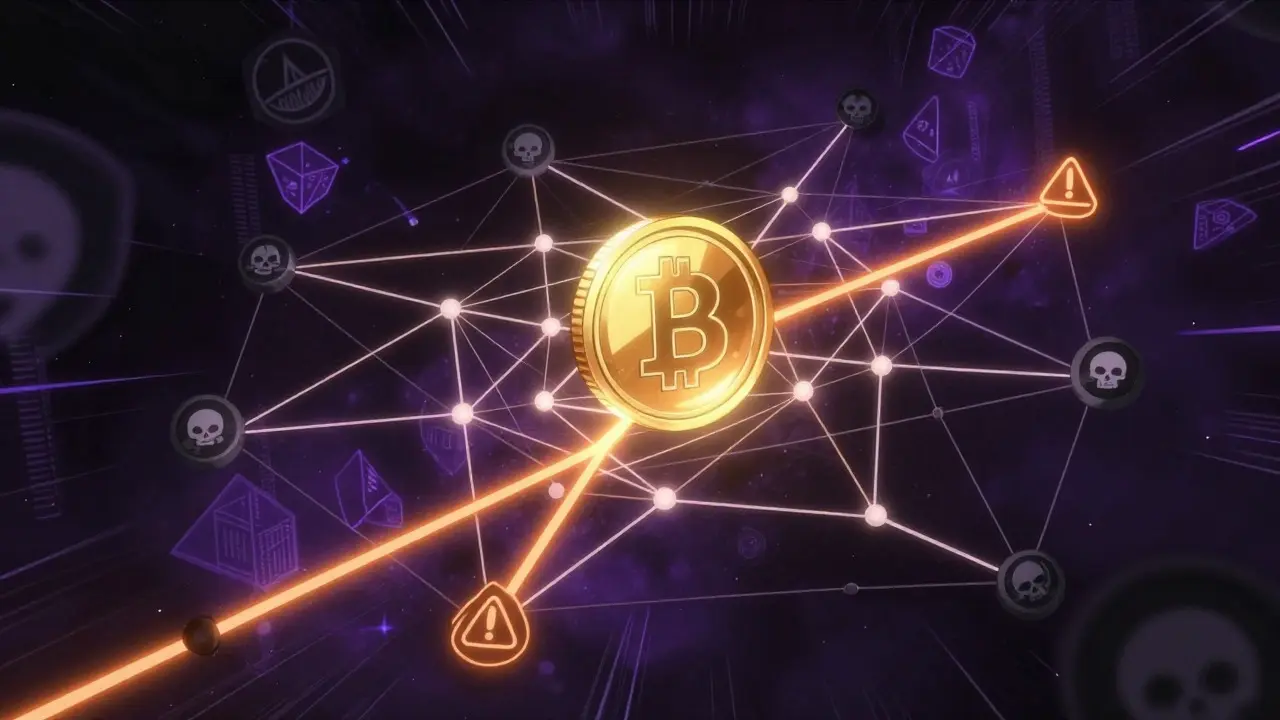
You might think your private wallet is safe. Think again. Banks and exchanges use Know Your Transaction (KYT) systems. These aren't just checking who you are; they are tracing where your coins came from. Because the blockchain is transparent, every transaction is linked. If you receive Bitcoin from an address that once touched a darknet market, a sanctioned entity, or a mixing service, your account gets flagged. You didn't do anything wrong, but your transaction history did.
This is where the term "secondary exposure" comes in. Even if you bought your crypto directly from a reputable exchange, if that exchange had a minor compliance lapse months ago, your coins might carry a "taint." When you try to off-ramp those coins into your bank account, the bank's AI system sees the taint and freezes the deposit. It’s an automatic response, not a human judgment call. This is why experienced users warn that even legitimate trading can lead to blocks if the source of funds looks questionable to an algorithm.
The Off-Ramp Bottleneck: Where Users Get Stuck
The biggest pain point for users isn't buying crypto; it's getting cash out. This process, known as off-ramping, is where most freezes occur. Banks are increasingly demanding extensive documentation before crediting an account. They want proof of source of funds. Did you earn the crypto? Sell it? Receive it as a gift? Each scenario requires different paperwork. Without it, the money sits in limbo. For merchants accepting crypto payments, this is a nightmare. Their customers' transaction histories become their liability. If a customer pays with tainted coins, the merchant's bank account could be frozen while the dispute is resolved.
Compliance teams at major banks have had to build new expertise in blockchain forensics. The learning curve is steep. Institutions need to manage cryptographic keys, ensure Bank Secrecy Act (BSA) compliance, and vet third-party vendors. This complexity translates to slower processing times for users. What used to take minutes now takes days or weeks, especially if a flag is raised.
Navigating the New Landscape: Practical Tips
So, how do you protect yourself? First, keep your records immaculate. Save every invoice, receipt, and trade confirmation. If you receive crypto from another person, get a written agreement stating the nature of the transfer. Second, be cautious with sources. Avoid receiving coins from unknown addresses or using privacy-focused tools like mixers unless you are prepared for intense scrutiny. Third, consider diversifying your banking relationships. Don't put all your eggs in one basket. If one neobank or traditional bank freezes your account, having a backup institution can save your cash flow.
Finally, stay informed about local regulations. While the GENIUS Act sets federal standards, state-level laws can add extra layers of complexity. The secondary market remains largely unregulated, creating loopholes that experts warn could be exploited. But for the average user, the safest bet is transparency and documentation.
What This Means for the Future
The trend is clear: institutional adoption is rising, but retail enforcement is tightening. Major banks like JPMorgan Chase and Bank of America are exploring stablecoin ventures, gaining regulatory clarity. Meanwhile, individual users face increased scrutiny. This bifurcated market means that while big players play by the new rules, individuals are left to navigate them alone. Some analysts predict this will drive more users toward Decentralized Finance (DeFi) platforms that operate outside traditional banking infrastructure. But for now, if you rely on fiat currency for daily life, understanding crypto compliance is essential.
The balance between preventing financial crime and allowing innovation is still being struck. Until then, assume that every crypto transaction is visible to your bank. Plan accordingly.
Can a bank freeze my account just because I hold crypto?
Not usually for simply holding it in a self-custody wallet, but yes, if you move it through a bank-linked exchange or try to convert it to fiat. The freeze typically happens during the off-ramp process when KYT systems flag the transaction history.
What is the GENIUS Act and how does it affect me?
The GENIUS Act is a 2025 U.S. law that created the first comprehensive framework for stablecoins. It allows banks and regulators to issue "lawful orders" to freeze digital assets, giving them more power to block accounts related to crypto activity without prior criminal proof.
How long does it take to resolve a crypto-related account freeze?
It varies widely. Simple flags might resolve in a few days with basic documentation. Complex cases involving questionable transaction histories can take weeks or even months, depending on the bank's compliance team workload and the depth of the investigation required.
Are DeFi platforms safer from bank freezes?
Yes, because DeFi operates on smart contracts rather than centralized banks. However, you still face risks when bridging assets back to traditional finance. The freeze risk shifts from the holding phase to the exit phase.
What documents should I keep to prove source of funds?
Keep exchange statements, trade confirmations, invoices for services paid in crypto, and written agreements for gifts or transfers between individuals. Digital signatures or notarized letters can help strengthen your case if a dispute arises.