
When you hear about ZBG Crypto Exchange, you might think it’s just another place to trade altcoins. But the truth is far more dangerous. ZBG isn’t just underregulated-it’s built on shaky ground, with red flags that should make any serious trader walk away. This isn’t a review that says "it’s okay if you’re careful." This is a warning: ZBG is a high-risk platform with no transparency, no accountability, and a trail of complaints that can’t be ignored.
What ZBG Claims to Be
ZBG says it’s a Hong Kong-based exchange launched in 2018, a "baby brother" to ZB.com. It promises access to hundreds of new cryptocurrencies, OTC trading, token launchpads, and mobile apps. It sounds like a normal exchange-until you dig deeper.
The problem isn’t what it says-it’s what it doesn’t show. Unlike Coinbase, Kraken, or even Binance, ZBG doesn’t publish verified trading volumes. CoinMarketCap lists it as "Volume data is untracked," meaning no independent source can confirm how much is actually being traded. That’s not a glitch. It’s a pattern.
The Volume Lie
In 2021, ZBG claimed to hit $8.8 billion in 24-hour volume. That’s bigger than most exchanges. But here’s the catch: CoinMarketCap stopped tracking it. Why? Because the numbers didn’t add up. Chainalysis found that exchanges with untracked volume like ZBG now account for less than 0.3% of global crypto trading-down from nearly 3% just two years ago.
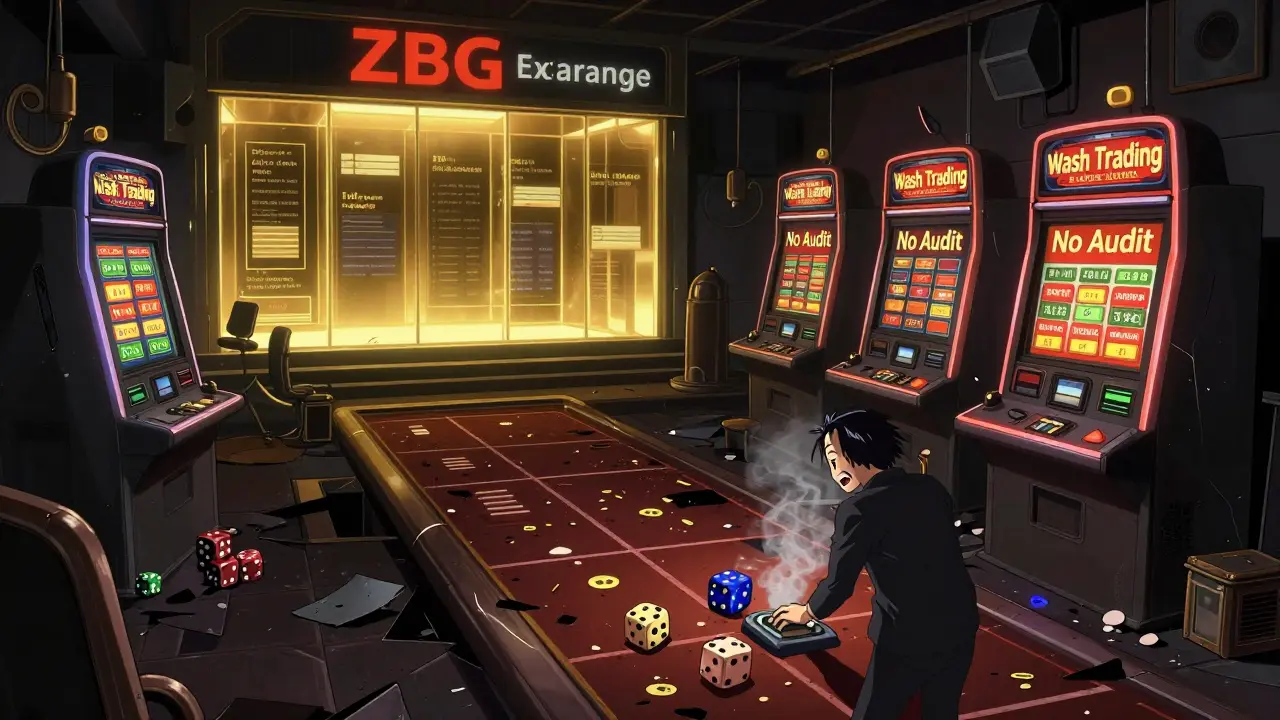
CryptoQuant’s analysis in May 2025 revealed something worse: only 27 of ZBG’s hundreds of trading pairs showed real activity. The rest? Classic wash trading. Fake buy orders, fake sell orders, the same wallets trading with themselves over and over. It’s like a casino where the dice are loaded-and only the house knows how.
Scam Domains Everywhere
Try searching for ZBG online. You’ll find dozens of fake sites: h5.zbgtrades.com, zbgour.com, zbgmax.com, zbgtan.com. These aren’t glitches. They’re deliberate phishing traps. Cryptolegal documented at least eight scam domains using "zbg" in their names, all designed to steal login details and private keys.
When a legitimate exchange gets hacked, it issues a public alert. When ZBG gets impersonated, it stays silent. No warning. No takedown request. That silence speaks volumes.
No Regulatory Oversight
Hong Kong introduced strict crypto exchange licensing rules in March 2023. To operate legally, exchanges must be licensed by the Securities and Futures Commission. ZBG has no license. Not even a public application.
Compare that to OSL, which got licensed in December 2020. Or Coinbase, which complies with U.S. and global regulations. ZBG operates in the gray zone-exactly where regulators warn investors not to go. The Hong Kong Monetary Authority explicitly states: "Investors using unlicensed platforms do so at their own risk."
And that risk? It’s real. Traders have reported withdrawals stuck for weeks. One user on CryptoSlate said they tried to pull out 2.5 BTC. The status stayed "processing" for 17 days. Then came an email: "System maintenance." No explanation. No timeline. Just silence.
Hidden Fees and No Transparency
ZBG claims "low fees." But Traders Union’s May 2025 review found something else: hidden charges. Withdrawal fees that appear after you initiate the transfer. Deposit fees buried in fine print. Maker-taker fees that change without notice.
Compare that to Coinbase, which publishes its full fee schedule-0.05% to 0.60% depending on volume. Clear. Public. Verifiable. ZBG? No fee schedule. No breakdown. Just promises.
No Security Proof
ZBG says it uses two-factor authentication and cold storage. So do hundreds of exchanges. The difference? Kraken, Bitstamp, and Coinbase publish quarterly proof-of-reserves audits by independent accounting firms. They show exactly how much crypto they hold versus what they owe users.
ZBG? Nothing. No audit. No report. No third-party verification. You’re being told to trust them. But trust isn’t security. And in crypto, trust gets you robbed.
What About the Tokens?
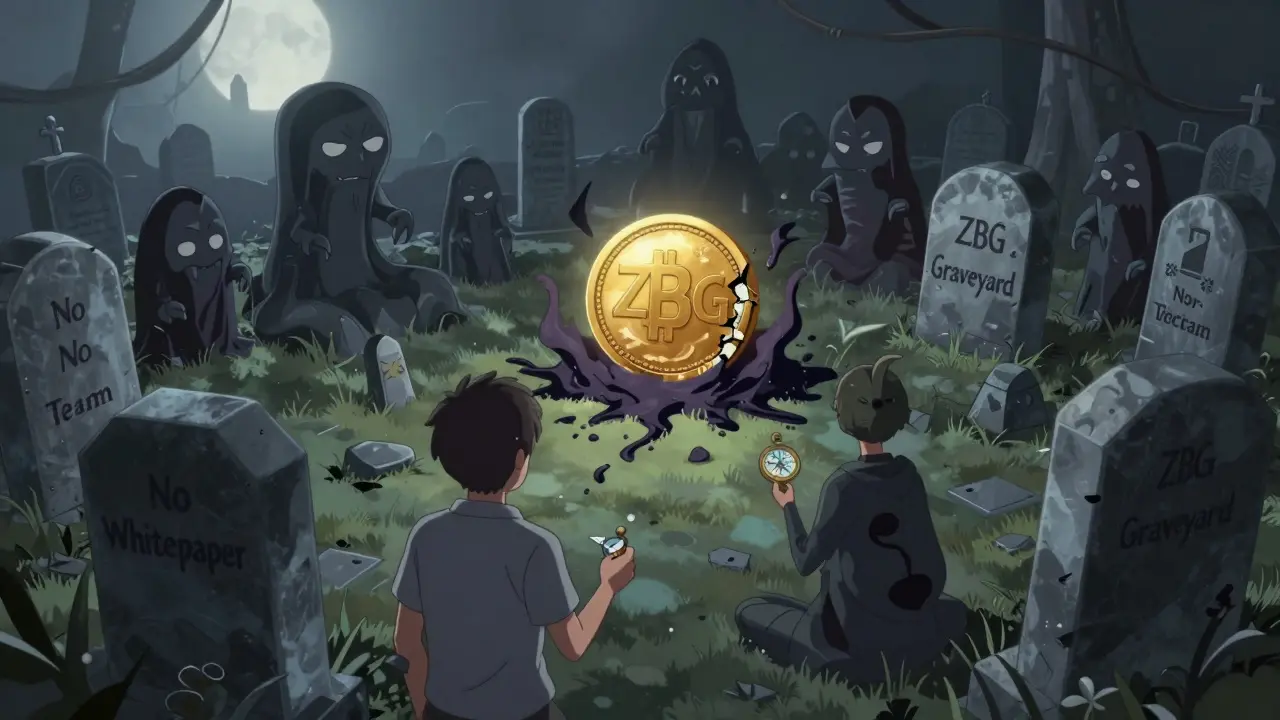
Yes, ZBG lists hundreds of tokens-many not available on bigger exchanges. But here’s the catch: those are the tokens nobody else wants. The ones with no real team, no whitepaper, no roadmap. They’re listed for free on ZBG because they can’t meet ZB.com’s standards. And when they fail there? They get "degraded" to ZBG.
That’s not opportunity. That’s a graveyard. Delphi Digital rated ZBG as "high risk" (level 4 out of 5) specifically because of this. If you’re looking for the next big coin, ZBG won’t help you find it. It’ll just help you lose money on one.
Why This Matters
You don’t trade on ZBG because it’s cheap. You don’t trade on ZBG because it’s fast. You trade on an exchange because you can trust it with your money. And ZBG? It doesn’t meet even the lowest standards of trust.
It’s not about whether ZBG is "scam" or "legit." It’s about whether it’s safe. And the answer is clear: no.
There are alternatives with real volume, real audits, real regulation. Why risk your funds on a platform that’s been flagged by regulators, ignored by data trackers, and abandoned by users?
What You Should Do Instead
If you want to trade lesser-known tokens, use a regulated exchange like Bybit, KuCoin, or Gate.io. They list new coins too-but they’re transparent about volume, fees, and security.
Or stick with Coinbase, Kraken, or Binance. They’re not perfect, but they’re accountable. You can check their audits. You can see their licenses. You can contact support-and actually get an answer.
ZBG offers nothing you can verify. And in crypto, what you can’t verify, you shouldn’t touch.
Is ZBG exchange safe to use?
No, ZBG is not safe. It lacks regulatory licensing in Hong Kong, has unverified trading volume, and is linked to multiple scam websites. There’s no proof of reserves, no third-party audits, and numerous user reports of withdrawal issues. The Financial Conduct Authority and Chainalysis both classify exchanges like ZBG as high-risk.
Does ZBG have real trading volume?
No. CoinMarketCap stopped tracking ZBG’s volume because it couldn’t be verified. Independent analysis by CryptoQuant found that over 90% of its trading pairs showed signs of wash trading-fake activity designed to inflate numbers. Its claimed $8.8 billion daily volume in 2021 is widely considered inflated.
Are there fake ZBG websites?
Yes. At least eight fraudulent domains-like zbgour.com, zbgmax.com, and zbgtan.com-are actively impersonating ZBG to steal login credentials and private keys. The official ZBG site does not warn users about these scams, increasing the risk of phishing attacks.
Why does ZBG list so many new tokens?
ZBG lists new tokens because it has low listing standards. Projects that fail to meet ZB.com’s requirements are moved to ZBG. These tokens often have no real team, no roadmap, or weak fundamentals. They’re high-risk, low-value assets that major exchanges avoid.
Can I withdraw funds from ZBG reliably?
Many users report severe delays or complete failure to withdraw. One user waited 17 days for a 2.5 BTC withdrawal, only to receive a generic "system maintenance" email. There’s no public record of customer support resolving such issues, and no escalation path is clearly defined.
Is ZBG regulated?
No. ZBG is not licensed by Hong Kong’s Securities and Futures Commission, which requires all crypto exchanges operating in the region to obtain a license since March 2023. ZBG’s lack of licensing makes it illegal to operate as a regulated entity, and users have no legal recourse if funds are lost.
What are better alternatives to ZBG?
Use regulated exchanges like Coinbase, Kraken, or KuCoin. They offer similar or better token selections, verified trading volumes, public audits, and responsive customer support. For new tokens, Bybit and Gate.io have strong listing standards without the risks ZBG presents.
Comments (13)