
Have you stumbled upon Zeddex Exchange, also known as Zedxion, and wondered if it’s the next big thing in crypto trading? Or are you worried that your funds might vanish into thin air?
If you are looking for a reliable place to trade Bitcoin, Ethereum, or altcoins, I have some bad news. Based on extensive data from 2024 through mid-2026, Zeddex Exchange is a micro-cap cryptocurrency platform with virtually no user base, zero regulatory oversight, and significant red flags regarding its operational status. It is not a competitor to giants like Binance or Coinbase. In fact, it barely registers on the radar of serious traders.
This review cuts through the noise. We will look at the hard numbers: traffic, liquidity, fees, and security. By the end, you will know exactly why keeping your money away from this platform is likely the smartest move you can make.
The Basics: What Is Zeddex Exchange?
Zeddex Exchange operates under the domain zedDEX.com. It launched around 2024 and claims to be built on the Binance Smart Chain (BSC). The platform markets itself as a "zero-fee" trading venue, promising 0.00% maker and taker fees.
That sounds too good to be true, right? Unfortunately, in the world of cryptocurrency, nothing is free. Exchanges need revenue to maintain servers, pay developers, and ensure security. When an exchange advertises zero fees, ask yourself: how do they survive?
Here is the reality check:
- Listings: Only 4 cryptocurrencies.
- Trading Pairs: Just 6 pairs available.
- Regulation: None. No licenses from any government authority.
- Traffic: Approximately 47 visits per month globally.
To put that in perspective, major exchanges handle millions of users daily. Zeddex has fewer monthly visitors than most small blogs. This lack of activity suggests the platform is either non-operational, abandoned, or functioning at such a minimal level that it poses extreme risk to any user who attempts to deposit funds.
Safety and Security: The Biggest Red Flags
When choosing a crypto exchange, security is not optional-it is essential. You need to know where your assets are stored and who is watching over them.
Let’s look at how Zeddex compares to industry standards:
| Feature | Zeddex Exchange | Major Exchanges (e.g., Binance, Kraken) |
|---|---|---|
| Regulatory Oversight | None | FCA, NYDFS, ASIC licensed |
| Cold Storage | Not documented | 95%+ assets in cold storage |
| Proof of Reserves | Absent | Regularly audited and published |
| Insurance Fund | Absent | Available for user protection |
| User Reviews | Zero | Thousands of verified reviews |
The absence of regulatory compliance means there is no legal recourse if something goes wrong. If Zeddex shuts down tomorrow, or if hackers steal your funds, you have no one to call. There is no insurance fund to cover losses. There is no proof that the exchange actually holds the assets it claims to manage.
In contrast, platforms like Kraken or Coinbase undergo regular audits and comply with strict financial regulations. They prioritize transparency because they have reputations to protect. Zeddex has neither.
Liquidity and Trading Experience
Liquidity refers to how easily you can buy or sell an asset without affecting its price. Low liquidity is a nightmare for traders. It leads to slippage-where you get a much worse price than expected-and makes it difficult to exit positions quickly.
Zeddex reports an average bid-ask spread of 0.603%. While this number might seem low in isolation, it is misleading. Spreads are only meaningful when there is volume behind them. With only 47 monthly visitors, the order book is likely empty or extremely thin.
Imagine trying to sell $1,000 worth of tokens on Zeddex. If there are no buyers waiting in the queue, your sale could crash the price, or worse, fail entirely. You might find yourself unable to withdraw your funds because the exchange lacks the liquidity to process the transaction.
Furthermore, the platform does not offer margin trading. While this limits leverage risks, it also signals that the exchange is not equipped for advanced trading strategies. It is designed for basic spot trading, but even that is risky given the lack of depth.
The Zero-Fee Trap
Zeddex’s main selling point is its claim of 0.00% trading fees. On paper, this beats every major exchange. But let’s dig deeper.
Exchanges make money in two ways: trading fees and spreads. If Zeddex charges no fees, they must rely on wide spreads or other hidden costs. However, their reported spread of 0.603% is not particularly wide compared to some decentralized exchanges (DEXs). So, how do they profit?
They don’t. Not yet. Or perhaps they never intended to. Many fraudulent or poorly managed exchanges use "zero fees" as bait to attract naive users. Once deposits roll in, the operators may disappear-a classic rug pull scenario.
Consider this: Binance offers maker fees as low as 0.02% and taker fees of 0.10%. These fees fund robust security infrastructure, customer support, and liquidity provision. Paying a small fee for safety is always better than paying nothing for a potential loss of everything.
User Feedback and Community Presence
In the digital age, reputation is everything. A legitimate business will have customers talking about it online. Whether the reviews are positive or negative, there should be *some* discussion.
Zeddex has none.
There are zero user reviews on Trustpilot, CryptoSlate, or BeInCrypto. Reddit threads discussing obscure exchanges do not mention Zeddex. Specialized forums like Bitcointalk show no active communities using the platform. The silence is deafening.
This lack of engagement is not just a minor inconvenience; it is a critical warning sign. It indicates that the exchange has failed to achieve even minimal user adoption. Without a community, there is no peer verification, no shared knowledge, and no accountability.
Compare this to KuCoin, which maintains over 10,000 user reviews across various platforms. Even when KuCoin faces criticism, users are actively discussing their experiences. Zeddex exists in a vacuum.
Zeddex vs. ZEDXION Token: Don't Get Confused
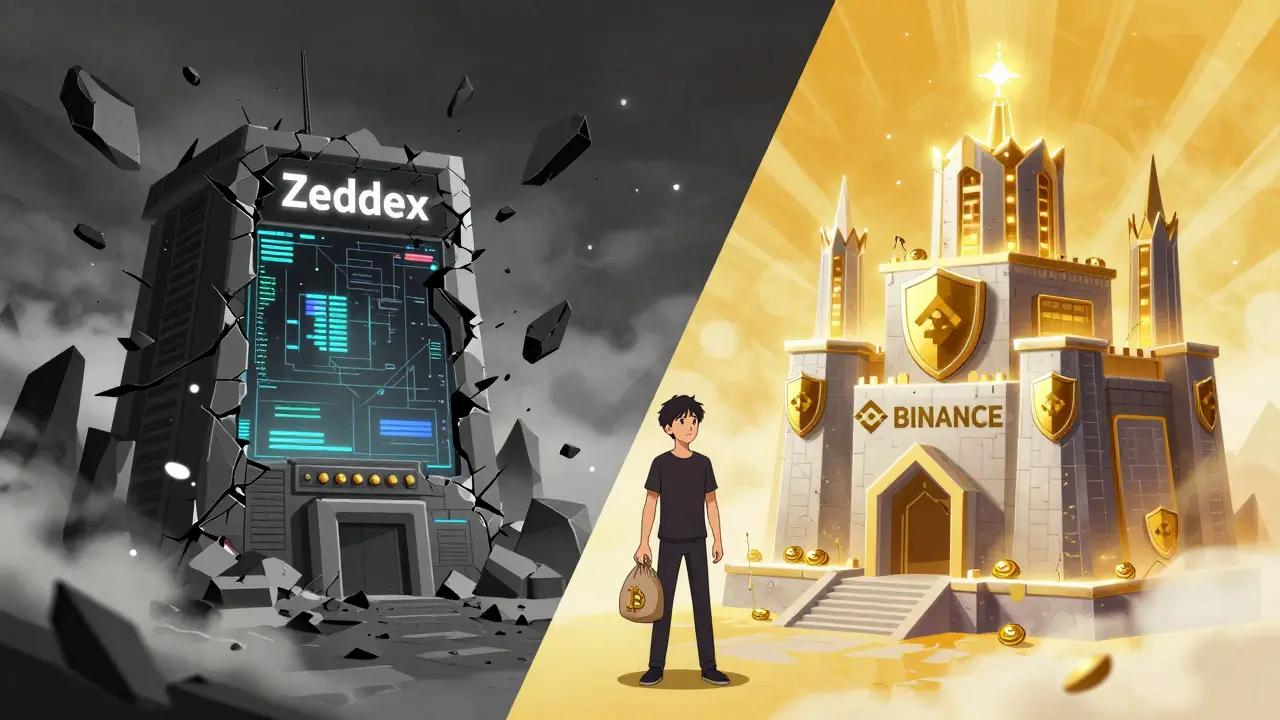
One common mistake new investors make is confusing the exchange with a token named similarly. ZEDXION is a cryptocurrency token traded on platforms like PancakeSwap, Uniswap, and Binance.
These are completely different entities. The ZEDXION token has price predictions and market data associated with it. Some sources forecast the token could reach specific values in future years. However, these projections apply to the token, not the exchange.
Do not assume that because the ZEDXION token has some trading volume on major DEXs, the Zeddex Exchange is safe. The token’s performance is irrelevant to the exchange’s reliability. Always verify that you are interacting with the correct entity before sending funds.
Verdict: Should You Use Zeddex Exchange?
No. Absolutely not.
Zeddex Exchange fails on almost every metric that matters for a secure and functional crypto trading platform:
- No Regulation: Your funds are unprotected by law.
- No Liquidity: You may not be able to sell your assets.
- No Reputation: Zero user feedback makes it impossible to trust.
- No Transparency: No proof of reserves or security audits.
- No Growth: Traffic metrics suggest the platform is stagnant or dead.
The cryptocurrency market is competitive. There are hundreds of reputable exchanges offering better fees, superior security, and wider selections of coins. Why risk your capital on a platform that offers none of these benefits?
If you are looking for a beginner-friendly option, consider Coinbase or Kraken. For lower fees and more advanced features, Binance or Bybit are solid choices. All of these platforms have established track records, regulatory compliance, and massive user bases.
Save yourself the headache. Avoid Zeddex Exchange and stick with platforms that have proven their worth over time.
Is Zeddex Exchange a scam?
While there is no definitive proof of malicious intent, Zeddex Exchange exhibits many characteristics of high-risk or potentially fraudulent platforms. These include zero regulatory oversight, no user reviews, extremely low traffic, and a lack of transparency regarding security measures. Treating it as a potential scam is the safest approach.
What is the difference between Zeddex Exchange and ZEDXION token?
Zeddex Exchange is a trading platform (zedDEX.com), while ZEDXION is a cryptocurrency token. They are separate entities. The token is traded on major platforms like PancakeSwap and Uniswap, whereas the exchange has minimal presence and activity. Do not confuse the two when making investment decisions.
Are Zeddex Exchange fees really zero?
The platform claims to offer 0.00% maker and taker fees. However, this claim is highly suspicious given the exchange's lack of revenue model and operational transparency. Hidden costs, such as wide spreads or withdrawal fees, may still apply. Moreover, the risk of losing funds outweighs any potential savings on fees.
Can I withdraw my money from Zeddex Exchange?
There is no guarantee. With zero user reviews and extremely low liquidity, there is no evidence that withdrawals function reliably. Many unregulated exchanges freeze withdrawals or shut down abruptly. Given the lack of proof-of-reserves, your funds may not be backed by actual assets.
What are safer alternatives to Zeddex Exchange?
For beginners, Coinbase and Kraken are excellent choices due to their strong regulatory compliance and user-friendly interfaces. For more advanced traders seeking lower fees, Binance and Bybit offer deep liquidity and a wide range of trading pairs. All these platforms have established reputations and millions of active users.