
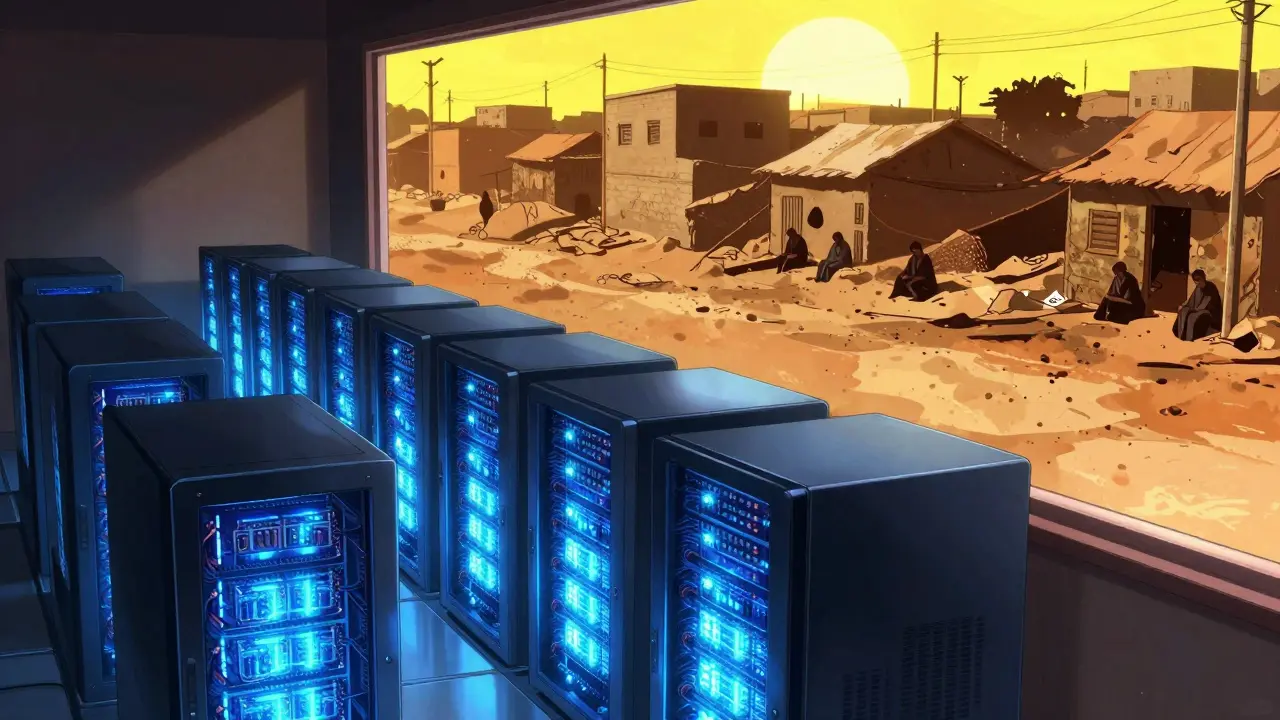
Imagine paying less than five cents for the same amount of electricity that costs over a dollar in the United States. For cryptocurrency miners in Iran, this isn't a hypothetical scenario; it is daily reality. This massive disparity in energy pricing has turned the country into one of the most profitable-and controversial-hubs for Bitcoin mining operations in the world.
But there is a steep price tag attached to these profits. While mining farms generate billions in revenue, ordinary Iranians face rolling blackouts and stifling heat waves. The tension between state-sanctioned crypto mining and public infrastructure strain has created a complex web of regulations, illegal operations, and geopolitical maneuvering. Understanding how this system works requires looking beyond the blockchain to the power grid itself.
The Economics of Subsidized Power
To understand why Iran has become a mining hotspot, you have to look at the numbers. In most Western countries, electricity costs can range from $0.10 to $0.30 per kilowatt-hour (kWh). In Iran, however, the government provides heavily subsidized electricity to certain users at rates as low as $0.01 to $0.05 per kWh.
This pricing structure creates an enormous competitive advantage. According to reports from early 2025, the estimated cost to mine a single Bitcoin in Iran is approximately $1,300. Compare this to Italy, where the cost can soar to nearly $306,000 due to high energy prices and regulatory hurdles. That is a difference of more than 200 times. Even when accounting for equipment costs and maintenance, Iranian miners operate with profit margins that are simply unmatched elsewhere.
The scale of this operation is staggering. It takes over 300 megawatt-hours of electricity to mine one Bitcoin. To put that in perspective, that is roughly the amount of power consumed by 35,000 average Iranian households in a single day. When you multiply this by the millions of ASIC devices operating across the country, the impact on the national grid becomes undeniable.
| Region | Electricity Cost (per kWh) | Est. Cost to Mine 1 BTC | Regulatory Status |
|---|---|---|---|
| Iran | $0.01 - $0.08 | $1,300 | Licensed & Illegal |
| Italy | $0.15 - $0.30+ | $306,000 | Restricted/Banned |
| Kazakhstan | $0.04 - $0.06 | $5,000 | Regulated |
| United States | $0.05 - $0.15 | $15,000 - $25,000 | Legal |
The Role of the IRGC and State Control
You cannot talk about crypto mining in Iran without mentioning the Islamic Revolutionary Guard Corps (IRGC). Reports indicate that the IRGC controls between 55% and 65% of all mining operations in the country, either directly or through affiliated front companies. This is not just business; it is a strategic tool for bypassing international sanctions.
By generating hard currency through cryptocurrency sales, the regime secures funds that are difficult for foreign governments to track or freeze. The Central Bank of Iran (CBI) maintains a dual approach: while domestic use of cryptocurrency for payments is prohibited, licensed miners are allowed to sell their mined coins to settle cross-border trade debts. This loophole allows the state to import essential goods despite heavy economic pressure.
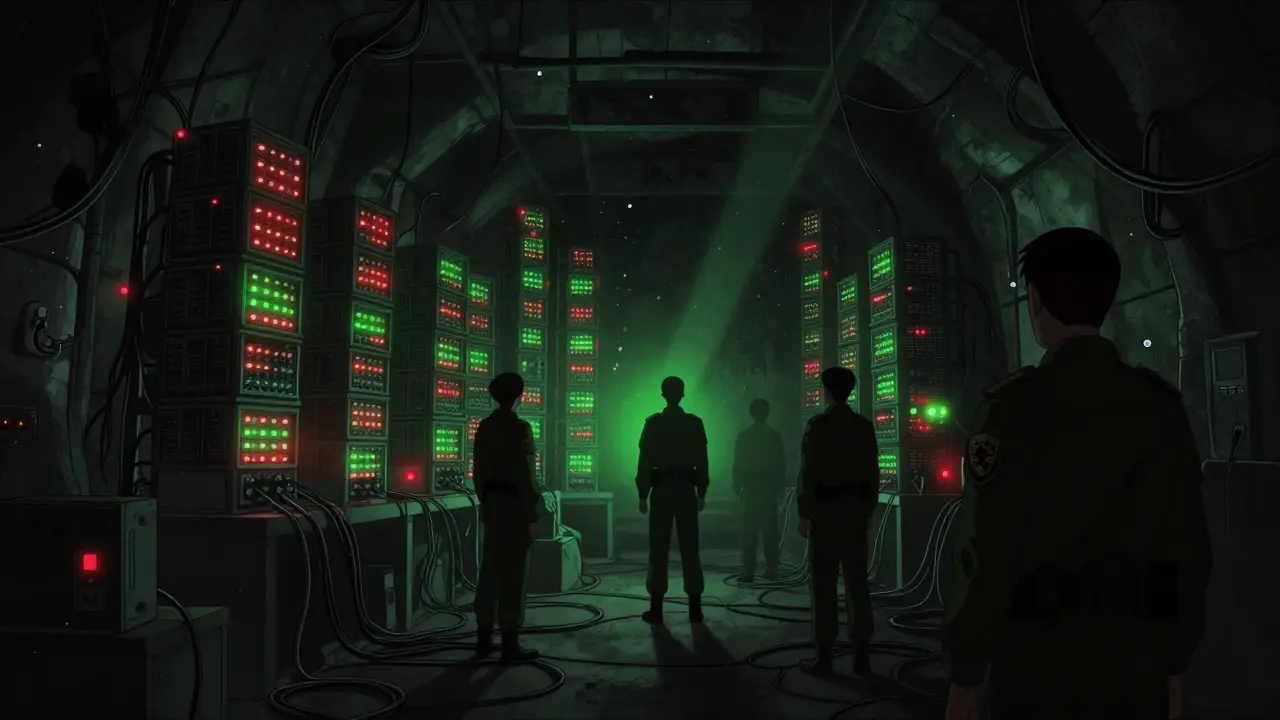
Critics argue this system amounts to "state-sanctioned theft." Mohammad Bagher Nobandegani, an energy policy analyst, has described the IRGC's control over illegal mining operations as a direct drain on public resources. Instead of powering hospitals, schools, or homes, vast amounts of subsidized electricity flow into underground tunnels and hidden warehouses controlled by military entities.
Infrastructure Strain and Public Outages
The human cost of this economic strategy is visible every summer. Iran’s power grid is already fragile, operating at only 60-70% of required capacity due to decades of underinvestment. When air conditioning demand spikes by 30-40% during peak summer months, the grid buckles.
In July 2025, officials acknowledged that cryptocurrency mining consumes nearly 2,000 megawatts of electricity. While this represents about 5% of total consumption, it accounts for 15-20% of the country’s electricity imbalance-the gap between supply and demand that causes blackouts. During a nationwide internet outage linked to regional conflicts, power consumption dropped by 2,400 MW when over 900,000 illegal mining devices were temporarily shut down. This sudden drop validated the scale of mining's impact on the grid.
For citizens, the result is relentless frustration. Social media platforms like X (formerly Twitter) and Telegram are filled with complaints from residents enduring 8-12 hours of daily blackouts. One user noted that blackouts increase by 30-40% within 48 hours of any major Bitcoin price surge, as miners run their machines at full capacity to maximize profits. The disconnect is stark: while families sweat in the dark, large-scale mining farms continue to operate uninterrupted.
Legal vs. Illegal Mining Operations
The Iranian government attempts to manage this chaos through a complex licensing system. To mine legally, operators must obtain approval from the Ministry of Industry, register with the Iran Power Generation Company, and receive authorization from the CBI. However, the process is slow and restrictive. Approval rates hover below 40%, and the wait time can stretch from three to six months.
Even those who secure licenses face challenges. They are charged industrial tariffs of $0.04-$0.07/kWh, which is higher than household rates but still incredibly cheap globally. Furthermore, they must use state-approved mining pools that take a 15-20% commission. These barriers push many smaller operators into the illegal market.
Illegal miners often tap into residential or commercial lines, using subsidized household electricity rates of $0.01-$0.02/kWh. This practice is rampant. The Energy Ministry estimates that illegal miners alone consume up to two gigawatts of power daily-equivalent to the entire electricity usage of Tehran, a city of 9 million people. To combat this, the government launched a reward program offering 10% of recovered electricity costs to citizens who report illegal setups. In the first half of 2025, this led to over 8,000 reports and more than 2,000 shutdowns.

Seasonal Bans and Regulatory Whiplash
If you are planning to invest in or operate within this space, stability is your biggest enemy. The Iranian government frequently imposes temporary bans on mining during periods of high energy demand. These bans typically occur in the summer months when the risk of grid collapse is highest.
Since 2021, the government has implemented seasonal shutdowns repeatedly. Legal miners are forced to turn off their equipment, leading to significant financial losses. This unpredictability makes long-term planning nearly impossible. While winter months offer stable conditions for mining, the threat of summer bans looms large. This pattern of "regulatory whiplash" discourages foreign investment and pushes more activity into the shadow economy.
Despite these restrictions, the sector continues to grow. Projections suggest the industry will generate $1.5 billion annually by 2025, growing at a rate of 23.7% per year. The government is caught in a dilemma: it needs the foreign exchange generated by mining to survive sanctions, but it cannot afford to let mining cripple the power grid further.
Future Outlook: A Fragile Balance
Looking ahead, the situation shows no signs of resolving easily. The International Energy Agency predicts that without significant upgrades to the power grid, shortages could worsen by 25-30% by 2027. The government is likely to continue its cycle of crackdowns and relaxations, trying to squeeze maximum value from crypto mining while minimizing public backlash.
For the global crypto community, Iran remains a wild card. Its contribution to the network hash rate is significant, but its political instability poses risks. If tensions rise or sanctions tighten further, we may see more aggressive interventions in the sector. Conversely, if the regime finds a way to balance the grid, Iran could remain a dominant force in low-cost Bitcoin production for years to come.
Ultimately, the story of Iranian energy subsidies for crypto mining is one of extreme contrasts. It is a tale of technological innovation clashing with outdated infrastructure, of state survival strategies conflicting with citizen welfare, and of immense wealth being generated in the shadows of a struggling nation.
Is cryptocurrency mining legal in Iran?
Yes, but with strict regulations. The government legalized mining in 2018, requiring operators to obtain licenses from multiple agencies including the Ministry of Industry and the Central Bank of Iran. However, unlicensed or "illegal" mining is widespread and frequently targeted by crackdowns. Domestic use of crypto for payments remains prohibited.
How much does electricity cost for miners in Iran?
Licensed miners pay industrial tariffs ranging from $0.04 to $0.08 per kWh. Illegal miners often exploit subsidized household rates, paying as little as $0.01 to $0.02 per kWh. These rates are significantly lower than global averages, providing a massive competitive advantage.
Why does the Iranian government support crypto mining?
The primary motivation is economic survival under international sanctions. By allowing licensed miners to sell cryptocurrency for cross-border trade settlements, the government generates vital foreign exchange (estimated at $800 million annually) to import essential goods without relying on traditional banking systems.
What role does the IRGC play in crypto mining?
The Islamic Revolutionary Guard Corps (IRGC) is estimated to control 55-65% of mining operations in Iran. They operate large-scale farms, often in hidden locations, and use the generated revenue to fund their activities and bypass sanctions. Critics view this as a form of state-sponsored resource extraction.
How does crypto mining affect ordinary Iranians?
Mining contributes significantly to power shortages, particularly during summer peaks. With mining consuming up to 20% of the electricity imbalance, frequent blackouts occur, affecting millions of households. Citizens often experience 8-12 hours of daily outages, leading to widespread public anger and social unrest.
Are there seasonal bans on mining in Iran?
Yes. The government frequently imposes temporary bans on mining during summer months when electricity demand is highest due to air conditioning use. These bans apply to both legal and illegal operations, causing financial uncertainty for miners and disrupting consistent production.