
Trading crypto on Ethereum mainnet used to feel like paying a luxury tax. You wanted to swap $50 worth of tokens, and the gas fees alone could eat up half your capital. That’s why Layer 2 solutions exploded in popularity, but not all of them are created equal. Enter SyncSwap, the dominant decentralized exchange built specifically for the zkSync Era network. If you are looking to trade on one of the fastest-growing zero-knowledge rollups, you’ve probably seen SyncSwap pop up everywhere. But is it actually safe? Is it profitable? And should you trust your funds to this protocol?
I’ve spent weeks digging into the data, testing the interface, and comparing SyncSwap against other major DEXs. The short answer? It is currently the king of the zkSync ecosystem, but that comes with specific risks and rewards you need to understand before connecting your wallet.
What Exactly Is SyncSwap?
At its core, SyncSwap is an Automated Market Maker (AMM). Think of it like Uniswap or SushiSwap, but optimized for a different underlying technology. While most early DEXs ran directly on Ethereum, SyncSwap was built from the ground up for zkSync Era, an Ethereum Layer 2 scaling solution that uses zero-knowledge proofs to process transactions faster and cheaper.
Launched in early 2023, SyncSwap didn’t just join the party; it quickly became the host. Today, it controls over 35% of the entire DEX market share on zkSync Era. To put that in perspective, if zkSync Era were a city, SyncSwap would be the biggest shopping mall. It has processed over $8 billion in cumulative trade volume since inception. This isn’t a niche project anymore; it is infrastructure.
The platform supports multiple networks now, including Scroll, Linea, Taiko, and Sophon, but its heart and soul remain on zkSync Era. For users, this means you get the security guarantees of Ethereum (because the final settlement happens there) with transaction costs that often drop below one cent.
User Experience: How Easy Is It to Trade?
You don’t need a computer science degree to use SyncSwap. The interface is clean, dark-mode by default, and intuitive. Here is how the typical flow works:
- Connect Wallet: You link your MetaMask, Rabby, or any standard Web3 wallet. Make sure your network is set to zkSync Era.
- Select Tokens: Choose the token you want to sell and the token you want to buy. SyncSwap automatically pulls prices from its liquidity pools.
- Set Slippage: For stable pairs, 0.1% is usually fine. For volatile new tokens, you might need to bump this to 1-5%.
- Approve & Swap: You approve the token spending (once per token) and then confirm the swap. The transaction confirms in seconds, not minutes.
One feature I appreciate is the speed. On Ethereum mainnet, waiting for block confirmation can take anxiety-inducing amounts of time. On SyncSwap via zkSync, finality is near-instant. You click swap, and within a few seconds, the tokens are in your wallet. There is also a "Limit Order" feature for more advanced traders who want to enter positions at specific price points without staring at charts all day.
Liquidity and Trading Volume: Where Is the Money?
In decentralized finance, liquidity is oxygen. Without it, you suffer from high slippage (getting a worse price than expected) or simply can’t execute large trades. SyncSwap solves this by being the largest protocol on zkSync.
| Metric | Value | Context |
|---|---|---|
| Total Value Locked (TVL) | $63M - $82M | Consistently #1 on zkSync Era |
| Market Share | ~37% | Of all DEX volume on zkSync |
| Cumulative Volume | $8B+ | Since launch in 2023 |
| Supported Networks | 5+ | zkSync, Scroll, Linea, Taiko, Sophon |
This concentration of liquidity is a double-edged sword. On the plus side, you get tight spreads. When you swap ETH for USDC on SyncSwap, you get a rate very close to the global market price. On the minus side, if something goes wrong with SyncSwap, there isn’t much alternative liquidity on zkSync to fall back on immediately. However, given its dominance, it is unlikely to disappear overnight.
Earning Yields: Liquidity Providing Strategies
If you aren’t just swapping, you’re probably here to earn. SyncSwap allows you to provide liquidity to pools and earn trading fees. Historically, APRs have been insane-reaching 1,700% during launch phases for certain pairs. Those days are mostly gone, replaced by more sustainable yields.
Currently, top-performing pools like the OT-USDC pair offer around 94% APR. But here is the catch: Impermanent Loss (IL). If you provide liquidity for ETH-USDC and the price of ETH crashes, you end up holding more USDC and less ETH. You made trading fees, but you lost value compared to just holding ETH in your wallet.
To mitigate this, SyncSwap offers concentrated liquidity features similar to Uniswap V3. This lets you deploy your capital within a specific price range, boosting your fee earnings significantly. However, this requires active management. If the price moves out of your range, you stop earning fees until you rebalance. For passive investors, sticking to stablecoin pairs (like USDC-USDT) is safer, though the yields are lower (typically 5-15%).

The SYNC Token: Governance and Speculation
Every major DeFi protocol eventually launches a token, and SyncSwap is no exception. The native SYNC token will have a total supply of 100 million tokens. As of mid-2026, the token has not yet had its official public launch date announced, but speculation is rampant.
Why does this matter to you? Because many users are farming activity on SyncSwap hoping for an airdrop. Other protocols like Arbitrum and Starknet rewarded early users heavily. While SyncSwap has not confirmed an airdrop, the precedent suggests it is likely. If you plan to use the platform anyway, treating your swaps and liquidity provision as "free" usage while potentially qualifying for future governance rights is a smart move. Just remember: never invest money solely for an airdrop. The risk of rug pulls or failed projects is real.
Security Risks: What Could Go Wrong?
No amount of marketing replaces security audits. SyncSwap operates on zkSync Era, which inherits Ethereum’s security model. This is generally considered robust. However, smart contract risks still exist.
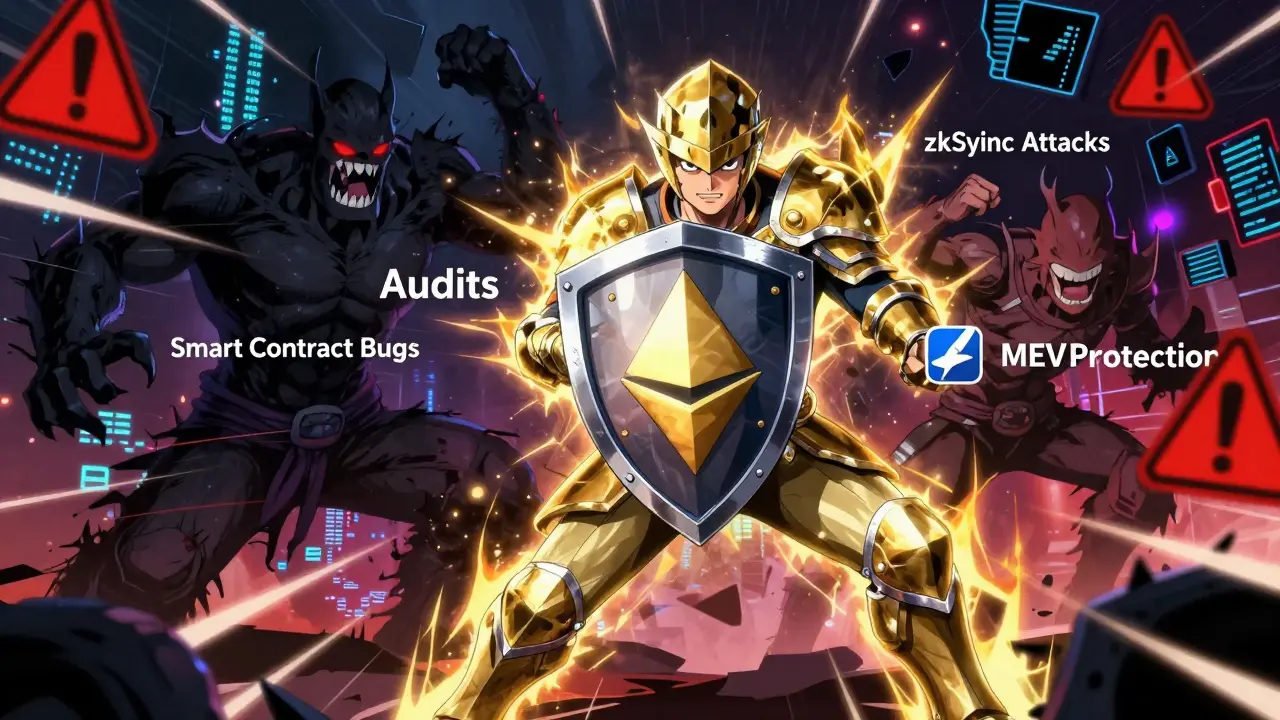
- Smart Contract Bugs: Like any code, SyncSwap’s contracts could have vulnerabilities. They have undergone audits from reputable firms, but bugs can slip through.
- Bridge Risks: To use zkSync, you must bridge assets from Ethereum L1. Bridges are historically the weakest link in Layer 2 security. Ensure you are using the official zkSync bridge or trusted aggregators.
- MEV Protection: SyncSwap integrates MEV (Maximal Extractable Value) protection tools to prevent sandwich attacks, where bots front-run your trade. This is crucial for maintaining fair pricing.
Always start small. Test the waters with $10 or $20 before committing significant capital. Never connect your primary savings wallet to any DeFi app. Use a separate "hot wallet" dedicated to DeFi interactions.
SyncSwap vs. Competitors: Why Choose It?
You might wonder, "Why not just use Uniswap on Arbitrum or PancakeSwap on BSC?" Each chain has its own strengths. Arbitrum has deeper overall liquidity, but higher competition among DEXs. BSC is cheap but less secure due to its centralized validator structure.
SyncSwap wins on efficiency within the zkSync ecosystem. If you are already holding ZK tokens or interacting with other zkSync dApps (like ZkLend or Mute.io), staying on-chain saves you bridge fees and time. SyncSwap’s integration with these apps makes it the natural hub. Furthermore, the user experience on SyncSwap is often smoother than trying to route complex cross-chain swaps through aggregators.
Final Verdict: Should You Use SyncSwap?
For anyone serious about the zkSync Era ecosystem, SyncSwap is not just an option; it is the essential tool. It offers the best liquidity, the lowest fees, and the most reliable interface on the network. Whether you are swapping stablecoins, providing liquidity for yield, or hunting for new gems on the Launch Pad, it is the place to be.
However, treat it with respect. Understand impermanent loss, manage your slippage settings, and keep your private keys secure. The potential for high yields exists, but so do the standard risks of decentralized finance. Do your own research, start small, and enjoy the speed of zero-knowledge trading.
Is SyncSwap safe to use?
SyncSwap is considered relatively safe as it runs on zkSync Era, which inherits Ethereum's security. The platform has undergone multiple audits. However, all DeFi platforms carry smart contract risks. Always use a dedicated wallet and start with small amounts to test the system.
How do I bridge funds to SyncSwap?
You need to bridge assets from Ethereum Mainnet to zkSync Era. You can use the official zkSync Era bridge or third-party aggregators like Orbiter or Jumper. Once your ETH or ERC-20 tokens are on zkSync, you can connect your wallet to SyncSwap.app to trade.
Will there be a SyncSwap airdrop?
While not officially confirmed, industry trends suggest an airdrop is likely for the upcoming SYNC token. Many similar protocols have rewarded early users. Engaging with the platform by swapping and providing liquidity may qualify you, but never invest solely for this purpose.
What are the fees on SyncSwap?
SyncSwap charges a trading fee that varies by pool type, typically ranging from 0.01% to 0.3%. Gas fees on zkSync Era are extremely low, often costing less than $0.01 per transaction, making it much cheaper than Ethereum mainnet.
Can I use SyncSwap on mobile?
Yes, SyncSwap is fully responsive and works well on mobile browsers. You can connect wallets like MetaMask or Trust Wallet directly from your phone to trade on the go.