
| Category | Requirement/Restriction | Key Detail |
|---|---|---|
| Registration | Mandatory for pros | Required if using >6,000 kWh/month |
| Taxes | 15% profit tax | Applies to Bitcoin mining profits |
| Power Priority | Fourth Category | Miners are the first to be disconnected |
| Bans | Regional & Seasonal | 13 regions have specific restrictions |
The Legal Status of Mining: From Shadow to State Control
For years, crypto mining in Russia existed in a grey area. However, the laws enacted in late 2024 and fully implemented by January 1, 2025, changed the game. mining crypto in Russia is now technically legal, provided you follow a very specific set of rules. The government's goal is simple: they want the economic benefits of the industry, but they refuse to let it crash the power grid or operate outside the tax man's reach. If you are a hobbyist using a small amount of power-specifically under 6,000 kWh per month-you can generally fly under the radar and don't need to register. But for anyone running a commercial operation, the National Miners' Registry is a mandatory state database where all professional mining equipment must be logged and certified . Failure to join this registry isn't just a paperwork error; it's an illegal operation that can lead to massive fines.Where You Can't Mine: Regional and Seasonal Bans
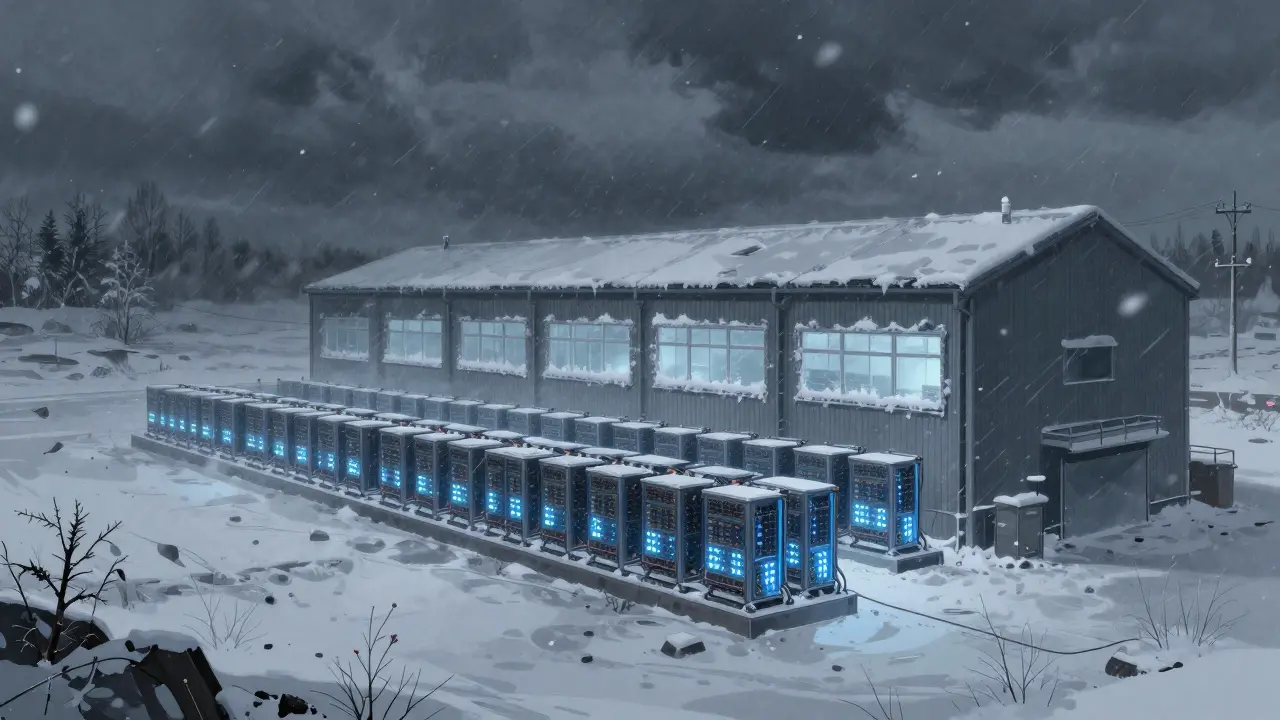
Not every part of Russia is open for business. The government has identified several areas where the energy deficit is too high to support the massive power draw of ASICs. This has resulted in a two-tiered restriction system that you must check before renting any warehouse or buying property. First, there are the blanket bans. As of 2026, ten regions are completely off-limits for mining activities. This includes areas like Chechnya, Dagestan, and the Donetsk and Lugansk People's Republics. These bans are not temporary glitches; they are scheduled to remain in place until March 15, 2031. If you try to run a farm in these zones, you are inviting a legal disaster. Then there are the seasonal restrictions. In the Siberian heartland-specifically Irkutsk, Buryatia, and Zabaikalsky-mining is restricted during the brutal winter peaks. From November 15 to March 15, the grid takes a hit from heating requirements, and miners are told to power down. In these regions, the government treats electricity like a triage unit: hospitals and homes get power first, and miners get whatever is left, which is often nothing.The Energy Trap: Remote Shutdowns and Power Priorities
One of the most aggressive parts of the Russian law is the classification of energy consumers. The state has labeled miners as "fourth category" consumers. In plain English, this means you are the lowest priority on the grid. Because all legal equipment must be labeled and certified through the registry, the authorities have the technical capability to implement remote disconnections. If a city's power demand spikes, the utility company can flip a switch and kill power to the mining farms to keep the streetlights on. This makes the business model incredibly risky for those relying on tight margins and 24/7 uptime.
Taxes and the Cost of Compliance
Running a legal operation means paying the price. In November 2024, Russia introduced a 15% tax on Bitcoin mining profits . This was a clear signal that the era of "free" crypto is over. Beyond the profit tax, there are heavy penalties for those who refuse to register. The Federal Tax Service is actively hunting for "shadow" miners. While only about 30% of miners were registered by mid-2025, the government is cranking up the pressure. Fines for unauthorized operations, which used to start at 200,000 rubles, are being pushed toward 2 million rubles (roughly $25,500). For a small-to-mid-sized operator, one fine could wipe out years of profit.Trading vs. Mining: The Fine Line
It's important to distinguish between mining the coin and using it. In Russia, owning Cryptocurrency as an asset is legal. You can buy it, hold it, and trade it. However, the ruble remains the only legal tender for payments. This means you cannot use Bitcoin to pay for a coffee or a car in Moscow; that remains illegal. Furthermore, transparency is now mandatory for large moves. If your crypto transactions exceed 600,000 rubles, you are required to report this to the tax authorities. The government is essentially treating crypto like a high-value asset-similar to gold or foreign real estate-rather than a currency.
The Bottom Line for Investors
Is it still worth it? Some industry experts suggest that if you have a diversified portfolio, allocating about 5% to mining operations can be a viable strategy, provided you are in a legal, non-restricted region. The credibility of the sector has actually improved because there is now a legal path to follow, rather than just guessing if the police will knock on your door. However, the risks are higher than ever. You aren't just fighting the difficulty adjustment of the network; you're fighting a government that can shut off your power remotely and tax your profits heavily. If you're looking at the Russian market, your primary focus shouldn't be on the hash rate, but on the legal registry and the regional power grid stability.Is cryptocurrency mining illegal in Russia?
No, it is not illegal, but it is strictly regulated. Mining is permitted as long as operators register with the national registry (if they exceed 6,000 kWh/month), pay a 15% profit tax, and operate in regions where there is no active ban.
Which regions are banned from mining?
Complete bans are in place in 10 regions, including Chechnya, Dagestan, and the Donetsk and Lugansk People's Republics. Additionally, seasonal restrictions apply in Irkutsk, Buryatia, and Zabaikalsky during the winter months (typically November 15 to March 15).
Can the government shut down my mining rig remotely?
Yes. Because miners are classified as "fourth category" consumers (the lowest priority), the government can disconnect mining equipment during periods of high electrical demand to ensure essential services have power.
Do I need to register if I'm just a hobbyist?
If your monthly electricity consumption for mining is under 6,000 kWh, you are generally exempt from the mandatory registration requirements.
Can I use crypto to pay for things in Russia?
No. While owning and trading cryptocurrency is legal, using it as a means of payment for goods or services is prohibited. The Russian ruble is the only legal tender for transactions within the country.
What are the penalties for illegal mining?
Fines for unauthorized mining operations are significant. They traditionally started around 200,000 rubles, but the government is moving toward increasing these penalties up to 2 million rubles for non-compliant operators.
Next Steps and Troubleshooting
For Industrial Operators: Your first move should be a full audit of your energy consumption. If you're over the 6,000 kWh threshold, prioritize registration with the Federal Tax Service and the national registry immediately to avoid the 2-million-ruble fine. Ensure your hardware is certified to avoid being flagged during inspections.
For Small-Scale Miners: Monitor your monthly kWh usage. If you're approaching the limit, consider splitting your operations or upgrading to more energy-efficient hardware to stay under the registration threshold.
For Investors in Siberian Regions: Plan for "dark months." If you are operating in Irkutsk or Buryatia, calculate your ROI based on 7-8 months of uptime rather than 12, accounting for the seasonal winter shutdowns.
Comments (23)
Man, the idea of being "fourth category" is wild. Just a total flip of a switch and your whole investment goes dark so some streetlights stay on. That's a crazy level of risk for any business, but hey, I guess that's the game if you're chasing those cheap Siberian electricity rates!
Typical state-level parasite behavior. They let you take all the risk of buying the hardware and setting up the farm, then they swoop in once you're profitable to demand a 15% cut and the power to kill your gear. It's a moral failure of governance, honestly, treating entrepreneurs like disposable batteries for the grid. Only a fool would think this is "legalization" when it's actually just a leash.
probly just a way to track everyone lol. like who actually thinks a "registry" is for safety and not for the tax man to suck every cent out of u. its a total joke
Ugh, imagine actually trying to do this without a proper legal team. Like, if you think you can just "fly under the radar" with 5,900 kWh, you're delusional. These people actually think they're hackers when they're just playing with expensive space heaters in a basement. it's so tacky
my heart literally sinks thinking about someone losing 2 million rubles just for a paperwork error... like why is the world so cruel and why does everythin have to be so stressfull all the time
The regulatory framework described herein is remarkably stringent. For those contemplating an entry into the Russian market, it is imperative to conduct a rigorous cost-benefit analysis regarding the 15% profit tax and the operational risks associated with the fourth-category power classification. Adherence to the National Miners' Registry is non-negotiable for commercial viability.
That remote shutdown part sounds genuinely stressful 😟 I can't imagine the anxiety of checking the news every time there's a cold snap just to see if your rigs are still breathing. Hopefully, people can find a way to balance this without losing everything.
It is fascinating to consider how the concept of ownership evolves when the state maintains a digital kill-switch over your physical assets, as this effectively transforms the nature of private property into a conditional privilege granted by the government. We must ask ourselves if the pursuit of decentralized wealth is even possible when the physical infrastructure remains tethered to a centralized, authoritarian power grid that prioritizes its own stability over the individual's right to operate a business. Perhaps there is a lesson here about the fragility of our technological dreams when they collide with the oldest form of power-the state's monopoly on energy and law. I believe we should all strive to find a middle ground where innovation isn't crushed by the weight of bureaucracy, but rather guided by a shared understanding of communal resource management that doesn't just cast the smallest player as the most expendable.
If you're feeling overwhelmed by these new rules, please remember that every challenge is just a stepping stone to a more resilient business model, and if you take the time to carefully audit your energy consumption now, you can actually turn these restrictions into a competitive advantage by being the most compliant operator in your region! It's all about the long game, and while the 6,000 kWh limit seems tight, it's actually a great opportunity to pivot toward more efficient hardware and a leaner operational strategy that will save you money in the long run while keeping the tax man happy and your peace of mind intact!
Actually, the 15% tax is quite low compared to some other jurisdictions where crypto is treated as income rather than profit. Most ppl dont realize that the registry is also a way for the state to ensure the grid doesnt collapse entirely, tho they probly messed up the implementation with those typos in the legal code.
Love the breakdown! 🚀 Just a tip for the newbies: look into those energy-efficient rigs to stay under the radar. Keep grinding! 💎🙌
THEY ARE TRACKING US!!! 🚨 These "registries" are just digital gulags for your hardware!!! First they tax your profit, then they flip the switch, and then they take your house for "national security" reasons!!! IT IS ALL A PLOT TO CONTROL THE FLOW OF WEALTH!!! WAKE UP PEOPLE!!! 🇺🇸🇺🇸🇺🇸
This is basically a classic case of regulatory capture where the state optimizes for tax yield while externalizing the operational risk via the fourth-category priority. If you can optimize your hash-to-power ratio and implement a robust hedging strategy for the seasonal downtime in Irkutsk, the ROI might still be viable despite the 15% friction cost.
Why are we even talking about mining in a place that can just turn you off like a lamp? Absolute madness. Get your gear out of there and move it somewhere with actual property rights!
Where's your gear located?
it is all just energy and light man the government just wants to hold the candle while we do the work
Oh sure, because the Russian government is just so well-known for its transparency and fairness. I'm sure they'll only use that registry for "taxes" and definitely not to identify every single dissident who happens to own a GPU. Such a lovely system they've built there.
I recommend keeping a very detailed log of your kWh usage every single day. It's much easier to prove you're under the 6,000 limit if you have a spreadsheet ready to go during an inspection.
do u think it's possibl to just move the rigs to a different region once the seasonal ban starts? like if i have a mobile setup would that actually work or would the registry catch me?
It's like trying to build a sandcastle while the tide is coming in, and the tide is the government. Just be careful and keep your eyes open, friends.
It's a tough spot for a lot of people who just wanted a side hustle. The risk of a 2 million ruble fine is just too much for a regular person to handle.
Total waste of electricity anyway 🤡. The 15% tax is the only good part because at least they get something from this nonsense. lol
Pure gold! Strategic pivot to low-wattage rigs now!