
When you hear about Bitcoin mining, you might picture a room full of flashing computers grinding away. But what’s really happening inside those machines? At the heart of every successful Bitcoin block is a single number: the nonce. It’s not flashy, it doesn’t make noise, and you won’t find it in any wallet app. But without it, Bitcoin wouldn’t work.
What Exactly Is a Nonce?
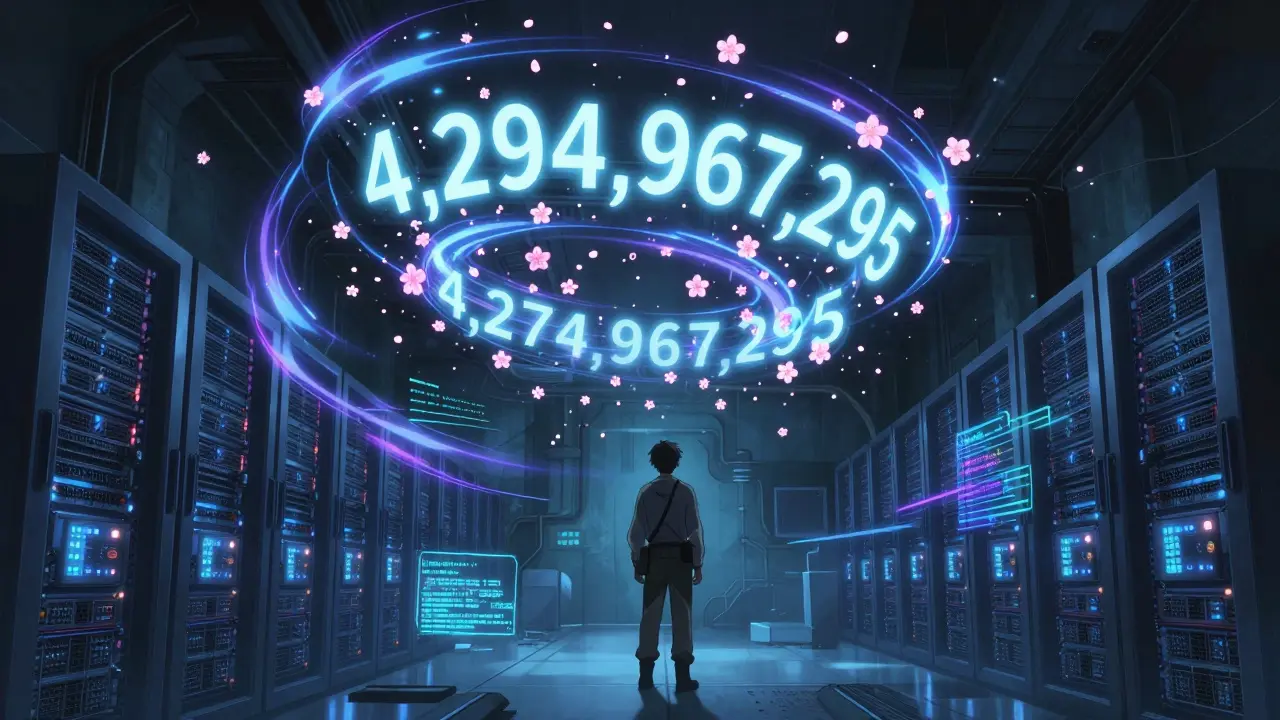
The word "nonce" stands for "number used once." It sounds like something from a spy movie, but in Bitcoin, it’s just a 4-byte (32-bit) number crammed into the block header. That means it can hold values from 0 to 4,294,967,295. Sounds simple, right? But this tiny field is the key to securing the entire Bitcoin network.
Miners don’t start with a magic number. They don’t know what the right nonce is. They have to guess. Over and over. And every time they change the nonce, they run the whole block header through SHA-256 - a cryptographic function that turns data into a fixed-length string of letters and numbers. The goal? Find a hash that starts with enough zeros to meet the network’s current difficulty target.
How the Nonce Fits Into Mining
Every Bitcoin block contains transactions, a timestamp, the previous block’s hash, and the merkle root (a summary of all transactions). But none of those can change easily. The nonce? That’s the only part miners can freely tweak without breaking the block’s structure. It’s like a dial on a lock. Turn it one way, get one hash. Turn it another, get a completely different one.
Here’s the catch: SHA-256 is designed to be unpredictable. Even changing one bit in the input creates a totally random output. That means there’s no pattern. No shortcut. If you try nonce 1,000,000 and it doesn’t work, nonce 1,000,001 isn’t "closer" - it’s just as likely to work as any other number. So miners just start at 0 and count up. It’s brute force, pure and simple.
Why the Nonce Was Designed This Way
Satoshi Nakamoto didn’t invent the nonce. Cryptographers had used similar concepts for decades. But he made it work for Bitcoin by giving miners just enough room to search - not too little, not too much. The 4-byte limit was intentional. It’s large enough to handle reasonable mining speeds, but small enough to force innovation when hardware gets too fast.
Think of it like a lock with 4 billion possible keys. If you can test all of them in under a second, the lock is broken. And that’s exactly what happened. By 2013, ASIC miners could cycle through every possible nonce in less than a second. So miners had to find a new way.

What Happens When the Nonce Runs Out?
When a miner hits nonce 4,294,967,295 and still hasn’t found a valid hash, they’re stuck. No more guesses left in the 4-byte field. So they change something else.
The easiest fix? Tweak the timestamp. It’s one of the few other fields in the block header that miners can adjust without invalidating the block. Even a one-second change creates a new header. Now the nonce can be reset to 0 and tried again. It’s not perfect - changing the timestamp too much can make the block invalid if it’s too far from real time - but it’s fast.
If that doesn’t work, miners turn to the ExtraNonce. This isn’t part of the official block header. It’s hidden inside the coinbase transaction - the first transaction in every block that pays the miner. By changing the data in that transaction’s scriptSig field, miners alter the merkle root, which changes the entire block header. Suddenly, they get a whole new set of 4 billion nonces to try.
But here’s the trade-off: every time the ExtraNonce changes, the miner has to rebuild the merkle tree. That takes time. So while it gives more options, it’s slower than just flipping the nonce. That’s why miners use it only when they’ve exhausted the regular nonce and timestamp.
Nonce vs. Nonces in Other Systems
You might hear "nonce" in other places - like logging into a website or encrypting a message. But those nonces are totally different. In cybersecurity, a nonce is usually a random number used once to stop replay attacks. It’s a security tool, not a mining tool.
In Bitcoin, the nonce isn’t random. It’s systematically tested. It’s not about secrecy - it’s about computation. Every hash attempt costs electricity. Every failed guess burns energy. The nonce is the lever miners pull to turn that energy into Bitcoin.
Why the Nonce Still Works After 16 Years
Bitcoin’s been running since January 2009. Back then, a single CPU could mine a block. Today, the entire network does more than 1.5 quintillion hashes per second. Yet the nonce hasn’t changed. Why?
Because it doesn’t need to. The difficulty target adjusts every 2,016 blocks - roughly every two weeks - to keep block times at 10 minutes. If mining power doubles, the target gets harder. If it drops, the target gets easier. The nonce’s 4-billion range is still enough because the difficulty is calibrated to match the hardware available.
Even with ASICs, GPUs, and data centers, the system holds. Miners adapt. They use ExtraNonces. They tweak timestamps. They optimize their circuits. But the nonce? It stays. It’s the one constant in a system that’s constantly changing.
The Bigger Picture: Security Through Computation
What makes Bitcoin secure isn’t encryption. It’s cost. To alter a block, you’d need to re-mine it and all 700,000+ blocks after it. That requires more computing power than the entire planet has ever devoted to Bitcoin. And the nonce is what makes that impossible.
Each block’s nonce is the proof that real work was done. No one can fake it. You can’t copy a hash. You can’t guess it without trying every possibility. The nonce forces honesty. If you want to change history, you have to pay for it - in electricity, in hardware, in time.
That’s why the nonce matters. It’s not just a number. It’s the reason Bitcoin has never been hacked. It’s the reason miners around the world keep running their machines. It’s the quiet, relentless engine behind every transaction ever confirmed.
Comments (25)