

Portugal used to be the go-to country in Europe for crypto investors looking to cut their taxes. If you held Bitcoin for over a year, you paid zero capital gains tax. If you earned staking rewards or airdrops, they weren’t taxed at all. And if you moved there under the Non-Habitual Resident (NHR) program, you could lock in a 20% flat tax rate on most income - even if it came from crypto trades halfway around the world.
That era is over.
As of March 31, 2025, the original NHR program stopped accepting new applicants. If you didn’t apply before that date, you can’t get it. And while Portugal still has one of the most straightforward crypto tax systems in Europe, the rules have changed. The old perks are gone for newcomers. The new system, called IFICI (Tax Incentive for Scientific Research and Innovation), is narrower, stricter, and not designed for full-time crypto traders.
What Happened to the NHR Program?
The NHR program launched in 2009 to bring in foreign professionals, retirees, and investors. It worked. By 2023, over 14,800 people had signed up - and about 1,800 of them listed crypto or blockchain work as their main activity. The government saw it as a success: more spending, more tax revenue from local goods and services, more people buying homes.
But by 2023, officials started calling it a victim of its own success. Too many people were using it just to avoid taxes on foreign income. So in October 2023, they announced it was ending. The final deadline to apply was March 31, 2025. After that? Closed.
Here’s the key thing to understand: if you got NHR status before March 2025, you’re still covered. The 10-year clock keeps ticking. So someone who got NHR in 2022 will still enjoy tax breaks until 2032. But if you’re thinking of moving to Portugal now to save on crypto taxes, the old path is locked.
Portugal’s Crypto Tax Rules Today (2026)
Even without NHR, Portugal still has one of the friendliest crypto tax environments in Europe - if you know how to use it.
Here’s how it works now:
- Long-term holdings (over 365 days): No tax. This applies to buying and selling Bitcoin, Ethereum, or any other crypto. As long as you hold it for more than a year, you don’t pay capital gains tax.
- Short-term holdings (under 365 days): Taxed at 28%. This is the new rule since 2023. If you buy Bitcoin in January and sell it in November, you owe 28% on the profit.
- Crypto-to-crypto trades: Not taxed. Swapping Bitcoin for Ethereum? No tax event. This is huge. It means you can rebalance your portfolio without triggering a tax bill.
- Staking, lending, airdrops: Taxed at 28%. Any income you earn from crypto activities - like getting rewards for staking ETH or interest from lending - is treated as ordinary income.
- Miners and professional traders: If you’re running a mining operation or trading full-time as a business, your profits are taxed under business income rules (up to 48%).
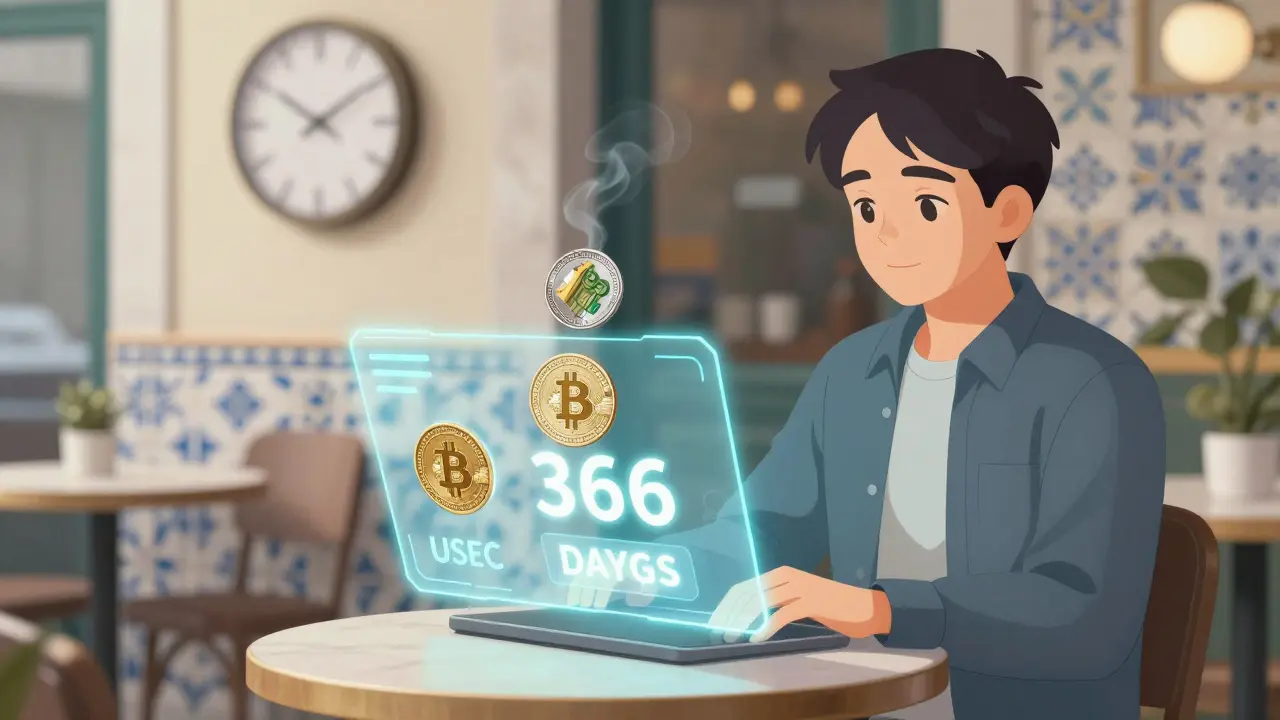
There’s one trick many investors use: hold for 366 days, then swap your Bitcoin for USDC or USDT. Then wait a few days, and cash out the stablecoin to euros. Since the swap isn’t taxed, and the stablecoin sale isn’t a capital gain if you bought it at the same value, you avoid the 28% hit entirely.
But here’s the catch: this only works if you’re not a professional trader. If the Portuguese tax authorities decide you’re running a business, they can reclassify your trades as income - and then you’re in a whole different tax bracket.

IFICI: The New NHR - But Only for a Few
IFICI replaced NHR. But it’s not the same thing.
IFICI still offers a 20% flat tax rate on certain types of income - but only if you qualify. And the bar is high.
To get IFICI, you need to be in one of these categories:
- Scientific researcher
- Highly qualified tech professional
- Engineer working on AI, blockchain, or quantum computing
- Someone with a PhD in a priority field
Full-time crypto traders? They don’t count. Investors who just hold Bitcoin? No. Even if you make €200,000 a year trading crypto, IFICI won’t help you unless you can prove you’re developing blockchain infrastructure - not just buying and selling.
One user on Reddit, who goes by “TaxNomad2025,” moved to Lisbon in April 2025 after the NHR cutoff. He’s a full-time trader. He applied for IFICI. They rejected him. His reply: “I’m making more than most engineers here. But I’m not an engineer. So I pay 48% now.”
IFICI is great if you’re a blockchain developer working for a Portuguese startup. It’s useless if you’re just a crypto investor.
What You Need to Do If You’re Moving Now
If you’re relocating to Portugal in 2026 and want to minimize crypto taxes, here’s your roadmap:
- Hold your crypto for at least 366 days. Don’t touch it. This is your biggest tax saver.
- Don’t trade frequently. If you’re swapping coins every few weeks, you’ll look like a trader - not an investor. That opens you up to higher taxes.
- Use stablecoins to avoid taxable events. Swap BTC for USDC after holding a year. Then cash out later. No tax on the swap. No capital gain on the stablecoin if you bought it at parity.
- Keep perfect records. You need timestamps, wallet addresses, and euro values for every transaction. Use software like Koinly or CryptoTaxAudit. Portugal’s tax agency (AT) is getting better at tracking crypto.
- Prove residency. You must spend at least 183 days a year in Portugal. Get a NIF (tax ID), open a local bank account, rent or buy property. No residency? No tax benefits.
And if you’re a U.S. citizen? Forget Portugal’s rules. The IRS still taxes you on every sale, no matter where you live. Portugal’s 0% tax doesn’t mean anything to the IRS. You still have to file Form 8949 and pay U.S. capital gains tax. Portugal doesn’t override U.S. law.
How Portugal Compares to Other EU Countries
Portugal isn’t the only crypto-friendly country anymore.
- Germany: Tax-free after one year - same as Portugal. But they tax staking and lending at your income rate (up to 45%).
- Switzerland: No federal capital gains tax on personal crypto holdings. But each canton sets its own rules. Zurich is friendly; Geneva is not.
- Malta: Still offers a 0% tax rate on crypto, but it’s not a residency program. You can’t just move there and get tax breaks.
- Spain: Taxes crypto at 19-26% on capital gains. No holding period exemption. Staking is taxed as income.
- France: Complex. You pay 30% flat tax on gains, plus social charges. It’s messy.
Portugal still wins on transparency. No gray areas. No surprise audits. Just clear rules: hold over a year = no tax. Trade within a year = 28%. Simple.
The Bigger Picture: Is Portugal Still Worth It?
Yes - but not for the reasons it used to be.
The golden age of NHR is gone. The days of moving to Lisbon, holding crypto for six months, and walking away tax-free? Over.
But Portugal still has:
- One of the cleanest crypto tax systems in Europe
- No wealth tax
- No tax on foreign dividends or pensions (if you’re an NHR holder)
- A stable legal system
- Good internet, English-speaking population, and EU access
- The Golden Visa program still exists - if you invest €500k+ in real estate
So if you’re a crypto investor who wants to live in Europe, Portugal still makes sense - but only if you’re patient. Hold your assets. Don’t trade often. Stay compliant. And don’t expect to pay 0% unless you’re already a long-term holder.
For most people, the real benefit isn’t tax avoidance anymore. It’s quality of life - with a side of smart tax planning.
Can I still apply for the NHR program in 2026?
No. The original NHR program stopped accepting new applications after March 31, 2025. If you didn’t submit your application before that date, you’re not eligible. The replacement program, IFICI, has very different rules and is only for qualified professionals in science, tech, or research.
Do I pay tax on crypto if I hold it for over a year in Portugal?
No. If you hold any cryptocurrency for more than 365 days and then sell it, you don’t pay capital gains tax in Portugal. This applies to Bitcoin, Ethereum, and all other crypto assets. The 0% rate only applies to personal, non-professional trading.
Is crypto-to-crypto trading taxable in Portugal?
No. Swapping one cryptocurrency for another - like trading Bitcoin for Ethereum - is not a taxable event in Portugal. You don’t trigger capital gains until you convert crypto into euros or another fiat currency. This makes portfolio rebalancing much easier for investors.
Are staking rewards taxed in Portugal?
Yes. Staking rewards, lending interest, and airdrops are treated as ordinary income and taxed at 28%. This applies whether you’re an NHR holder or not. You must report these as income on your annual tax return.
Do I need to live in Portugal to get the crypto tax benefits?
Yes. To benefit from Portugal’s crypto tax rules, you must be a tax resident. That means spending at least 183 days per year in the country or having strong ties - like a rental contract, bank account, or property. Non-residents are taxed differently and don’t qualify for the 0% long-term rate.
I’m American. Can I still use Portugal’s crypto tax rules?
You can use Portugal’s system to avoid Portuguese taxes - but the IRS still taxes you. The U.S. taxes worldwide income. So even if Portugal says your crypto gain is 0%, the IRS will still tax you when you sell. You’ll need to file Form 8949 and report the sale. Portugal’s tax rules don’t override U.S. law.
What happens if I trade crypto frequently in Portugal?
If the tax authorities decide you’re a professional trader - not an investor - they can reclassify your trades as business income. That means you could be taxed up to 48%, not 28%. Frequent trading, short-term holds, and high-volume activity raise red flags. Keep records, but avoid looking like a day trader.
Is the 28% crypto tax rate likely to change?
Possibly. The EU’s MiCA regulation (in effect since July 2025) requires member states to standardize crypto rules. Portugal’s Ministry of Finance has signaled it will review crypto taxation in early 2026. Some experts predict the holding period could extend from 365 to 730 days. But for now, the 28% rate on short-term gains stands.
Comments (25)