Blockchain Forks: What They Are, Why They Happen, and What They Mean for You
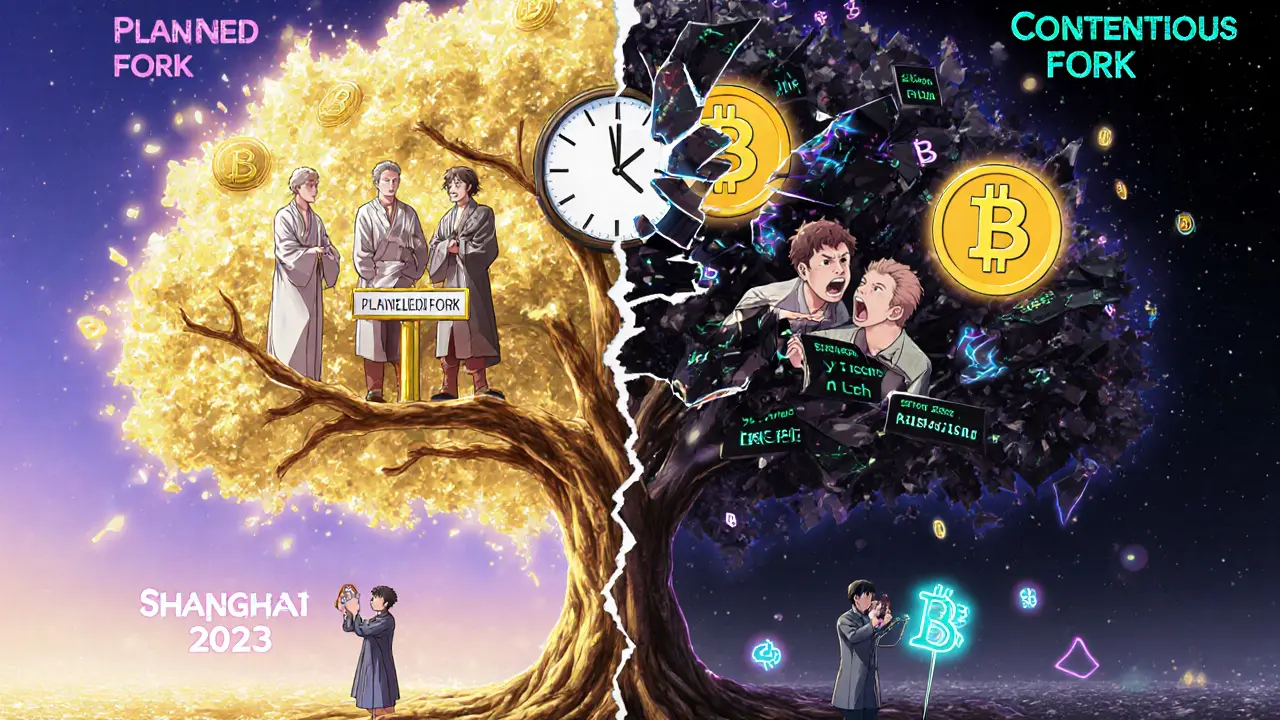
When a blockchain fork, a split in a blockchain network that creates two versions of the ledger. Also known as chain split, it happens when developers or users disagree on how the network should evolve—whether it’s about transaction speed, security rules, or who gets to vote on changes. This isn’t just technical jargon. Every major crypto upgrade, from Bitcoin’s 2017 split to Ethereum’s 2022 transition, started with a fork. And if you hold crypto, you’ve likely been affected by one—even if you didn’t notice.
There are two main types: hard fork, a permanent split that requires all nodes to upgrade to the new rules. Also known as non-backward-compatible fork, it’s like rewriting the rules of a game mid-match—everyone must agree to play by the new version or get left behind. The most famous example? Bitcoin Cash, born when a group of miners wanted bigger blocks to handle more transactions. Then there’s the soft fork, a backward-compatible update that only requires miners to upgrade, not every user. Also known as backward-compatible fork, it’s more like a software patch—older wallets still work, but new features unlock for those who update. Ethereum’s transition to proof-of-stake in 2022 was a soft fork in design, even though it changed the whole network’s foundation.
These splits don’t just change code—they change money. A hard fork often creates two new coins, like Bitcoin and Bitcoin Cash. But not all forks succeed. Many die quietly, their tokens worth nothing because no one traded them, no exchange listed them, or the team vanished. That’s why you’ll find posts here about fake airdrops pretending to be fork rewards—like the fake StakeHouse NFT or THN token claims. Scammers love forks. They know people get excited, check their wallets, and click anything that says "claim your free coins."
And it’s not just about new coins. Forks expose deeper issues: Who controls the network? Are developers acting in public interest—or for profit? That’s why Angola banned mining: energy theft from crypto networks caused blackouts. Why North Korea steals crypto: it’s easier than hacking banks. Why Pakistan uses crypto daily: it’s a lifeline when banks fail. These aren’t just tech stories—they’re human stories shaped by how blockchains fork, fail, or flourish.
Below, you’ll find real cases—some profitable, most dangerous. You’ll see how a forgotten airdrop turned into a scam, how a "new" token had zero liquidity, and how a single line of code can erase years of work. No fluff. No hype. Just what happened, why it matters, and how to protect yourself the next time a blockchain splits.