

You might have seen DoctorX popping up in your crypto feeds, promising a "meme-powered digital ecosystem" that blends humor with serious blockchain utility. It sounds like the next big thing, right? But before you throw your hard-earned EGLD or USDC at it, you need to understand what this token actually does and why its ticker causes so much confusion. As of late September 2026, DRX remains a micro-cap asset on the MultiversX blockchain, trading at fractions of a cent with market caps hovering under $250,000. This article cuts through the marketing noise to explain exactly what DoctorX is, how it works, and the critical risks you face due to ticker collisions on other chains.
Key Takeaways
- Core Identity: DoctorX (DRX) is primarily an EGLD-standard token on the MultiversX network, designed for meme betting, gaming, and community rewards.
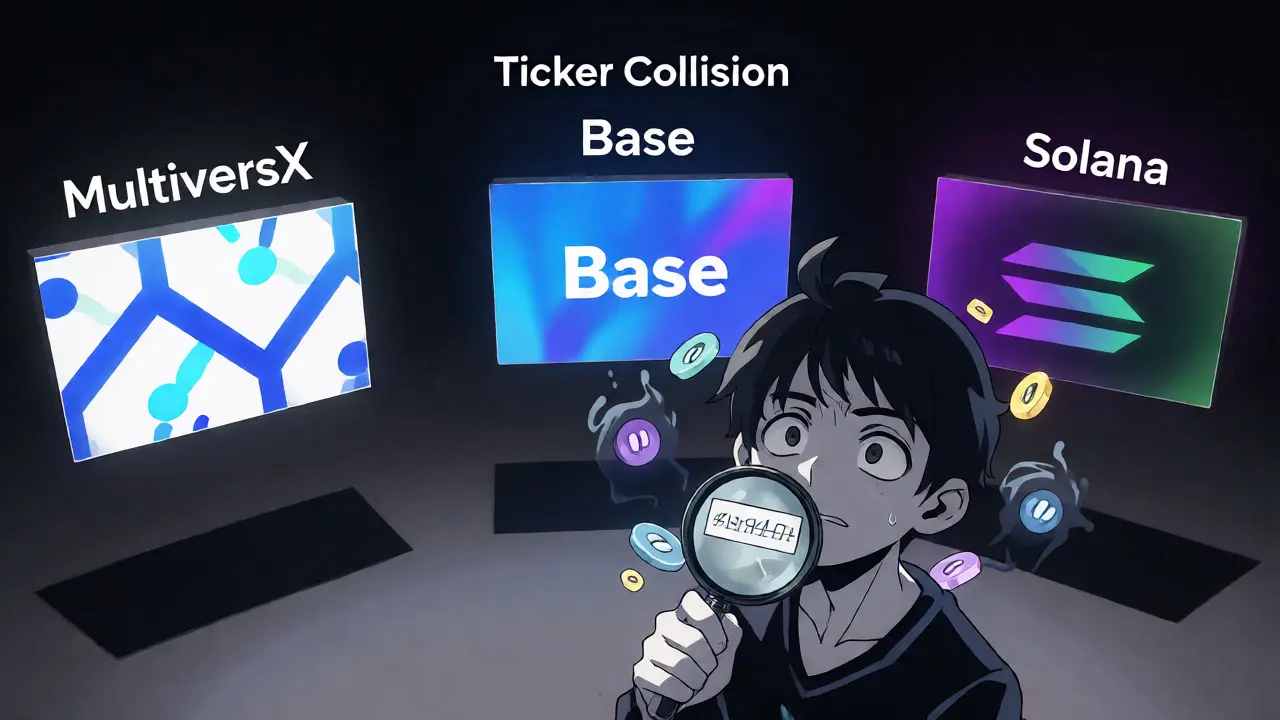
- Ticker Danger: At least three different tokens use the "DRX" ticker across MultiversX, Base, and Solana. Always verify the contract address.
- Market Status: As of August 2026, the MultiversX-based DRX has a market cap between $36,940 and $228,100, classifying it as a high-risk micro-cap.
- Liquidity Reality: Trading volume is thin. DEX volumes on xExchange can drop below $100/day, while CEXs like Gate.io provide the bulk of liquidity.
- Utility Focus: Unlike pure speculation memes, DRX aims to integrate into decentralized gaming and engagement platforms within the MultiversX ecosystem.
The Core Concept: More Than Just a Joke?
Most people hear "meme coin" and think of Dogecoin or Shiba Inu-assets driven almost entirely by hype and community sentiment. DoctorX tries to pivot from that narrative. The project markets itself as the "world’s first meme-driven economy for engagement, competition, and rewards." This isn't just fluff; it points to specific use cases. According to data from CoinGecko and BitMart, DRX is intended to be used for meme betting, decentralized gaming participation, and reward distribution within partner platforms.
Think of it less like a currency you spend on coffee and more like a loyalty point system for a very specific, niche gaming community. If you are part of the MultiversX ecosystem, you might earn DRX by participating in competitions or stake it to enter meme-based wagering pools. The value proposition here is gamification. The developers argue that by combining humor with on-chain utility, they create a sticky user base that stays engaged longer than typical pump-and-dump crowds. However, keep in mind that these claims come largely from exchange listings and project marketing materials rather than independent technical audits.
Technical Architecture and Tokenomics
Technically, DoctorX doesn't reinvent the wheel. It relies on the security and consensus mechanisms of the MultiversX network. It is not a standalone Layer 1 blockchain; it is a token issued on top of an existing infrastructure. Specifically, it operates as an EGLD-standard token, meaning it behaves similarly to other assets native to the MultiversX environment.
The tokenomics are straightforward but massive in scale. The maximum supply is fixed at approximately 203.12 billion DRX. This number appears consistently across trackers like TradingView, CoinMarketCap, and Coinbase. Interestingly, reports suggest that nearly 100% of this supply is already in circulation. There is no mining involved; the tokens were minted at deployment. This lack of inflationary pressure via mining means the price is driven purely by demand versus the static supply. For investors, this removes one variable (inflation) but adds another concern: if everyone who holds the token decides to sell at once, there is no new supply to absorb the shock, leading to sharp price drops.
| Feature | MultiversX DRX (Primary) | Base Network DRX | Solana DRX |
|---|---|---|---|
| Blockchain | MultiversX (EGLD Standard) | Base (ERC-20) | Solana (SPL-like) |
| Total Supply | ~203.12 Billion | 1 Trillion or 8.4 Billion (varies by contract) | Data Limited |
| Approx. Market Cap | $36k - $228k (Aug 2026) | ~$1.4 Million (Dec 2024 data) | Negligible/Unclear |
| Main Exchange | Gate.io, xExchange | DEXs on Base | DEXs on Solana |
| Risk Factor | Low Liquidity, Micro-cap | Ticker Confusion | Unknown Utility |
The Ticker Collision Problem
Here is where things get tricky for anyone trying to buy or track DoctorX. The ticker "DRX" is not unique. While the primary DoctorX project lives on MultiversX, other unrelated tokens share the same name and symbol on different blockchains. This creates a significant risk for inexperienced users who might accidentally buy the wrong asset.
For instance, CoinBrain documents a separate DoctorX token on the Base blockchain. This Base-based version has a vastly different supply structure-one source cites a 1 trillion token supply, while another mentions 8.4 billion. Its market cap has historically been higher than the MultiversX version, reaching over $1.4 million in late 2024. Then there is yet another DRX token deployed on Solana. Because aggregators like CoinMarketCap sometimes group these together or fail to clearly distinguish them in quick-glance views, you could end up holding a token with zero connection to the MultiversX gaming ecosystem. Always check the smart contract address before executing a swap. If you are buying on MultiversX, ensure the contract matches the official EGLD-standard identifier.
Market Performance and Volatility
If you are looking for stability, look elsewhere. DoctorX is a textbook example of a volatile micro-cap. Data from early 2026 through August 2026 shows the price oscillating wildly. At its peak, the token hit an all-time high of roughly $0.0000253. By mid-2025, it had dropped over 95% from that peak. As of August 2026, prices reported by various trackers range from $0.0000005086 to $0.000001819 per token.
Why such a huge discrepancy? Different exchanges report different prices based on their own order books. CoinMarketCap might show a market cap of $36,940, while CoinLore reports $228,100 for the same period. These differences often stem from how each platform calculates circulating supply or which exchanges they include in their average. The takeaway is clear: the asset is illiquid. Small trades can move the price significantly. If you try to sell a large position, you might crash the price locally on the exchange you are using because there aren't enough buyers on the other side.
Where to Buy and How to Trade
Accessing DoctorX requires navigating a fragmented landscape. You cannot buy it directly on major tier-1 exchanges like Coinbase or Binance. Instead, you have two main paths:
- Centralized Exchanges (CEXs): Gate.io is currently the most popular venue for trading DRX. In July 2025, the DRX/USDT pair on Gate saw daily volumes around $81,936. BitMart also lists DRX as an EGLD-type token. Using a CEX is generally easier for beginners, but remember that mid-tier exchanges carry their own counterparty risks.
- Decentralized Exchanges (DEXs): On the MultiversX network, xExchange is the primary hub. Here, you trade DRX against USDC or EGLD. The catch? Liquidity is incredibly thin. In August 2026, the 24-hour volume on the DRX/USDC pair on xExchange was recorded at just $68.44. That is less than the cost of a decent dinner. Attempting to trade significant amounts here will result in massive slippage.
To participate, you need a wallet compatible with MultiversX, such as the XPortal Wallet or Maiar. You will also need EGLD to pay for gas fees. Remember, if you are buying the Base or Solana versions of DRX, you need ETH or SOL respectively, and different wallets entirely.
Risks and Realistic Expectations
Is DoctorX a good investment? That depends on your risk tolerance. It is currently classified as a speculative asset. There are no known hacks or catastrophic failures in the provided data up to late 2026, but the absence of news is not proof of safety. The project lacks detailed public documentation regarding developer SDKs or deep technical audits accessible to the general public.
The biggest risk isn't just price volatility; it's relevance. Meme coins survive only if the community stays active. If the "gamification" aspect fails to attract sustained user interest beyond the initial launch hype, the token could fade into obscurity. Furthermore, the multi-chain ticker collision means that negative news about a different "DRX" token on Base or Solana could unfairly impact sentiment for the MultiversX version, even though they are technically unrelated.
Is DoctorX (DRX) the same as Dogecoin?
No. While both are meme-themed, DoctorX is built on the MultiversX blockchain and focuses on specific utilities like meme betting and gaming rewards. Dogecoin is a separate cryptocurrency with its own blockchain and broader payment acceptance. DoctorX is a micro-cap asset with much lower liquidity and recognition compared to Dogecoin.
Why do I see different prices for DRX on different sites?
This happens for two reasons. First, DoctorX has low liquidity, so prices vary significantly between exchanges like Gate.io and xExchange. Second, multiple unrelated tokens use the "DRX" ticker on different blockchains (MultiversX, Base, Solana). Aggregators may sometimes mix data or display averages that don't reflect the specific token you hold. Always verify the contract address and chain.
Can I mine DoctorX?
No. DoctorX is not a mineable token. It was minted at deployment on the MultiversX blockchain. The total supply is fixed at approximately 203.12 billion tokens, and nearly all of them are already in circulation. New tokens are not created through mining processes.
What is the best place to buy DRX?
As of late 2026, Gate.io offers the highest liquidity for centralized trading. For decentralized trading on MultiversX, xExchange is the primary option, but be aware of extremely low daily volumes which can lead to high slippage. Avoid buying "DRX" on Ethereum or Solana unless you specifically want those alternative tokens, as they are different projects.
Is DoctorX audited?
Publicly available information from major trackers does not highlight comprehensive third-party security audits for the DoctorX smart contracts. Most descriptions come from exchange listings and project marketing. Investors should proceed with caution and treat the token as high-risk until formal audit reports are widely published and verified.